
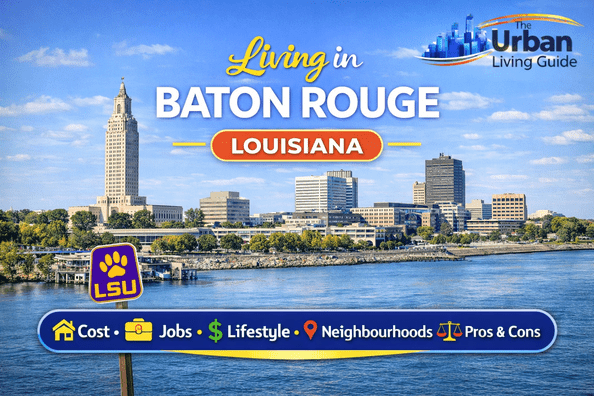
Living in Baton Rouge, Louisiana: What Life Is Like Between LSU and the State Capitol
Thinking about moving to Baton Rouge? Here’s what you need to know before making the decision. Located along the Mississippi River, Baton Rouge is the capital city of Louisiana and an important political, industrial, and educational hub.
With a population of around 220,000, the city offers a mix of southern charm, economic opportunities, and cultural heritage. Baton Rouge is home to Louisiana State University (LSU), which plays a major role in shaping the city’s identity, economy, and vibrant college-town atmosphere.
Many people consider Living in Baton Rouge, Louisiana because of its affordable housing, strong job market in industries like petrochemicals and healthcare, and relatively lower cost of living compared to other U.S. capitals. The riverfront views, historic landmarks, and lively sports culture add to its appeal.
Watch a recent video by a popular vlogger to understand daily life and vibes in Baton Rouge.
Information in this guide is compiled from publicly available data, official city resources, economic reports, and local housing databases to ensure accuracy and reliability.
What Makes Baton Rouge So Unique & Popular
Baton Rouge stands out as a mix of government power, education, and southern culture. Known as the political heart of Louisiana, it offers both stability and lifestyle benefits.
-
- Capital city with strong government presence
- Home to Louisiana State University (LSU)
- Located along the Mississippi River
- Affordable cost of living
- Strong sports and college culture
👉 If this area is new to you, check the map below to see where the city is positioned geographically.
Famous Personalities, Sports & Major Brands from Baton Rouge
Baton Rouge has produced influential personalities and is known for its sports culture.
-
- Shaquille O’Neal (LSU connection) – NBA legend
- Kevin Gates – Rapper
- James Carville – Political consultant
Sports play a huge role in the city’s identity:
-
- LSU Tigers (NCAA teams)
Major employers and industries include:
-
- ExxonMobil (major refinery)
- Dow Chemical Company
- Ochsner Health
- Government and education sector
Best Neighborhoods in Baton Rouge
Baton Rouge offers a mix of suburban, family-friendly, and student-focused neighborhoods.
-
- Downtown Baton Rouge
Located along the river, offering city life, offices, and entertainment. - LSU Area
Popular among students and young professionals with vibrant surroundings. - Bocage / Jefferson Area
Upscale neighborhood with good schools and residential comfort. - Mid City
Known for its artsy vibe, restaurants, and growing community. - Prairieville (nearby)
Family-friendly suburban area with peaceful living.
- Downtown Baton Rouge
Housing & Rent in Baton Rouge
Baton Rouge is considered affordable, especially compared to larger metro areas.
As of recent housing data (Zillow, RentCafe, Redfin), average rent:
-
- Studio – $800–$1,100
- 1 Bedroom – $1,000–$1,300
- 2 Bedroom – $1,300–$1,700
- Family home – $2,200+
Rental figures are based on aggregated listing data and recent market trends.
Job Market & Business Opportunities
Baton Rouge has a strong and stable job market driven by government, petrochemical industries, healthcare, and education. The presence of major corporations like ExxonMobil makes it an important industrial hub.
The city also benefits from LSU’s research activities and a growing healthcare sector led by Ochsner Health.
Average salaries typically range between $55,000 and $95,000 depending on profession.
Major Companies & Headquarters in Baton Rouge
Baton Rouge hosts several major employers and industries.
-
- ExxonMobil
- Dow Chemical Company
- Ochsner Health
- Louisiana State Government Offices
What It’s Really Like Living in Baton Rouge, Louisiana
Living in Baton Rouge offers a balanced lifestyle with a mix of work, education, and community living. The presence of LSU brings energy, sports culture, and events throughout the year.
Residents enjoy riverfront views, local food, and college sports. Living in Baton Rouge, Louisiana is ideal for families, students, and professionals looking for affordability and stability.
Cost of Living in Baton Rouge
Baton Rouge is more affordable than many U.S. cities, making it attractive for relocation.
-
- Rent – $1,000–$1,500
- Utilities – $150–$250
- Groceries – $300–$500
- Transportation – $100–$150
- Healthcare – $200–$350
Compared to cities like New Orleans, costs are slightly lower.
Transportation & Commute
-
- Mostly car-dependent
- Limited public transportation
- Average commute time: 20–30 minutes
- Easy highway access
Weather & Environment
Baton Rouge has a humid subtropical climate.
-
- Hot, humid summers
- Mild winters
- Frequent rainfall
The Mississippi River plays a major role in the city’s geography.
Popular Hotels, Cafes & Restaurants
Baton Rouge offers a mix of southern cuisine and modern dining.
-
- Hilton Baton Rouge Capitol Center
- Watermark Baton Rouge Hotel
- Crowne Plaza Baton Rouge
Local food includes Cajun and Creole dishes.
Sightseeing & Attractions
-
- Louisiana State Capitol
- LSU Campus
- Mississippi Riverfront
- USS Kidd Veterans Museum
- Bluebonnet Swamp Nature Center
Quick Snapshot of Living in Baton Rouge, Louisiana
-
- Population – ~220,000
- Average Rent – $1,000+
- Average Salary – $55,000–$90,000
- Commute Time – 20–30 minutes
- Climate – Humid subtropical
Education & Universities
Baton Rouge is a major education hub.
-
- Louisiana State University (LSU)
- Southern University
- Local colleges
Pros and Cons of Living in Baton Rouge, Louisiana
Pros 🙂
-
- Affordable living
- Strong job market
- College town energy
- Cultural richness
- Riverfront location
Cons
-
- High humidity
- Limited public transport
- Traffic in peak hours
- Weather risks
Is Baton Rouge Safe and a Good Place to Live?
Baton Rouge combines the advantages of a state capital, a major university city, and a growing industrial economy. Safety can vary by neighborhood, making location research an important step for anyone planning a move. Many newcomers are drawn to Baton Rouge for its affordable housing, employment opportunities, and the influence of Louisiana State University (LSU) on the city’s culture and economy.
Many people choose Baton Rouge for:
-
- The educational, cultural, and sporting influence of LSU
- Career opportunities in government, healthcare, petrochemicals, and manufacturing
- More affordable housing than many major Southern metro areas
- Family-friendly neighborhoods and suburban communities
- Louisiana food, festivals, and local culture
- A central location with access to other Gulf Coast cities
👉 For students, professionals, and families seeking affordability, career opportunities, and a strong local culture, living in Baton Rouge, Louisiana can be a rewarding relocation choice.
FAQs
Is Baton Rouge expensive to live in?
Baton Rouge is relatively affordable compared to many U.S. cities, especially when it comes to housing and daily expenses.
What salary is needed to live comfortably in Baton Rouge?
A salary of around $55,000 to $90,000 per year is generally enough for a comfortable lifestyle.
Is Baton Rouge a safe place to live?
Safety depends on the neighborhood, with many safe residential areas available.
Is Baton Rouge family-friendly?
Yes, it offers good schools, parks, and community living suitable for families.
Can you live in Baton Rouge without a car?
A car is recommended as public transportation is limited.
🔗 Explore More Cities in Louisiana
Looking beyond Baton Rouge? The Urban Living Guide has also covered multiple popular cities across Louisiana that you can explore further:
- Living in New Orleans, Louisiana
- Living in Shreveport, Louisiana
- Living in Lafayette, Louisiana
- Living in Lake Charles, Louisiana
Before moving to Baton Rouge, make sure you check:
- Cost of Living in Baton Rouge, Louisiana
- Pros and Cons of Living in Baton Rouge, Louisiana
- Best Neighborhoods in Baton Rouge, Louisiana
For everything you need in one place, read our complete guide: Moving to Baton Rouge, Louisiana
These city guides provide detailed insights into everyday living, including housing costs, employment opportunities, neighborhoods, commute options, climate, education, local attractions, and key industries shaping each city.
By bringing all these insights together, The Urban Living Guide helps you compare different cities side by side and choose the one that aligns best with your lifestyle, priorities, and long-term goals.