
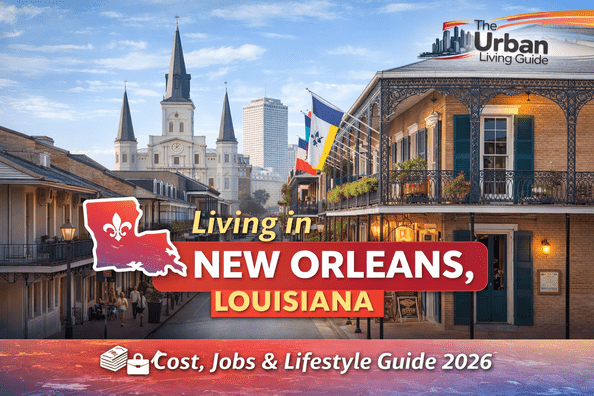
Living in New Orleans, Louisiana: What Life Is Like Beyond Bourbon Street
Thinking about moving to New Orleans? Here’s what you need to know before making the decision. Located along the Mississippi River near the Gulf of Mexico, New Orleans is one of the most culturally rich and unique cities in the United States.
With a population of around 380,000, the city is globally famous for its music, food, festivals, and historic architecture. Known as “The Big Easy”, New Orleans offers a lifestyle unlike any other, blending French, Spanish, and Creole influences.
Many people consider Living in New Orleans, Louisiana because of its vibrant culture, lively atmosphere, and relatively affordable housing compared to other major U.S. cities. The presence of riverfronts, historic districts like the French Quarter, and annual events like Mardi Gras make it truly special.
Watch a recent video by a popular vlogger to understand daily life and vibes in New Orleans.
Information in this guide is compiled from publicly available data, official city resources, economic reports, and local housing databases to ensure accuracy and reliability.
What Makes New Orleans So Unique & Popular
New Orleans stands out for its unmatched cultural identity, music scene, and historic charm. It offers a lifestyle full of energy, tradition, and celebration.
-
- Known as The Big Easy
- Famous for Mardi Gras Festival
- Rich music culture (jazz birthplace)
- Historic architecture and riverfront
- Unique food culture (Creole & Cajun cuisine)
Famous Personalities, Sports & Major Brands from New Orleans
New Orleans has produced legendary artists, athletes, and cultural icons.
-
- Louis Armstrong – Jazz legend
- Lil Wayne – Rapper and global artist
- Ellen DeGeneres (Louisiana connection) – TV personality
Sports culture is strong with:
-
- New Orleans Saints (NFL)
- New Orleans Pelicans (NBA)
Major employers and industries include:
-
- Ochsner Health
- Entergy Corporation
- Tourism and hospitality sector
Best Neighborhoods in New Orleans
New Orleans offers a mix of historic, vibrant, and residential neighborhoods, each with its own personality.
- French Quarter
The heart of the city with historic buildings, nightlife, and tourism. - Garden District
Known for beautiful mansions, tree-lined streets, and historic charm. - Uptown
Popular with families and students, close to universities. - Mid-City
A balanced area with parks, restaurants, and local culture. - Bywater
Trendy and artistic neighborhood with colorful homes and creative vibe.
👉 If you’re not familiar with the location, the map below will help you understand the city’s exact location.
Housing & Rent in New Orleans
New Orleans offers moderate housing costs compared to other major U.S. cities.
As of recent housing data (Zillow, RentCafe, Redfin), average rent:
- Studio – $900–$1,200
- 1 Bedroom – $1,100–$1,500
- 2 Bedroom – $1,500–$2,000
- Family home – $2,500+
Rental figures are based on aggregated listing data and recent market trends.
Job Market & Business Opportunities
New Orleans has a diverse economy driven by tourism, healthcare, energy, and port-related industries. The Port of New Orleans plays a major role in trade and logistics.
Major employers include Ochsner Health, Entergy, and hospitality businesses. The city is also seeing growth in startups and creative industries.
Average salaries typically range between $50,000 and $95,000 depending on profession.
Major Companies & Headquarters in New Orleans
New Orleans hosts several key companies and industries.
-
- Entergy Corporation
- Ochsner Health System
- Port of New Orleans
- Tourism and hospitality businesses
What It’s Really Like Living in New Orleans, Louisiana
Living in New Orleans is vibrant, energetic, and culturally rich. Daily life often includes live music, festivals, and exploring historic neighborhoods.
Residents enjoy riverfront walks, food markets, and local events throughout the year. Living in New Orleans, Louisiana is ideal for those who enjoy culture, nightlife, and a lively environment.
Cost of Living in New Orleans
New Orleans is moderately affordable compared to other large cities.
-
- Rent – $1,200–$1,800
- Utilities – $150–$250
- Groceries – $350–$550
- Transportation – $100–$200
- Healthcare – $250–$400
Compared to cities like Houston or Atlanta, costs are similar or slightly lower.
Transportation & Commute
-
- Streetcars and buses available
- Walkable in central areas
- Average commute time: 20–30 minutes
- Louis Armstrong International Airport nearby
Weather & Environment
New Orleans has a humid subtropical climate.
-
- Hot, humid summers
- Mild winters
- High rainfall
- Hurricane risk
The Mississippi River and coastal location shape its environment.
Popular Hotels, Cafes & Restaurants
New Orleans is famous for its food scene.
-
- Hotel Monteleone
- The Roosevelt New Orleans
- Ace Hotel New Orleans
Local food includes gumbo, jambalaya, and beignets.
Sightseeing & Attractions
-
- French Quarter
- Bourbon Street
- Jackson Square
- Mississippi Riverwalk
- St. Louis Cathedral
Quick Snapshot of Living in New Orleans, Louisiana
-
- Population – ~380,000
- Average Rent – $1,200+
- Average Salary – $50,000–$85,000
- Commute Time – 20–30 minutes
- Climate – Humid subtropical
Education & Universities
New Orleans has several major institutions.
-
- Tulane University
- University of New Orleans
- Loyola University New Orleans
Pros and Cons of Living in New Orleans, Louisiana
Pros 🙂
-
- Rich culture and history
- Vibrant nightlife
- Unique food scene
- Affordable compared to major cities
- Strong community vibe
Cons
-
- High humidity
- Hurricane risk
- Infrastructure issues in some areas
- Crime in certain neighborhoods
Is New Orleans safe to live in? – Safety & Crime Overview
Safety varies by neighborhood in New Orleans. While many areas are safe and vibrant, some parts have higher crime rates, so location choice is important.
Is New Orleans a Good Place to Live?
New Orleans is perfect for those who love culture, music, and a lively environment. It offers a unique lifestyle that cannot be found elsewhere in the U.S.
If you are planning relocation, Living in New Orleans, Louisiana provides a rich cultural experience with a mix of affordability and excitement.
FAQs
Is New Orleans expensive to live in?
New Orleans is moderately affordable compared to other major cities, especially in terms of housing, though costs can vary by neighborhood.
What salary is needed to live comfortably in New Orleans?
A salary of around $55,000 to $90,000 per year is generally sufficient for a comfortable lifestyle.
Is New Orleans a safe place to live?
Safety depends on the neighborhood. Some areas are very safe, while others require caution.
Is New Orleans family-friendly?
Yes, certain neighborhoods like Uptown and Garden District are family-friendly with good amenities.
Can you live in New Orleans without a car?
Yes, public transportation and walkability in central areas make it possible.
🔗 Explore More Cities in Louisiana
Looking beyond New Orleans? The Urban Living Guide has also covered multiple popular cities across Louisiana that you can explore further:
- Living in Baton Rouge, Louisiana
- Living in Shreveport, Louisiana
- Living in Lafayette, Louisiana
- Living in Lake Charles, Louisiana
Want to learn more about New Orleans? Check out these helpful guides:
- Cost of Living in New Orleans, Louisiana
- Pros and Cons of Living in New Orleans, Louisiana
- Best Neighborhoods in New Orleans, Louisiana
Ready to make your decision? Explore our complete guide here: Moving to New Orleans, Louisiana
These city guides provide detailed insights into everyday living, including housing costs, employment opportunities, neighborhoods, commute options, climate, education, local attractions, and key industries shaping each city.
By bringing all these insights together, The Urban Living Guide helps you compare different cities side by side and choose the one that aligns best with your lifestyle, priorities, and long-term goals.