
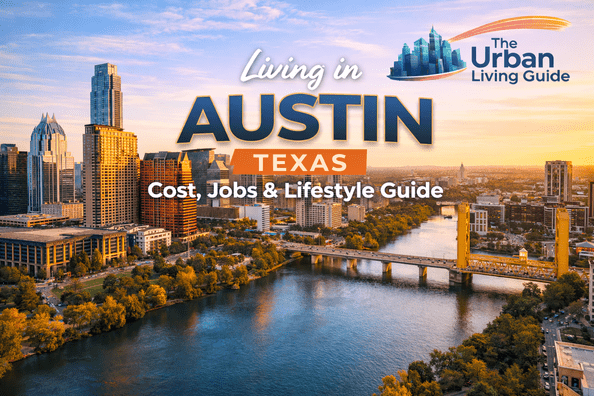
Living in Austin, Texas: What Life Is Like in America’s Fastest-Growing Tech Hub
Living in Austin, Texas has become increasingly popular over the last decade as the city transformed into one of America’s fastest-growing tech hubs. Austin is the capital of Texas and sits along the Colorado River in Central Texas. Known for its live music scene, startup culture, and business-friendly environment, Austin attracts entrepreneurs, tech professionals, students, and families seeking economic opportunity without coastal-level taxation.
At the same time, Living in Austin, Texas requires realistic financial expectations. While housing remains more affordable than California’s major cities, prices have increased significantly due to population growth. Texas has no state income tax, which makes salary retention attractive, but property taxes and rising rent should be carefully considered. This guide explains housing, jobs, lifestyle, transportation, weather, and long-term affordability.
👉 Not sure where the city is? Check the map below to quickly understand its geographic position.
Information in this guide is compiled from publicly available housing data, economic reports, and official city resources.
What Makes Austin So Popular?
Austin’s growth is fueled by a mix of business opportunity and lifestyle appeal.
Key reasons people relocate here:
-
- No state income tax
- Rapidly growing tech industry
- Strong startup ecosystem
- Music and cultural festivals
- Warm climate
- Business-friendly regulations
The city balances corporate growth with a creative identity 🎸
Big Brands & Major Employers in Austin
Austin has become a magnet for large technology companies and corporate expansions.
Major employers include:
-
- Tesla – Gigafactory Texas
- Dell Technologies – Founded in Austin
- Apple Inc. – Major campus expansion
- Oracle Corporation – HQ relocation to Austin
- IBM – Regional operations
The city is often referred to as “Silicon Hills” due to its strong technology presence.
📺 What It’s Really Like Living in Austin
Life in Austin blends work and leisure. Professionals often enjoy outdoor activities after office hours due to the warm climate.
Watch a recent video by a popular vlogger to get a better feel for the city’s real-life vibe.
Residents typically spend weekends exploring:
- Barton Springs Pool
- Lady Bird Lake trails
- Downtown live music venues
- Food truck parks
The culture is casual, entrepreneurial, and youthful.
🏠 Housing & Rent in Austin
Housing costs have risen quickly due to migration from high-cost states.
Average monthly rent ranges:
- Studio: $1,300–$1,600
- 1-bedroom: $1,500–$2,000
- 2-bedroom: $1,900–$2,800
Median home prices remain lower than California but have increased significantly in recent years.
Popular neighborhoods include:
- Downtown
- South Congress
- Mueller
- Round Rock (suburban area)
Rental figures reflect aggregated listing data and recent market trends.
Read our detailed guide on Best Neighborhoods in Austin.
💼 Job Market & Business Opportunities
Austin’s economy is driven by:
- Technology
- Manufacturing
- Education
- Healthcare
- Creative industries
Average salary ranges:
- Entry-level tech roles: $80,000–$110,000
- Mid-level engineers: $110,000–$150,000
- Senior professionals: $160,000+
While salaries may be slightly lower than Silicon Valley, the absence of state income tax improves take-home pay.
💰 Cost of Living in Austin
The cost of living in Austin is above the national average but below major coastal cities.
Typical monthly expenses:
-
- Rent: $1,500–$2,500
- Utilities: $150–$250
- Groceries: $350–$550
- Transportation: $120–$250
- Healthcare: Moderate
To live comfortably while Living in Austin, Texas, individuals often require $85,000–$110,000 annually.
Compared to San Francisco, Austin is significantly more affordable in housing and taxes.
🚗 Transportation & Traffic
Austin is car-dependent in many areas.
Transportation factors:
-
- Limited rail network
- Bus services available
- Increasing traffic congestion
- Served by Austin–Bergstrom International Airport
Commute times have increased due to rapid population growth.
🌤 Weather & Environment
Austin has a warm climate with long summers.
Climate characteristics:
-
- Hot summers (often above 95°F)
- Mild winters
- Occasional storms
- Limited snowfall
Summer heat can be intense, but outdoor lifestyle remains a major draw ☀️
🏨 Hotels, Restaurants & Lifestyle Scene
Austin has a strong hospitality and entertainment culture.
Popular attractions:
-
- Barton Springs Pool
- Texas State Capitol
- Live music venues on Sixth Street
Food culture includes BBQ, Tex-Mex, and diverse food truck communities.
🎓 Education & Universities
Austin is home to:
-
- University of Texas at Austin
The university drives research, innovation, and student population growth.
👍 Pros and Cons of Living in Austin
Pros:
-
- No state income tax
- Growing tech job market
- Strong startup culture
- Lower housing cost than California
- Vibrant music and food scene
Cons:
-
- Rising housing prices
- Hot summers
- Increasing traffic
- Limited public transport
- Competitive job market
Austin suits professionals seeking growth with lower tax burden 😊
🎸 Why Austin Continues to Attract New Residents
Austin has evolved from a college town into one of America’s most influential technology and startup hubs. The city attracts professionals, entrepreneurs, and remote workers with its combination of career opportunities, no state income tax, and a lifestyle built around music, outdoor recreation, and innovation.
Austin may be a great fit if you want:
-
- Career opportunities in technology, startups, AI, and major corporate offices
- Access to the University of Texas at Austin and a highly educated workforce
- A vibrant live music, food, and cultural scene
- Outdoor recreation around Lady Bird Lake, greenbelts, and city parks
- The benefits of living in a state with no personal income tax
You may want to think carefully if you:
-
- Expect low housing costs compared to other Texas cities
- Depend heavily on public transportation
- Dislike traffic congestion and rapid urban growth
- Struggle with long periods of summer heat
👉 For professionals seeking career growth, innovation, and an active lifestyle, living in Austin, Texas remains one of the most compelling relocation choices in the country, particularly for those who value opportunity as much as quality of life.
FAQs
Is Austin expensive?
Austin is more affordable than coastal cities but above the national average. Housing costs have risen significantly.
What salary do you need in Austin?
Around $85,000–$110,000 annually for comfortable living.
Is Austin family-friendly?
Yes, many suburban neighborhoods offer good schools and parks.
Can you live without a car in Austin?
Possible downtown, but difficult in most areas.
Biggest expense in Austin?
Housing is the largest monthly cost.
Is Austin better than Dallas?
Austin offers stronger tech culture, while Dallas has larger corporate presence and slightly lower housing costs.
🔗 Explore More Cities in Texas
If you’re exploring more options beyond Austin, The Urban Living Guide has covered several other popular cities in Texas. You can also check:
- Living in Houston, Texas
- Living in Dallas, Texas
- Living in San Antonio, Texas
- Living in Fort Worth, Texas
These guides give you a complete picture of what it’s like living across different cities, covering everything from cost of living, housing, and job opportunities to neighborhoods, commute, weather, education, popular places, and major employers.
The Urban Living Guide brings together these local insights in one place, helping you compare cities easily and make a confident, well-informed decision based on your lifestyle and goals.
If you want to know more about living in Austin, explore these guides:
- Cost of Living in Austin, Texas
- Pros and Cons of Living in Austin, Texas
- Best Neighborhoods in Austin, Texas
For a complete overview, check our full guide: Moving to Austin, Texas