
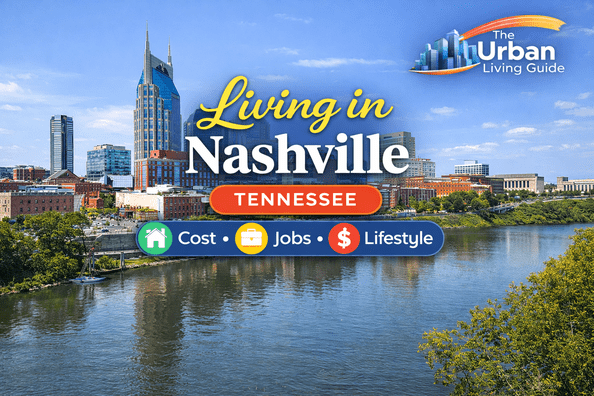
Living in Nashville, Tennessee: Career Growth, Entertainment Culture & Everyday Life
Living in Nashville, Tennessee offers a dynamic mix of music culture, economic opportunity, and Southern charm. Located in the central part of Tennessee along the Cumberland River, Nashville is the state capital and one of the fastest-growing cities in the United States. The city has a population of around 700,000 residents, while the greater Nashville metropolitan area exceeds two million people.
Nashville is globally known as “Music City”, a nickname that reflects its deep connection to the music industry. The city is home to hundreds of recording studios, music venues, and the famous Grand Ole Opry. Country music legends and rising artists alike continue to shape Nashville’s vibrant cultural identity.
Many people are choosing living in Nashville, Tennessee because of the booming job market, lack of state income tax, and thriving entertainment scene. The city has also become a major center for healthcare, technology, and tourism, attracting professionals from across the country.
Watch a recent video by a popular vlogger to understand daily life and vibes in Nashville.
Information in this guide is compiled from publicly available data, official city resources, economic reports, and local housing databases to ensure accuracy and reliability.
What Makes Nashville So Popular
Key reasons why people move here include:
-
- Strong job growth in healthcare, technology, and entertainment
- Famous music culture earning the nickname “Music City”
- No state income tax in Tennessee
- Vibrant nightlife, restaurants, and live music venues
- Rapid population growth and economic expansion
Famous Personalities, Sports & Major Brands from Nashville
Nashville has produced many well-known artists, entrepreneurs, and athletes.
-
- Taylor Swift – Global pop star who started her career in Nashville
- Dolly Parton – Legendary country singer and philanthropist
- Kings of Leon – Grammy-winning rock band formed in Nashville
Sports are also a major part of Nashville’s identity.
Major professional teams include:
-
- Tennessee Titans (NFL)
- Nashville Predators (NHL)
- Nashville SC (MLS)
Major companies connected with Nashville include:
-
- HCA Healthcare
- Bridgestone Americas
- Nissan North America (regional headquarters)
These organizations contribute significantly to the city’s growing economy.
Best Neighborhoods in Nashville
Nashville offers a wide range of neighborhoods depending on lifestyle and budget.
-
- Downtown Nashville
The center of entertainment with music venues, restaurants, and luxury apartments. - The Gulch
A trendy neighborhood known for upscale living, shopping, and nightlife. - East Nashville
Popular with creatives and young professionals due to its arts scene and cafes. - Green Hills
An affluent area with shopping centers and family-friendly neighborhoods. - 12 South
A stylish district known for boutique stores, restaurants, and walkable streets. - Belle Meade
A prestigious residential area with large homes and quiet surroundings.
- Downtown Nashville
👉 If you’re not familiar with this part of the state, the map below will help you understand the city’s exact location.
Housing & Rent in Nashville
Housing costs in Nashville have increased significantly due to rapid population growth and strong demand.
Typical monthly rent estimates include:
-
- Studio apartment – $1,300 – $1,700
- 1 Bedroom – $1,600 – $2,200
- 2 Bedroom – $2,200 – $3,000
- Family home – $3,200 – $4,800
Downtown and popular neighborhoods tend to be more expensive, while suburban areas offer more affordable housing.
Rental figures are based on aggregated listing data and recent market trends.
Job Market & Business Opportunities
Nashville has one of the strongest job markets in the southern United States.
Major industries include:
-
- Healthcare and hospital management
- Music and entertainment
- Tourism and hospitality
- Technology and startups
- Logistics and manufacturing
The city is often referred to as the healthcare capital of the United States due to the large number of healthcare companies headquartered here.
Average salaries typically range between $65,000 and $120,000 depending on profession.
Major Companies & Headquarters in Nashville
Several large corporations operate major offices or headquarters in Nashville.
Key employers include:
-
- HCA Healthcare
- Nissan North America
- Bridgestone Americas
- Amazon Operations Centers
- Oracle (Nashville campus development)
These companies provide thousands of jobs and support Nashville’s economic growth.
What It’s Really Like Living in Nashville, Tennessee
Daily life in Nashville revolves around music, food, and community events. Residents often spend evenings enjoying live performances at local venues or dining at popular Southern restaurants.
The city has an energetic atmosphere with frequent festivals, concerts, and sporting events. Neighborhoods such as East Nashville and The Gulch provide trendy cafes, art galleries, and vibrant nightlife.
For many residents, living in Nashville, Tennessee offers an exciting blend of culture, entertainment, and professional opportunity.
Cost of Living in Nashville
Nashville’s cost of living has increased in recent years but remains competitive compared to many major U.S. cities.
Typical monthly costs include:
-
- Rent – $1,700 – $2,500
- Utilities – $160 – $260
- Groceries – $350 – $520
- Transportation – $150 – $260
- Healthcare – $320 – $500
Compared to nearby cities like Memphis or Knoxville, Nashville generally has higher housing costs due to its popularity and economic growth.
Transportation & Commute
Transportation in Nashville mainly relies on driving.
Public transit options include:
-
- WeGo Public Transit bus system
- Regional commuter routes
- Ride-share services
Average commute time is around 25–28 minutes.
Nashville International Airport offers flights to major domestic and international destinations.
Weather & Environment
Nashville experiences a mild southern climate.
-
- Summer: Hot and humid with temperatures around 85–95°F
- Winter: Mild with occasional cold spells
- Spring/Fall: Pleasant weather with colorful foliage
Parks, lakes, and greenways provide many outdoor recreational opportunities.
Popular Hotels, Cafes & Restaurants
Nashville’s hospitality scene is world-famous.
Popular hotels include:
-
- The Hermitage Hotel
- JW Marriott Nashville
- The Westin Nashville
Dining districts such as Broadway and The Gulch feature restaurants, live music venues, and rooftop bars.
Sightseeing & Attractions
Nashville has numerous attractions for visitors and residents.
-
- Grand Ole Opry
- Country Music Hall of Fame
- Broadway Entertainment District
- Centennial Park & Parthenon Replica
- Ryman Auditorium
These landmarks highlight Nashville’s cultural and musical heritage.
Budget Stay / Hostels
Affordable accommodations are available for travelers and students.
Examples include:
-
- Budget hotels near downtown Nashville
- Hostels near music districts
- Guesthouses in East Nashville
Quick Snapshot of Living in Nashville, Tennessee
| Category | Snapshot |
|---|---|
| Population | Approximately 700,000 residents, with over 2 million in the Greater Nashville metro area |
| Typical Rent | Around $2,000 per month, with premium neighborhoods often costing more |
| Typical Home Price | Generally $450,000–$700,000+, depending on location and property type |
| Average Salary | Roughly $75,000+ per year, with strong earning potential in healthcare, technology, finance, and entertainment |
| Major Industries | Healthcare, Music & Entertainment, Technology, Finance, Tourism |
| Average Commute | About 26 minutes, though peak-hour traffic can be significantly higher |
| Climate | Hot, humid summers and generally mild winters with occasional snow events |
| Best Known For | Live music, the country music industry, and a booming economy |
| Lifestyle | Fast-growing, energetic, career-focused, and packed with entertainment options |
| Outdoor Access | Parks, lakes, greenways, hiking trails, and weekend trips to the Smoky Mountains region |
Education & Universities
Nashville is home to several well-known universities.
-
- Vanderbilt University
- Belmont University
- Tennessee State University
These institutions attract students from across the United States and internationally.
Pros and Cons of Living in Nashville, Tennessee
Pros
-
- Strong job market and economic growth
- No state income tax
- Vibrant music and entertainment culture
- Excellent restaurants and nightlife
- Rapid city development and opportunity 🙂
Cons
-
- Rising housing prices
- Traffic congestion during peak hours
- Hot and humid summers
- Growing population increasing living costs
- Limited rail public transportation
Is Nashville a Good Place to Live?
For many people, living in Nashville, Tennessee offers an exciting mix of opportunity and lifestyle. The city’s strong economy, thriving entertainment industry, and welcoming Southern culture make it one of the fastest-growing destinations in the United States.
Young professionals are drawn to Nashville’s expanding job market, especially in healthcare, technology, and entertainment industries. Entrepreneurs and creatives also find opportunities within the city’s vibrant music and startup scenes.
Families appreciate Nashville’s suburban communities, good schools, and outdoor recreation opportunities. Parks, lakes, and greenways provide many options for weekend activities.
Although housing prices have risen due to rapid growth, Nashville continues to attract residents seeking career opportunities and an energetic urban lifestyle.
FAQs
Is Nashville expensive to live in?
Nashville is moderately expensive compared to other cities in Tennessee.
What salary is needed to live comfortably in Nashville?
Around $70,000–$90,000 per year is generally comfortable.
Is Nashville safe to live in?
Many neighborhoods are safe, but safety varies by area.
What are the best neighborhoods in Nashville?
The Gulch, East Nashville, Green Hills, and 12 South are popular choices.
Can you live in Nashville without a car?
It is possible near downtown but most residents drive.
Does Nashville get snow?
Snowfall is rare and winters are generally mild.
🔗 Explore More Cities in Tennessee
Looking beyond Nashville? The Urban Living Guide has also covered multiple popular cities across Tennessee that you can explore further:
Before moving to Nashville, make sure you check:
- Cost of Living in Nashville, TN
- Pros and Cons of Living in Nashville, TN
- Best Neighborhoods in Nashville, TN
For everything you need in one place, read our complete guide: Moving to Nashville, TN
These city guides provide detailed insights into everyday living, including housing costs, employment opportunities, neighborhoods, commute options, climate, education, local attractions, and key industries shaping each city.
By bringing all these insights together, The Urban Living Guide helps you compare different cities side by side and choose the one that aligns best with your lifestyle, priorities, and long-term goals.