

Living in Augusta, Georgia: What Life Is Really Like Beyond The Masters
Living in Augusta, Georgia offers an incredibly stable, slower-paced lifestyle paired with highly affordable housing and a rapidly expanding cybersecurity and healthcare-driven economy. Nestled directly along the banks of the Savannah River, which forms the natural border between Georgia and South Carolina, Augusta is the state’s third-largest city. With a city population of roughly 200,000 residents and a broader metropolitan reach of over 600,000, it operates as the primary regional hub for the Central Savannah River Area (CSRA).
Nationally, the city is famous for one very specific week in April: hosting the legendary Masters Tournament at the exclusive Augusta National Golf Club. While this brings massive global attention and a sudden influx of wealth to the area, the true local economy is powered year-round by massive institutions like Fort Eisenhower (formerly Fort Gordon), a booming cybersecurity sector, and a sprawling medical district. Families, military personnel, and retiring veterans consistently relocate here, trading the heavy congestion of Atlanta for lower living costs, excellent suburban schools in neighboring counties, and a quiet, deeply Southern environment.
What Makes Augusta So Unique & Popular
Augusta is uniquely defined by its incredible juxtaposition of historic Southern elegance, global sporting prestige, and cutting-edge military intelligence. It provides the deep-rooted charm of a historic riverfront city while aggressively modernizing to become the “Cyber City of the South.” For those looking to explore the city’s events and heritage, the official Visit Augusta portal highlights why the region remains so highly visited and continuously growing.
- The Masters Tournament: The most prestigious golf tournament in the world, defining the city’s global identity and driving a massive, unique local rental economy every April.
- The Cyber Boom: Home to the U.S. Army Cyber Command and the massive Georgia Cyber Innovation and Training Center, drawing tech talent from across the nation.
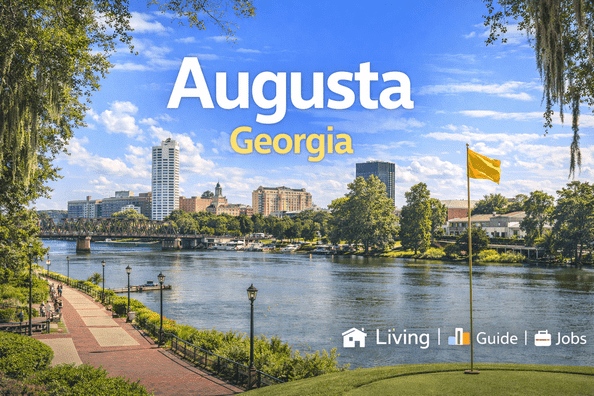
- The Riverwalk: A stunning, multi-level brick pathway running directly along the Savannah River, acting as the heart of downtown community life.
- Medical Powerhouse: One of the most concentrated medical, research, and healthcare education sectors in the Southeastern United States.
Augusta at a Glance: Key Relocation Metrics
Reviewing these baseline statistics provides a clear picture of what moving to the Central Savannah River Area actually entails.
| Metric | Augusta City Data | Regional Context |
|---|---|---|
| City Population | ~200,000 Residents | Over 600,000 in the broader CSRA Metro |
| Median Home Price | $250,000 – $320,000 | Prices significantly higher in Columbia County |
| Average 1BR Rent | ~$1,250 | Highly affordable compared to Atlanta |
| Average Commute | 20 – 25 Minutes | Traffic spikes near Fort Eisenhower gates |
| Top Industries | Defense, Cybersecurity, Healthcare | Manufacturing and Higher Education |
If you are not familiar with this part of the state, the map below will help you understand the city’s exact location.
Famous Personalities, Sports Teams & Major Brands in Augusta
The cultural and economic fingerprint of Augusta stretches far beyond the manicured greens of the local golf club. The city has produced incredibly influential cultural icons, supports a deeply loyal minor league sports fanbase, and serves as the strategic headquarters for massive defense and medical brands.
- Cultural Icons: The city is the undisputed hometown of the “Godfather of Soul,” James Brown, whose legacy is celebrated with a life-sized bronze statue downtown. It is also the hometown of internationally renowned opera singer Jessye Norman and actor Laurence Fishburne.
- Local Sports: The Augusta GreenJackets (a Minor League Baseball affiliate) play at the beautiful, state-of-the-art SRP Park, which sits right across the river in North Augusta, drawing massive community crowds.
- Major Brands: Corporate stability is anchored by major regional employers like Textron Specialized Vehicles (manufacturers of E-Z-GO golf carts), huge facilities for Kellogg’s, and the massive federal presence at Fort Eisenhower.
Job Market & Business Opportunities with Major Employers
Augusta’s economy is incredibly resilient, primarily because it is heavily insulated by federal government spending and a massive healthcare sector. Fort Eisenhower is the economic engine of the region, housing the U.S. Army Cyber Command. This military pivot toward digital warfare has sparked a massive influx of private defense contractors (like BAE Systems and Booz Allen Hamilton) setting up offices nearby.
Beyond defense, healthcare is the largest civilian employer. The city’s medical district is massive, anchored by Augusta University and its associated medical college, which employs thousands of physicians, researchers, and academic staff. While it lacks the Fortune 500 corporate diversity of Atlanta, finding high-paying work in tech or medicine is easier here than ever before.
- Entry-level salaries: Generally range from $40,000 – $55,000.
- Mid-level professional roles: Typically span $60,000 – $85,000.
- Cybersecurity & Medical roles: Cleared tech professionals and medical specialists frequently start at $80,000+ and scale deep into the six figures.
Housing & Real Estate Overview in Augusta
Housing remains one of Augusta’s strongest advantages, offering profound value for your money. In 2026, median home prices within Richmond County hover between $250,000 and $320,000, though prices are noticeably higher in the highly desirable suburban zones of Columbia County (Evans and Martinez).
A unique quirk of local real estate is the “Masters Rental” market. Many residents literally pay for their annual vacations or home renovations by renting out their primary residences for massive premiums during the tournament week. For year-round renters, the market is steady and affordable.
- Studio Apartment: $900 – $1,100
- 1 Bedroom Apartment: $1,100 – $1,400
- 2 Bedroom Apartment: $1,400 – $1,900
- Family Home Rentals: $1,900 – $2,800
Best Neighborhoods in Augusta: Finding Your Ideal Community
Neighborhood selection in the Augusta area completely dictates your lifestyle, school zoning, and daily commute. The table below outlines the most popular residential zones for newcomers.
| Neighborhood / Suburb | Location, Pricing & Community Overview |
|---|---|
| Summerville | The quintessential historic district known as “The Hill.” Features stunning 19th-century mansions, massive tree-lined streets, and close proximity to Augusta University. Premium pricing for historic charm. |
| West Augusta | A well-established, highly convenient suburban sector with direct access to major shopping, dining, and the I-20 corridor. Offers a mix of mid-century ranch homes and larger family estates. |
| Evans (Columbia County) | A highly affluent, rapidly growing suburb just northwest of the city. Universally favored by families for its top-rated public schools, master-planned communities, and low crime rates. |
| Grovetown | The boomtown of the region, located right outside the gates of Fort Eisenhower. Exploding with affordable new-construction homes, making it incredibly popular with young military families and contractors. |
| Downtown Augusta | The heart of local nightlife and tech innovation. Ideal for young professionals seeking modern loft apartments within walking distance of the Cyber Center, Broad Street bars, and the Riverwalk. |
What It’s Really Like Living in Augusta (Daily Life & Vibe)
Life in Augusta generally moves at a comfortable, unhurried pace. Traffic is highly manageable compared to larger metros, and daily life revolves heavily around suburban community events, high school football, and outdoor recreation along the Savannah River and the Augusta Canal.
However, the city’s personality completely transforms in early April. During Masters Week, Washington Road becomes a chaotic, globally focused epicenter of luxury hospitality. For the other 51 weeks of the year, residents enjoy a quiet, community-oriented lifestyle with modest but deeply authentic local entertainment options.
Watch a recent video by a popular vlogger to understand daily life and vibes in Augusta:
Cost of Living in Augusta: Monthly Expenses & Salary Needs
Augusta is celebrated for its affordability, sitting comfortably below the national average. To afford rent, cover car expenses, and enjoy the city’s restaurants, a single professional should target a salary of roughly $55,000+, while households with children generally thrive on $85,000+.
- Average Rent (1BR): ~$1,250 average for decent, updated units.
- Monthly Utilities: $130–$200 (With heavy spikes during the intense summer cooling months).
- Groceries & Dining: Tracks slightly below the national average, making dining out locally quite accessible.
- Transportation: Affordable, primarily due to low local traffic keeping gas consumption low.
- Childcare Costs: Very reasonable for a city of its size, averaging $800–$1,200 per month.
Transportation, Highway Bottlenecks & Airport Connectivity
Augusta is fundamentally car-dependent. While a local bus service exists, coverage is highly limited and not practical for broad suburban commuting. The primary regional arteries are I-20 (connecting to Atlanta and Columbia) and I-520 (Bobby Jones Expressway), which loops around the city.
The average commute is a breeze at 20 to 25 minutes. However, locals know to anticipate severe bottlenecks on Washington Road (especially near the National during spring) and massive delays at the gates of Fort Eisenhower during morning and afternoon shift changes.
For travel, the Augusta Regional Airport (AGS) provides convenient connections to Atlanta and Charlotte, though most residents seeking cheaper international flights will simply make the two-hour drive to Hartsfield-Jackson in Atlanta.
Weather Patterns, Seasonal Realities & Climate Factors
The city sits on the fall line and experiences a classic humid subtropical climate.
- Summers: Long, intensely hot, and incredibly humid. From late May through September, temperatures consistently sit in the 90s.
- Winters: Very mild and short. Freezing temperatures are rare, allowing for year-round golfing and outdoor activities.
- Spring: Visually spectacular (which is exactly why the Masters is hosted when it is) as the azaleas bloom, but it brings an aggressive wave of heavy tree pollen that plagues allergy sufferers.
Education, Schools & Major Universities
Higher education is a major pillar of the local economy. Augusta University operates as a massive public research university and is home to the Medical College of Georgia, fueling the city’s deep healthcare talent pool.
For families, K-12 public school quality is the primary driver of real estate. While Richmond County schools face urban challenges, the neighboring Columbia County School District (serving Evans, Martinez, and Grovetown) is consistently ranked among the highest-performing school systems in the state.
Medical Facilities, Hospitals & Healthcare Systems
The healthcare infrastructure here is world-class. The city serves as a medical destination for eastern Georgia and western South Carolina. Wellstar MCG Health operates the region’s only Level 1 Trauma Center and a dedicated children’s hospital. Furthermore, the Charlie Norwood VA Medical Center and Piedmont Augusta ensure that active military, veterans, and civilians have unmatched access to top-tier specialized care.
Popular Hotels, Cafes, Dining & Culinary Scene
The local culinary scene expertly balances high-end Southern gastronomy with relaxed, everyday comfort food.
- Iconic Stays: The historic Partridge Inn is legendary for its Southern elegance and sweeping balcony views, while the modern Hyatt House Augusta anchors the revitalized downtown grid.
- Cafes & Social Hubs: Coffee shops scattered along Broad Street act as daily gathering points for medical students and cyber professionals.
- Dining Culture: Frog Hollow Tavern offers incredible farm-to-table dining downtown, while casual spots serve up some of the best BBQ and soul food in the state.
Sightseeing, Cultural Spots & Tourist Attractions
While April brings global tourism, residents enjoy beautiful local landmarks all year round.
- The Riverwalk: The Augusta Riverwalk provides miles of serene, brick-paved pathways directly along the Savannah River, hosting weekend markets and concerts.
- Iconic Golf: The gates of Augusta National Golf Club are the most famous attraction in the city, though access is strictly limited.
- Nature & Trails: The Phinizy Swamp Nature Park offers incredible boardwalks through natural wetlands, and the historic Augusta Canal is perfect for kayaking and cycling.
Honest Trade-offs: Pros and Cons of Living in Augusta
Every city has its realities. Here is the unvarnished truth for anyone planning a move to the CSRA in 2026:
Pros:
- Highly affordable housing compared to state and national averages.
- A rapidly growing, highly lucrative cybersecurity and defense job market.
- World-class healthcare access through massive medical hubs.
- Excellent public school districts in the immediate Columbia County suburbs.
- The annual economic boost and prestige of the Masters Tournament.
Cons:
- Highly limited downtown nightlife and big-city entertainment options.
- Intensely hot and oppressively humid summer months.
- Complete car dependency with virtually no functional regional public transit.
- Heavy, frustrating traffic bottlenecks around military base gates.
- Fewer corporate job opportunities outside of defense and healthcare.
Who Is Augusta Ideal For (and Who Should Avoid It?)
Ideal For: Military families stationed at Fort Eisenhower, cleared cybersecurity professionals, medical students and healthcare workers, and budget-conscious families seeking affordable housing and strong suburban schools.
Who Should Avoid It: Young singles seeking a massive, fast-paced dating and nightlife scene, professionals in niche corporate sectors (like high finance or fashion), and anyone completely opposed to driving.
Real Experiences: Perspectives from Long-Term Residents (5 to 10+ Years)
Data provides the foundation, but locals provide the truth. Here is what veteran residents have to say about navigating daily life in the CSRA:
“Everyone asks about the Masters, and yes, renting your house out for 10k a week is amazing. But the reality of living here is avoiding Washington Road at all costs in April, and realizing that the true growth of this city is out in Columbia County. The cyber boom brought a ton of money, but it also means traffic on I-20 near the Grovetown exits has gotten substantially worse.”
[Source: r/Augusta Community Discussions]
“Augusta is a big medical and military town that feels like a small neighborhood. It’s a fantastic place to raise kids—especially if you land in Evans—but it’s not a thrilling city for young people in their twenties. The Riverwalk and Broad Street have gotten much better, but you really move here for the cost of living, not the nightlife.”
[Source: Local Neighborhood Subreddit Threads]
Frequently Asked Questions About Living in Augusta, Georgia
Is Augusta, Georgia expensive?
No, Augusta is generally considered highly affordable compared to other Georgia hubs like Atlanta or Savannah. Housing costs are significantly lower than the national average, making it very budget-friendly.
What salary do you need to live comfortably in Augusta?
A single adult can live comfortably on around $55,000 per year. Families typically need between $80,000 and $90,000, depending on their housing choices in the suburbs.
Is Augusta a safe place to live?
Safety varies significantly by neighborhood. Suburbs in Columbia County (like Evans) are highly rated for safety. As with any mid-sized city, urban awareness is required closer to the downtown core.
Is Augusta family-friendly?
Absolutely. Families flock to the neighboring Columbia County suburbs for their excellent public schools, master-planned communities, and expansive youth sports programs.
What is the biggest expense in Augusta?
Housing is universally the largest expense, though it remains highly manageable. Following housing, transportation costs (car payments, gas) rank second due to total car dependency.
Can you live in Augusta without a car?
Living without a car is exceptionally difficult. Public transportation coverage is minimal, and navigating the sprawling suburbs to reach work or shopping requires a personal vehicle.
Is Augusta better than Atlanta?
It depends on your lifestyle. Augusta is far more affordable, has significantly less traffic, and offers a quiet suburban life. Atlanta provides vastly superior job diversity, massive entertainment, and a fast-paced urban environment.
🔗 Explore More Cities in Georgia
If you’re exploring more options beyond Augusta, The Urban Living Guide has covered several other popular cities in Georgia. You can also check:
- Living in Atlanta, Georgia
- Living in Alpharetta, Georgia
- Living in Savannah, Georgia
- Living in Macon, Georgia
Thinking about Augusta? Here are a few must-read guides:
- Cost of Living in Augusta, Georgia
- Pros and Cons of Living in Augusta, Georgia
- Best Neighborhoods in Augusta, Georgia
And if you’re planning your move, don’t miss our complete guide: Moving to Augusta, Georgia
These guides give you a complete picture of what it’s like living across different cities, covering everything from cost of living, housing, and job opportunities to neighborhoods, commute, weather, education, popular places, and major employers.
The Urban Living Guide brings together these local insights in one place, helping you compare cities easily and make a confident, well-informed decision based on your lifestyle and goals.