

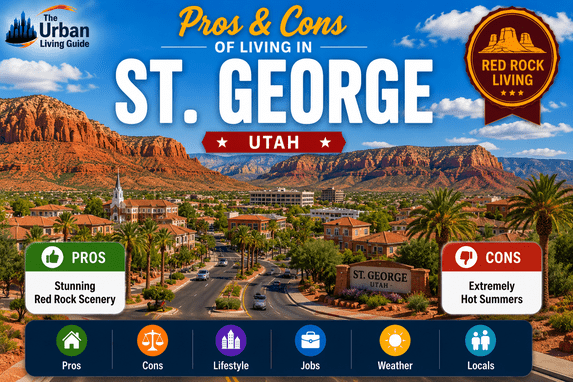
Pros and Cons of Living in St. George in Utah’s Desert Recreation Paradise
If you’re considering a move to Utah, understanding the pros and cons of living in St. George can help you determine whether this rapidly growing desert city matches your lifestyle and retirement goals.
Located in the southwestern corner of Utah near Zion National Park, St. George has become one of the fastest-growing cities in the United States. Known for its red rock scenery, warm climate, outdoor recreation, and retirement-friendly atmosphere, the city attracts retirees, remote workers, entrepreneurs, and outdoor enthusiasts from across the country.
Residents enjoy abundant sunshine, easy access to national parks, and a relaxed lifestyle. However, rising housing costs, extreme summer heat, and rapid population growth have created new challenges for residents.
Watch local St. George relocation videos and neighborhood tours to better understand the real pros and cons of living in St. George before moving.
Whether you’re relocating for retirement, outdoor recreation, remote work, or a warmer climate, this guide covers the real pros and cons of living in St. George.
Pros of Living in St. George
Incredible Year-Round Outdoor Recreation
One of the biggest advantages in the pros and cons of living in St. George is access to outdoor adventure.
The city sits among some of the most spectacular landscapes in the American Southwest.
Popular outdoor destinations include:
-
- Zion National Park
- Snow Canyon State Park
- Sand Hollow State Park
- Red Cliffs National Conservation Area
- Quail Creek State Park
Residents enjoy:
-
- Hiking
- Mountain biking
- Golfing
- Boating
- Off-road recreation
The city’s outdoor lifestyle, red rock scenery, and recreation opportunities are unmatched for many residents.
Warm Climate and Abundant Sunshine
Another major positive in the pros and cons of living in St. George is the weather.
Residents enjoy significantly more sunshine than most parts of the country.
The city offers:
-
- Mild winters
- More than 300 sunny days annually
- Outdoor activities year-round
- Limited snow
- Comfortable winter temperatures
The city’s warm climate, year-round sunshine, and outdoor-friendly environment attract many retirees and remote workers.
Growing Economy and Business Development
St. George is no longer just a retirement destination.
The city continues attracting businesses, entrepreneurs, and professionals.
Major industries include:
-
- Healthcare
- Construction
- Tourism
- Education
- Professional services
Major employers include:
-
- Intermountain Health
- Utah Tech University
- Regional healthcare providers
- Construction firms
- Tourism businesses
The city’s growing economy, business development, and expanding employment opportunities continue fueling growth.
Retirement-Friendly Lifestyle
Many retirees choose St. George for its climate and quality of life.
Residents benefit from:
-
- Active adult communities
- Golf courses
- Healthcare access
- Mild winters
- Outdoor recreation
The city’s retirement-friendly atmosphere, active lifestyle, and community amenities continue attracting older adults.
Beautiful Desert Scenery
Natural beauty is one of St. George’s defining characteristics.
Residents enjoy:
-
- Red rock cliffs
- Desert landscapes
- Scenic drives
- Mountain views
- Unique geological formations
The city’s natural beauty, desert environment, and breathtaking scenery contribute significantly to its appeal.
Lower Crime and Family-Friendly Environment
Many residents appreciate the city’s community atmosphere.
The city offers:
-
- Family-friendly neighborhoods
- Community events
- Strong civic involvement
- Safe residential areas
- Quality parks
The city’s family-oriented culture, community spirit, and quality of life are major attractions.
Cons of Living in St. George
Extreme Summer Heat
One of the biggest downsides in the pros and cons of living in St. George is summer weather.
Temperatures frequently reach triple digits during the hottest months.
Summer challenges include:
-
- Extreme heat
- High cooling costs
- Reduced daytime outdoor activity
- Heat-related health concerns
- Extended hot seasons
Many newcomers underestimate the intensity of Southern Utah summers.
Rising Housing Costs
Rapid growth has significantly impacted affordability.
Housing challenges include:
-
- Rising home prices
- Competitive housing market
- Higher rental rates
- Limited inventory
- Increased demand from retirees
Housing remains one of the most commonly discussed concerns among residents.
Limited Water Resources
Water availability is an ongoing concern throughout the Southwest.
Environmental concerns include:
-
- Drought conditions
- Water restrictions
- Conservation efforts
- Population growth pressures
- Long-term sustainability challenges
Residents are increasingly aware of regional water issues.
Smaller Job Market Than Major Cities
Although growing, St. George’s economy remains smaller than major metropolitan areas.
Career challenges include:
-
- Fewer corporate headquarters
- Limited executive opportunities
- Smaller technology sector
- Reduced industry diversity
Some professionals may find more opportunities elsewhere.
Tourism Can Increase Congestion
Tourism contributes significantly to the local economy.
Common concerns include:
-
- Seasonal traffic
- Crowded parks
- Tourist congestion
- Busy recreation areas
- Increased seasonal demand
Popular destinations can become especially crowded during peak travel periods.
Limited Big-City Amenities
While St. George offers many attractions, it lacks some urban amenities.
Residents may notice fewer:
-
- Major professional sports teams
- Large concert venues
- International airports
- Major cultural institutions
People seeking a major metropolitan lifestyle may find the city somewhat limited.
Final Thoughts on the Pros and Cons of Living in St. George
Understanding the pros and cons of living in St. George is important before making a relocation decision.
The city stands out for its outdoor lifestyle, year-round sunshine, retirement-friendly environment, natural beauty, and growing economy. At the same time, residents should prepare for extreme summer heat, rising housing costs, water concerns, and a smaller job market.
For retirees, outdoor enthusiasts, remote workers, and families seeking a warmer climate and access to some of America’s most spectacular landscapes, St. George remains one of Utah’s most desirable places to live.
| Pros | Cons |
| Incredible outdoor recreation | Extreme summer heat |
| Warm climate and sunshine | Rising housing costs |
| Growing economy | Water resource concerns |
| Retirement-friendly lifestyle | Smaller job market |
| Beautiful desert scenery | Limited big-city amenities |
FAQs
Is St. George a good place to live?
Many residents consider St. George one of the best places to live in Utah because of its climate, outdoor recreation, and high quality of life.
What is St. George known for?
St. George is known for Zion National Park, red rock landscapes, golf courses, outdoor recreation, and its growing retirement community.
Is St. George expensive to live in?
Housing costs have risen considerably due to population growth and demand, although costs may still be lower than many western coastal cities.
Does St. George get snow?
Snow is relatively rare in the city itself. Winters are generally mild compared to most parts of Utah.
Do you need a car in St. George?
Yes. Most residents rely on personal vehicles for commuting, errands, and accessing outdoor recreation areas.
More Utah Living Guides Worth Reading
Read our full guide on living in St. George, Utah, and make sure you also check:
- Living in St. George, Utah
- Cost of Living in St. George, Utah