

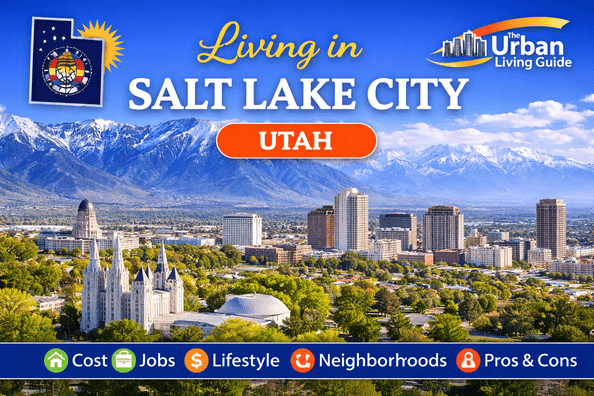
Living in Salt Lake City, Utah in 2026: The Complete Local Guide to Wasatch Mountain Peaks, Silicon Slopes Innovation, and Great Salt Lake Basin Living
Stretching across the high-desert valley floor where the towering, snow-capped peaks of the Wasatch Mountains dramatically meet the western edge of the Great Salt Lake, living in Salt Lake City, Utah offers an extraordinary fusion of alpine wilderness access, a booming high-tech economic engine, and rich cultural heritage. As the state capital and largest municipality in Utah with a population of approximately 200,000 residents (anchoring a massive metropolitan basin exceeding 1.3 million people), Salt Lake City delivers world-class urban sophistication paired with immediate backyard access to some of the finest skiing and hiking on earth.
Universally celebrated as the core economic and cultural hub of Utah, Salt Lake City commands a dynamic identity shaped by pioneering history, monumental outdoor recreation, and the rapid expansion of the tech-driven “Silicon Slopes” region. Whether you are riding the TRAX light rail system past the historic architecture of Temple Square, exploring the trendy cafes and boutique shops of Sugar House, or catching fresh powder in Big Cottonwood Canyon, life here delivers an active, health-conscious, and economically thriving standard of living. Local municipal governance, public safety programs, and urban development initiatives are centrally coordinated through the official Salt Lake City Government Portal under the direction of city leadership.
If you’re not familiar with the area, take a look at the map below to understand where the city is located.
Why Salt Lake City Has Evolved Into the Crown Jewel of the Intermountain West
Over recent decades, Salt Lake City has captured international acclaim as a premier destination for tech entrepreneurs, remote professionals, winter sports enthusiasts, and families seeking high-altitude adventure without sacrificing urban career growth. Key factors driving its sustained popularity include:
- Unmatched Mountain and Ski Resort Proximity: Immediate access to world-class alpine resorts, rugged hiking trails, and majestic canyons like Little Cottonwood Canyon and Big Cottonwood Canyon. Explore regional tourism initiatives via the Visit Salt Lake Official Tourism Portal.
- Booming Silicon Slopes Economy: A dynamic job market fueled by software giants, venture-backed startups, and expanding corporate headquarters.
- Exceptional Quality of Life and Clean Infrastructure: A meticulously organized urban core featuring wide grid streets, pristine public parks, and a health-focused community culture.
- Year-Round Outdoor Recreation: Endless opportunities for alpine skiing, mountain biking, rock climbing, and paddleboarding across Utah’s breathtaking public lands.
Salt Lake City At a Glance: Key Living Metrics
Famous Personalities, Local Icons & Major Brands in Salt Lake City
Salt Lake City has a proud history of nurturing legendary entertainers, Pro Football Hall of Famers, elite winter athletes, and global technology innovators:
- Donny Osmond: The internationally celebrated singer, actor, and entertainer who spent decades performing and maintaining deep family roots in Utah (Donny Osmond Official Portal).
- Steve Young: The legendary Pro Football Hall of Fame quarterback and Super Bowl MVP whose collegiate and professional legacy connects him deeply to the region (Steve Young Official Legacy Portal).
- Roseanne Barr: The acclaimed comedian, actress, and writer who spent significant creative years residing in the Salt Lake City area.
- Utah Jazz: The electrifying NBA franchise driving passionate sports fandom and packed home crowds at the Delta Center (Utah Jazz Official Portal).
- Qualtrics & Adobe (Utah Operations): Major technological juggernauts driving massive corporate influence and software innovation across the Silicon Slopes (Qualtrics Official Portal).
Job Market & Business Opportunities with Major Employers
The employment landscape in Salt Lake City offers robust professional diversity, high average salaries, and rapidly expanding innovation sectors:
- Software Engineering and Tech Innovation: Anchored by the Silicon Slopes corridor, supporting thousands of engineering, data science, and cloud computing careers. Track regional economic indicators via the Utah Department of Workforce Services.
- Healthcare and Medical Research: World-class research hospitals and clinical health systems delivering extensive biomedical and clinical employment.
- Finance, Banking and Corporate Services: Home to major investment banking operations, regional credit hubs, and corporate financial headquarters.
- Outdoor Recreation and Tourism: A thriving sector supporting winter sports manufacturing, hospitality, and outdoor gear innovation.
Housing & Real Estate Overview in Salt Lake City
Navigating the real estate market in Salt Lake City requires understanding its valley geography, historic preservation, and rapid population growth:
- Diverse Architectural Stock: Features charming historic Victorian homes in The Avenues, bungalow classics in Sugar House, luxury urban high-rises Downtown, and master-planned developments in Daybreak. Track property assessments via the Salt Lake County Assessor Portal.
- Market Valuations: Strong migration, geographical mountain barriers, and high economic desirability have elevated property values and rental rates over past decades, rewarding long-term homeowners.
- Rental Market Inventory: Average monthly rent spans $1,200 to $1,500 for studio units, $1,400 to $1,800 for one-bedroom apartments, $1,800 to $2,400 for two-bedroom properties, and $2,800+ for single-family home rentals.
- Suburban Alternatives: Surrounding cities like Sandy and Draper offer alternative housing options with strong transit connections and family amenities.
Best Neighborhoods in Salt Lake City: Finding Your Ideal Community
- Downtown Salt Lake City
- Vibrant urban core packed with corporate offices, fine dining, the Eccles Theater, and energetic nightlife venues. Features modern high-rise condominiums, luxury loft rentals, and premium urban valuations.
- Sugar House
- Trendy, highly walkable neighborhood celebrated for its leafy parks, independent coffee shops, craft breweries, and local boutiques. Features historic character homes, modern multi-family builds, and dynamic community demand.
- The Avenues
- Historic residential grid nestled against the foothills, offering magnificent panoramic views of the entire Salt Lake Valley. Features beautifully restored Victorian homes, vintage character properties, and stable valuations.
- Daybreak
- Master-planned modern community featuring artificial lakes, community parks, neighborhood trails, and family-friendly infrastructure. Features contemporary home builds, townhomes, and strong suburban demand.
- Capitol Hill
- Picturesque hillside neighborhood packed with historic architecture, offering direct proximity to the Utah State Capitol. Features historic homes, sweeping valley views, and competitive residential pricing.
Watch a recent video by a popular vlogger to understand daily life and vibes in Salt Lake City.
What It’s Really Like Living in Salt Lake City (Daily Life & Vibe)
Daily life in Salt Lake City is defined by an active, health-conscious, and outdoor-driven rhythm that balances professional ambition with alpine recreation:
- Active Mountain Weekend Routines: Residents spend winter weekends skiing powder in Little Cottonwood Canyon and summer weekends hiking alpine ridges or paddleboarding on Pineview Reservoir. Explore park guidelines via the Salt Lake City Parks and Recreation Portal.
- Downtown Cafe and Culinary Scene: Mornings begin at artisan coffee roasters in downtown, followed by afternoon visits to local farm-to-table bistros and outdoor markets.
- Arts and Cultural Engagement: Participating in independent film screenings, attending Utah Symphony performances, and exploring local art galleries.
- Social Atmosphere: Friendly, athletic, intellectually curious, and deeply connected to environmental conservation and community wellness.
Cost of Living in Salt Lake City: Monthly Expenses & Salary Needs
Transportation, Commute Dynamics & Transit Realities
Salt Lake City provides exceptional public transportation infrastructure that makes regional transit highly efficient:
- TRAX Light Rail System: Rapid transit light rail lines connecting downtown Salt Lake City directly to the airport, university, and surrounding suburbs (UTA TRAX Light Rail Portal).
- UTA Bus Networks: Comprehensive regional bus routes linking residential wards across the Salt Lake Valley.
- Highway Connectivity: Excellent freeway access via Interstate 15 and Interstate 80, ensuring smooth regional travel.
- Commute Times: Average daily commutes hover around a manageable 20 to 25 minutes during standard hours.
- Aviation Convenience: Proximity to the award-winning, newly modernized Salt Lake City International Airport (SLC) for global travel (SLC Airport Official Portal).
Weather Patterns, Seasonal Realities & Climate Factors
The environmental rhythm of Salt Lake City follows a classic semi-arid climate featuring hot summers and snowy winters:
- Hot, Dry Summers: Summer daytime high temperatures routinely average 85°F to 95°F with very low humidity, providing magnificent weather for evening outdoor dining and mountain hiking. Track active forecasts via the National Weather Service Salt Lake City Portal.
- Cold, Snowy Winters: Winter seasons bring brisk temperatures and legendary snowfall (“The Greatest Snow on Earth”) across surrounding ski resorts.
Education, Schools & Major Universities
Educational infrastructure stands as a premier anchor for academic excellence, scientific research, and workforce development:
- University of Utah: A prominent public research university offering comprehensive undergraduate, graduate, and medical programs (University of Utah Official Portal).
- Salt Lake Community College (SLCC): Respected comprehensive community college providing career training and technical education (SLCC Official Portal).
- Salt Lake City School District: Operating numerous neighborhood schools focused on academic achievement and student enrichment.
Medical Facilities, Hospitals & Healthcare Systems
Healthcare infrastructure in Salt Lake City is advanced, highly specialized, and anchored by premier regional medical networks:
- University of Utah Health: Premier academic medical center and level-one trauma facility delivering groundbreaking clinical care and research (University of Utah Health Portal).
- Intermountain Health: Major regional hospital network operating comprehensive acute care hospitals, emergency rooms, and specialty clinics.
- Specialized Outpatient Centers: Extensive network of community health clinics and specialized medical practices across every neighborhood ward.
Popular Hotels, Cafes, Dining & Culinary Scene
The hospitality and culinary identity of Salt Lake City reflects historic luxury hotel elegance, artisan coffee mastery, and world-class culinary traditions:
- Grand America Hotel: Sophisticated luxury hotel located in downtown Salt Lake City, featuring striking European design, fine dining, and refined hospitality (Grand America Hotel Portal).
- Little America Hotel & Hyatt Regency Salt Lake City: Premier accommodations offering timeless elegance and sweeping mountain views near convention centers.
- Local Cafes & Bistros: Acclaimed neighborhood cafes, artisan roasters, and inventive restaurants serving innovative local flavors.
Sightseeing, Cultural Spots & Tourist Attractions
Landmark cultural institutions and natural wonders significantly enhance the daily quality of life for local residents:
- Temple Square: Historic 35-acre cultural center housing iconic architecture, beautiful gardens, and the Salt Lake Temple.
- Big Cottonwood Canyon & Little Cottonwood Canyon: Breathtaking alpine canyons providing world-class hiking, rock climbing, and ski resorts like Alta and Snowbird (Big Cottonwood Canyon Portal).
- Red Butte Garden & Utah State Capitol: Sprawling botanical gardens and historic government architecture offering panoramic valley vistas (Red Butte Garden Portal).
Regional Trade-offs: Pros and Cons of Living in Salt Lake City
Who Is Salt Lake City Ideal For — And Who Should Avoid It?
Who Salt Lake City Is Ideal For
- Outdoor and Ski Enthusiasts: Residents who prioritize weekend powder skiing, alpine hiking, rock climbing, and mountain biking.
- Tech and Venture Professionals: Workers pursuing robust careers across Silicon Slopes software firms and healthcare research.
- Families and Quality Seekers: People looking for safe neighborhoods, excellent schools, and a health-focused community.
- Urban Commuters: Individuals who value light rail transit and pedestrian-friendly urban living near the mountains.
Who Should Avoid Salt Lake City
- Winter Inversion Avoiders: Individuals sensitive to seasonal air quality inversions trapped in the high-desert mountain basin.
- Ultra-Low Budget Homebuyers: Buyers seeking bargain real estate markets with minimal living costs.
- Mega-City Nightlife Seekers: Residents looking for massive 24-hour ultra-dense metropolitan club districts.
- Those Intolerant of Local Cultural Norms: People uncomfortable navigating unique state regulations and conservative cultural traditions.
Real Experiences: Perspectives from Long-Term Residents (5 to 10+ Years)
“Moving to Sugar House eight years ago after taking a tech role in Silicon Slopes was the best lifestyle change I could have made. Being able to leave my office and be hitting fresh powder in Big Cottonwood Canyon within thirty minutes is an absolute dream. Housing has gotten more expensive, but the outdoor lifestyle and the friendly community make it impossible to leave.”
[Source: r/saltlakecity Community Discussions — u/WasatchPowderSkier, resident of 9 years]
“The big reality check for newcomers is learning to navigate winter inversions and adjusting to the housing market demand. However, the trade-off is completely worth it. The healthcare system is world-class, the schools in the valley are fantastic, and having the mountains as your daily backdrop changes your entire outlook on life. It’s a wonderfully unique western city.”
[Source: Local Resident Panels & Community Forums — Marcus L., The Avenues homeowner of 11 years]
Frequently Asked Questions About Living in Salt Lake City, Utah
Is Salt Lake City expensive to live in compared to other U.S. cities?
Salt Lake City maintains a cost of living moderately above the national average, though it remains more affordable than coastal tech hubs like San Francisco or Seattle.
What level of annual salary do individuals need to live comfortably in Salt Lake City?
Most single professionals require an annual salary of $70,000 to $120,000 to comfortably cover rent, utilities, transportation, and discretionary spending in popular neighborhoods.
Can residents successfully live in Salt Lake City without owning a personal vehicle?
Yes. Many residents live car-lite by utilizing the TRAX light rail system, UTA buses, and bike paths, especially in central neighborhoods like Downtown and Sugar House.
What are the best residential neighborhoods to consider in Salt Lake City?
Top neighborhoods include Downtown for urban convenience, Sugar House for trendy local walkability, The Avenues for historic hillside charm, and Daybreak for family suburban living.
How does commuting work for professionals working across Salt Lake City?
Commuters primarily utilize Interstate 15, Interstate 80, and TRAX light rail lines, enjoying average daily commute times of around 20 to 25 minutes during standard hours.
What are the primary natural and cultural highlights of Salt Lake City?
Residents enjoy exploring Temple Square, hiking Big Cottonwood Canyon, skiing Wasatch mountain resorts, and visiting Red Butte Garden.
🔗 Explore More Cities in Utah
If you’re exploring more options beyond Salt Lake City, The Urban Living Guide has covered several other popular cities in Utah. You can also check:
- Living in Provo, Utah
- Living in Ogden, Utah
- Living in St. George, Utah
- Living in West Valley City, Utah
Thinking about Salt Lake City? Here are a few must-read guides:
- Cost of Living in Salt Lake City, Utah
- Pros and Cons of Living in Salt Lake City, Utah
- Best Neighborhoods in Salt Lake City, Utah
And if you’re planning your move, don’t miss our complete guide: Moving to Salt Lake City, Utah
These guides give you a complete picture of what it’s like living across different cities, concluding everything from cost of living, housing, and job opportunities to neighborhoods, commute, weather, education, popular places, and major employers.
The Urban Living Guide brings together these local insights in one place, helping you compare cities easily and make a confident, well-informed decision based on your lifestyle and goals.