

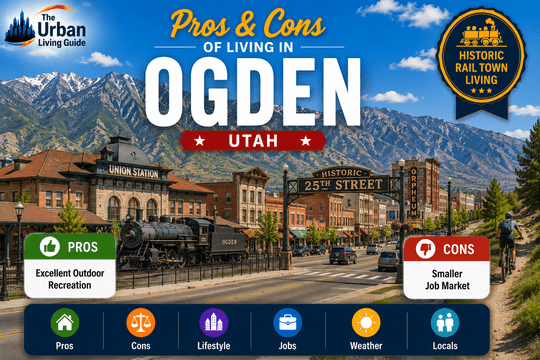
Pros and Cons of Living in Ogden Beneath the Wasatch Mountains
If you’re considering a move to Utah, understanding the pros and cons of living in Ogden can help you determine whether this historic mountain city fits your lifestyle and career goals.
Located north of Salt Lake City and framed by the stunning Wasatch Mountains, Ogden is one of Utah’s most underrated cities. Once known as a major railroad hub of the American West, Ogden has transformed into a growing outdoor recreation destination with affordable housing, expanding employment opportunities, and easy access to some of Utah’s best skiing and hiking.
Residents enjoy mountain views, outdoor adventure, and a lower cost of living than some nearby Utah cities. However, challenges such as winter air-quality concerns, rising housing prices, and limited nightlife can affect the overall experience.
Watch local Ogden relocation videos and neighborhood tours to better understand the real pros and cons of living in Ogden before moving.
Whether you’re relocating for outdoor recreation, affordability, family life, or career opportunities, this guide covers the real pros and cons of living in Ogden.
Pros of Living in Ogden
Incredible Access to Mountains and Outdoor Recreation
One of the biggest advantages in the pros and cons of living in Ogden is access to outdoor adventure.
Few cities in the United States place residents so close to world-class recreation opportunities.
Popular outdoor destinations include:
-
- Snowbasin Resort
- Powder Mountain
- Ogden Canyon
- Pineview Reservoir
- Waterfall Canyon Trail
Residents enjoy:
-
- Hiking
- Mountain biking
- Skiing
- Snowboarding
- Boating
The city’s outdoor lifestyle, mountain access, and year-round recreation opportunities are among its strongest attractions.
More Affordable Than Salt Lake City
Another major positive in the pros and cons of living in Ogden is relative affordability.
While housing costs have increased throughout Utah, Ogden generally remains more affordable than many communities closer to Salt Lake City.
The city offers:
-
- Lower home prices than many Wasatch Front cities
- More affordable rentals
- Better value for larger homes
- Family-friendly neighborhoods
- Lower entry costs for homebuyers
Many newcomers view Ogden as a practical alternative to more expensive Utah markets.
Strong Transportation and Commuter Access
Ogden has long been a transportation hub.
Today, residents benefit from strong regional connectivity.
Residents enjoy access to:
-
- Interstate 15
- FrontRunner commuter rail
- Salt Lake City
- Hill Air Force Base
- Regional employment centers
This accessibility helps support commuting and economic growth.
Historic Downtown and Railroad Heritage
Ogden has one of the most distinctive downtown districts in Utah.
Popular attractions include:
-
- Historic 25th Street
- Union Station
- Local restaurants
- Art galleries
- Community festivals
The city’s historic character, railroad heritage, and revitalized downtown continue attracting visitors and residents alike.
Growing Job Market
The economy continues expanding thanks to a mix of industries.
Major employers include:
-
- Hill Air Force Base
- Intermountain Health
- Weber State University
- Manufacturing companies
- Aerospace contractors
The city’s growing job market, defense sector, and healthcare employment opportunities support long-term growth.
Less Crowded Than Salt Lake City
Many residents appreciate the city’s smaller scale.
Residents benefit from:
-
- Less congestion
- Smaller crowds
- Easier commuting
- More relaxed pace
- Better access to recreation
This balance between urban amenities and outdoor living appeals to many families and retirees.
Cons of Living in Ogden
Winter Air Quality Issues
One of the biggest downsides in the pros and cons of living in Ogden is seasonal air quality.
Like other communities along the Wasatch Front, Ogden experiences winter inversions.
Air-quality concerns include:
-
- Pollution buildup
- Reduced visibility
- Winter smog
- Respiratory concerns
- Seasonal air-quality alerts
These conditions can be frustrating during colder months.
Rising Housing Costs
Although still relatively affordable, housing costs continue increasing.
Housing challenges include:
-
- Rising home prices
- Growing rental costs
- Competitive housing market
- Limited inventory
- Increased demand
Affordability remains a strength, but the gap is narrowing.
Limited Nightlife and Entertainment
While Ogden has improved its entertainment options, it remains smaller than nearby metro areas.
Residents may notice fewer:
-
- Major concert venues
- Large nightlife districts
- Professional sports events
- Big-city entertainment options
Many residents travel to Salt Lake City for larger events.
Hot Summers and Dry Conditions
Utah’s climate can surprise some newcomers.
Summer challenges include:
-
- High temperatures
- Dry weather
- Wildfire smoke risks
- Water conservation concerns
- Increased cooling costs
Residents often need time to adapt to the desert climate.
Smaller Economy Than Salt Lake City
Although growing, Ogden’s economy remains smaller than nearby metropolitan areas.
Common concerns include:
-
- Fewer corporate headquarters
- Limited executive positions
- Smaller professional networks
- Less industry diversity
Some professionals eventually seek opportunities elsewhere along the Wasatch Front.
Public Transportation Still Has Limitations
While commuter rail exists, many residents continue relying on personal vehicles.
Transportation challenges include:
-
- Car dependency
- Limited local routes
- Regional commuting requirements
- Transit coverage gaps
Most households still find vehicle ownership necessary.
Final Thoughts on the Pros and Cons of Living in Ogden
Understanding the pros and cons of living in Ogden is important before making a relocation decision.
The city stands out for its outdoor lifestyle, mountain access, historic downtown, growing job market, and relative affordability compared to other Utah cities. At the same time, residents should prepare for winter air-quality concerns, rising housing costs, and a smaller entertainment scene.
For outdoor enthusiasts, families, military personnel, and professionals seeking a balance between affordability and recreation, Ogden remains one of Utah’s most appealing places to live.
| Pros | Cons |
| Incredible outdoor recreation | Winter air-quality issues |
| More affordable than Salt Lake City | Rising housing costs |
| Historic downtown | Limited nightlife |
| Growing job market | Hot, dry summers |
| Strong commuter access | Smaller economy |
FAQs
Is Ogden a good place to live?
Many residents consider Ogden one of Utah’s best-kept secrets because of its outdoor recreation opportunities, affordability, and mountain scenery.
What is Ogden known for?
Ogden is known for Historic 25th Street, Union Station, its railroad heritage, and easy access to Snowbasin Resort and other outdoor destinations.
Is Ogden cheaper than Salt Lake City?
Generally, yes. Housing costs and living expenses are often lower than many neighborhoods in the Salt Lake City metro area.
Does Ogden get a lot of snow?
Yes. Winters bring snowfall, particularly in nearby mountain areas, making the city popular among skiers and snowboarders.
Do you need a car in Ogden?
Most residents own cars, although commuter rail and public transportation options are available for some routes.
Discover More Utah Living Guides
Read our full guide on living in Ogden, Utah, and make sure you also check:
- Living in Ogden, Utah
- Cost of Living in Ogden, Utah