

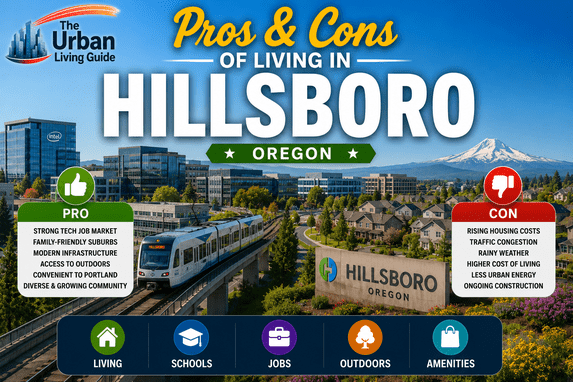
Pros and Cons of Living in Hillsboro Near Oregon’s Growing Tech and Suburban Communities
If you’re considering a move to Oregon, understanding the pros and cons of living in Hillsboro can help you decide whether this rapidly growing tech-focused city fits your lifestyle and career goals.
Located west of Portland, Hillsboro is known for its strong tech industry, family-friendly suburbs, modern infrastructure, and convenient access to both urban amenities and outdoor recreation. The city attracts tech professionals, families, remote workers, and residents looking for suburban comfort with strong job opportunities.
At the same time, residents also deal with rising housing costs, traffic congestion, rainy weather, and increasing population growth throughout the metro area.
Watch local Hillsboro relocation videos and neighborhood tours to better understand the real pros and cons of living in Hillsboro before moving.
Whether you’re relocating for technology careers, suburban living, or access to the Portland metro region, this guide covers the real pros and cons of living in Hillsboro.
Pros of Living in Hillsboro
Strong Technology and Silicon Forest Job Market
One of the biggest advantages in the pros and cons of living in Hillsboro is the city’s thriving technology industry.
Often called part of Oregon’s Silicon Forest, Hillsboro is home to major tech employers and manufacturing facilities.
Major employers in Hillsboro include:
-
- Intel
- Genentech
- Nike nearby
- ASML
- Salesforce regional operations
The city provides strong employment opportunities in:
-
- Technology
- Engineering
- Semiconductor manufacturing
- Healthcare
- Research
For professionals in tech industries, Hillsboro remains one of the strongest job markets in Oregon.
Family-Friendly Suburban Living
Another major positive in the pros and cons of living in Hillsboro is the city’s family-friendly suburbs, modern neighborhoods, and cleaner residential environment.
Compared to central Portland, many areas feel quieter and more community-oriented.
The city offers:
-
- Newer residential developments
- Community parks
- Good schools
- Spacious neighborhoods
- Family-focused amenities
Families often appreciate the balance between suburban comfort and nearby urban access.
Modern Infrastructure and Clean Environment
Because of rapid development and economic growth, Hillsboro has modern infrastructure compared to many older cities.
Residents benefit from:
-
- Well-maintained roads
- Modern shopping centers
- New apartment communities
- Business parks
- Expanding public services
The city also feels cleaner and more organized than many dense urban environments.
Access to Portland and Outdoor Recreation
Another advantage in the pros and cons of living in Hillsboro is the city’s location.
Residents have convenient access to:
-
- Downtown Portland
- The Oregon Coast
- Wine country areas
- Hiking trails
- Forest recreation
The combination of suburban living and nearby outdoor activities appeals to many residents throughout the Pacific Northwest.
Strong Public Transportation Connections
Compared to many suburban cities, Hillsboro has relatively strong transit connections to nearby metro areas.
The MAX Light Rail system connects parts of Hillsboro directly to Portland and surrounding communities.
Transportation benefits include:
-
- Light rail access
- Public transit options
- Bike-friendly areas
- Regional commuter routes
This helps some residents reduce dependence on daily driving.
Diverse Community and Continued Growth
Hillsboro continues to attract people from across the country and internationally because of its growing economy.
The city has become increasingly diverse, with expanding cultural communities, restaurants, and local businesses.
Growth throughout the region has also supported:
-
- New housing
- Retail expansion
- Restaurant development
- Improved amenities
Many residents appreciate the city’s modern and evolving atmosphere.
Cons of Living in Hillsboro
Rising Housing Costs
One of the biggest downsides in the pros and cons of living in Hillsboro is the rising cost of housing.
As technology companies continue expanding, home prices and rental costs have increased significantly.
Common housing challenges include:
-
- Expensive home prices
- Rising rent costs
- Competitive housing market
- Limited affordable inventory
While still somewhat cheaper than parts of California, affordability has become more difficult for some residents.
Traffic Congestion and Population Growth
Rapid development has also created more traffic congestion throughout the region.
Major commuter routes near Highway 26 and surrounding roads can become crowded during peak travel hours.
Traffic-related concerns include:
-
- Rush-hour congestion
- Longer commute times
- Construction delays
- Population-related traffic growth
Commuting toward Portland can become frustrating during busy periods.
Rainy and Cloudy Weather
Like much of western Oregon, Hillsboro experiences frequent rain and cloudy skies during much of the year.
For newcomers from sunnier states, the weather can feel repetitive during fall and winter.
Weather challenges include:
-
- Long rainy seasons
- Gray skies
- Wet roads
- Seasonal mood changes
- Limited winter sunshine
Although summers are generally pleasant, winters can feel gloomy for some residents.
Higher Cost of Living Than Smaller Oregon Cities
Compared to smaller Oregon communities, Hillsboro has a higher overall cost of living because of its strong economy and housing demand.
Residents may pay more for:
-
- Housing
- Utilities
- Dining
- Childcare
- Daily expenses
The growing tech economy continues pushing costs upward in several neighborhoods.
Less Urban Energy Than Portland
Although Hillsboro offers shopping and restaurants, some residents may find the city quieter and less energetic than downtown Portland.
People looking for:
-
- Large nightlife districts
- Major entertainment venues
- Big-city culture
- Dense urban living
may feel somewhat limited living in suburban areas.
Ongoing Construction and Rapid Development
Because the city continues growing quickly, many parts of Hillsboro experience ongoing development and construction.
Residents sometimes deal with:
-
- Road construction
- Expanding subdivisions
- Traffic detours
- Noise from development projects
Growth benefits the economy, but rapid expansion can also create temporary inconvenience.
Final Thoughts on the Pros and Cons of Living in Hillsboro
Understanding the pros and cons of living in Hillsboro is important before making a relocation decision.
The city stands out for its strong tech industry, family-friendly suburbs, modern infrastructure, and access to both Portland and outdoor recreation throughout the Pacific Northwest. At the same time, residents should prepare for rising housing costs, traffic congestion, rainy weather, and rapid population growth.
For technology professionals, families, and commuters seeking suburban living with strong career opportunities, Hillsboro continues to be one of the most attractive places to live in Oregon.
FAQs
Is Hillsboro a good place to live?
Many residents consider Hillsboro one of the best suburban cities in Oregon because of its technology jobs, clean neighborhoods, and family-friendly environment.
Why is Hillsboro called Silicon Forest?
The city is part of Oregon’s “Silicon Forest” because of its strong concentration of technology and semiconductor companies like Intel.
Is Hillsboro expensive to live in?
Housing costs in Hillsboro have increased significantly in recent years, especially due to tech industry growth and population demand.
Does Hillsboro get a lot of rain?
Yes, Hillsboro experiences frequent rain and cloudy weather during much of the year, especially from fall through spring.
Do you need a car in Hillsboro?
Many residents drive daily, but public transportation options like the MAX Light Rail help connect parts of the city to nearby metro areas.
Explore More Hillsboro Living Guides:
• Living in Hillsboro, Oregon
• Cost of Living in Hillsboro, Oregon