

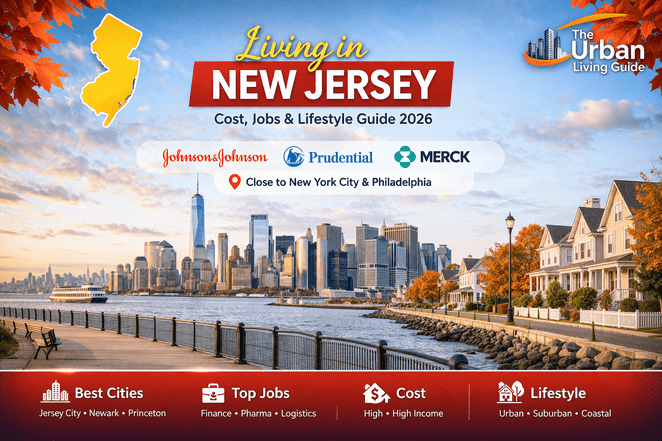
Living in New Jersey: Commuter Towns, Jersey Shore Lifestyle & Family-Friendly Suburbs in 2026
Making your home in New Jersey in 2026 means settling into one of the most densely populated, economically vibrant, and culturally complex states in the northeastern United States. Spanning over 8,722 square miles, the “Garden State” is defined by its strategic position between New York City and Philadelphia, serving as a critical global gateway for finance, logistics, and innovation.
As a long-term local resident will tell you, New Jersey offers a unique lifestyle dichotomy: the hyper-connected, high-velocity urban life of the Hudson Waterfront contrasted with the serene, Pine Barrens wilderness and the iconic seasonal rhythm of the Jersey Shore. From the pharmaceutical hubs of Princeton and New Brunswick to the diverse, bustling neighborhoods of Newark and Jersey City, everyday life here is characterized by elite school districts, a massive transit grid, and an economic engine anchored by healthcare, technology, and global maritime trade. For official administrative guidelines, state tax forms, and civic resources, residents frequently consult the Official State of New Jersey Portal.
| Quick Facts Snapshot: New Jersey (2026) | |
|---|---|
| Time Zone | Eastern Time Zone (ET / UTC-5, Daylight Saving UTC-4) |
| State Population | Approx. 9.3 Million (The most densely populated state in the U.S.) |
| State Income Tax | Progressive rates ranging from 1.4% to 10.75% for top-tier income earners |
| Median Home Price | $450,000 – $700,000+ (High variance between northern transit hubs and southern rural counties) |
| Average Rent Range | $1,600 – $3,500+ per month (Dependent on NYC/Philly proximity) |
| Sales Tax Baseline | 6.625% state-wide base, with local Urban Enterprise Zone exemptions |
What It Is Really Like to Live Here (The Macro Reality & Cultural Identity)
Living in New Jersey requires mastering a fast-paced environment where intense career ambition, influential public policy, and dense suburban layouts meet preserved natural reserves. Locals quickly understand that day-to-day existence depends entirely on whether your zip code sits within the NJ Transit commuter web or the quieter, decentralized regions of South Jersey. The state is a true American melting pot, driven by diverse international communities, world-class dining, and historical industrial roots. For deeper insights into lifestyle and recreational planning, residents rely on VisitNJ.org.
- Cultural Vibe: An energetic, diverse landscape where the pace varies from the intense transit-commuting rhythm of the Hudson Waterfront to the slower, community-centric suburban lifestyle of towns like Haddonfield or Summit.
- The Resident Trade-Off: Long-term locals accept demanding property tax assessments and a higher cost-of-living index in exchange for unmatched career mobility, robust public transit infrastructure, top-tier public school systems, and diverse coastal and urban amenities.
- Identity: New Jerseyans possess a fiercely independent local identity, defined by the “shore” culture, pride in diverse culinary traditions, and resilience in the face of Northeast seasonal extremes.
Regional Diversity, Geography & Economic Zones
New Jersey’s geography stretches from the dense urban corridors of the Northeast to the rural, pine-forested flatlands of the South, creating distinct living experiences.
Coastal Corridors, Metro Hubs & Suburban Enclaves
- North Jersey (The Commuter Belt): Encompassing Bergen, Hudson, and Essex counties—serving as the primary residential extension of New York City, defined by dense suburban transit hubs and high-rise waterfront living.
- Central Jersey (The Academic & Pharma Corridor): Anchored by Middlesex, Mercer, and Somerset counties—known for corporate HQs, major pharmaceutical campuses, and elite university influence.
- South Jersey (The Philly Influence): Encompassing Camden and Burlington counties—defined by a tighter relationship with Philadelphia, lower residential density, and more agricultural land.
Mountain, Inland, Agricultural & Coastal Belts
- The Highlands & Palisades: Massive protected forest reserves and dramatic cliffside landscapes featuring rugged peaks, reservoirs, and protected hiking trails.
- The Jersey Shore: Spanning over 130 miles of Atlantic coastline, featuring distinct resort towns, thriving boardwalk economies, and seasonal tourism-driven real estate.
- The Pine Barrens: A massive, mysterious forest ecosystem in South Jersey that serves as a unique ecological refuge and outdoor recreation zone.
Infrastructure, Power Grids, Water Systems & Transport Networks
Sustaining 9.3 million residents demands some of the nation’s most complex water engineering, electrical grids, and a massive, integrated mass-transit network.
Water Resources & Aqueducts
- Delaware & Passaic River Basins: Essential water sources supporting municipal utilities, heavy industry, and agricultural irrigation. Learn more via the New Jersey Department of Environmental Protection.
Power Generation & Energy Frameworks
- Energy Mix: Supplied by major investor-owned utilities like PSE&G, JCP&L, and Atlantic City Electric, utilizing a mix of nuclear, natural gas, and rapidly expanding offshore wind projects.
Statewide Transit, Rail, Air & Port Connectivity
- Aviation Gateways: International travel is anchored by Newark Liberty International (EWR), alongside regional access to JFK and LaGuardia.
- Commuter Grid: NJ Transit operates the nation’s most comprehensive statewide bus and commuter rail system, complemented by the PATH subway system and extensive highway networks like the New Jersey Turnpike (I-95) and Garden State Parkway.
- Maritime Commerce: The Port of New York and New Jersey handles massive volumes of containerized freight, making the state a critical logistics node for the entire East Coast.
Statewide Economy, Job Markets & Major Industries
New Jersey maintains a towering macroeconomic footprint, functioning as a primary corporate hub for industries requiring massive technical talent and regional connectivity.
- Economic Powerhouse: Generating massive annual GDP contributions, cementing the state as a premier global leader in biotech and logistics.
- Dominant Sectors: Pharmaceuticals (the “Medicine Chest of the World”), financial services, logistics and warehousing, chemical manufacturing, and higher education.
- Corporate Footprint: Headquarters for multi-national giants such as Johnson & Johnson, Prudential Financial, Merck & Co., and Campbell Soup Company. Track economic initiatives via the New Jersey Economic Development Authority.
Salary Realities Across Economic Corridors
- Metropolitan Potential: Executive management, pharmaceutical research, and specialized finance roles in Northern Jersey command average professional salaries well above national medians, often exceeding $130,000 to $200,000+.
- Regional Wage Variance: Southern and inland manufacturing and service wages align closer to national medians, balanced by lower cost-of-living thresholds outside the immediate NYC commuter radius.
Cost of Living Realities & Housing Market Variance
Living in New Jersey requires careful budget planning, as expenses vary from some of the highest real estate costs in the U.S. down to highly accessible suburban and rural options.
| Expense Category | Cost Range / Index Reality |
|---|---|
| Housing (Urban vs. Suburban) | $2,200 – $4,500+ rent in transit hubs; $1,200 – $2,000 in inland/southern regional cities |
| Utilities & Heating | Above national averages, reflecting dense urban infrastructure maintenance costs |
| Transportation | Varies: Extensive NJ Transit monthly passes vs. car ownership/turnpike toll costs |
| Groceries & Goods | Roughly 10%–20% higher in high-density metropolitan boroughs compared to medians |
State Tax Climate, Business Environment & Government Policies
New Jersey operates under a highly regulated governance model characterized by robust public investment and progressive taxation. Review compliance guidelines via the New Jersey Division of Taxation.
- Income Tax Structure: Imposes a progressive personal income tax system with brackets reaching up to 10.75% for high-income earners.
- Property Tax Pressures: Local school districts and municipal governments rely heavily on property assessments, resulting in effective property tax rates that rank among the highest in the nation.
- Regulatory Framework: Comprehensive consumer protection statutes, labor regulations, and robust tenant protection laws shape residential compliance.
Legal & Lifestyle Governance Quirks
- Self-Service Gas Prohibition: New Jersey is unique for its long-standing legislative ban on self-service gasoline stations, making full-service fueling the norm.
- Driver Licensing: Legal mandates require new residents to secure an official New Jersey driver’s license and transfer vehicle registrations at a Motor Vehicle Commission (MVC) office within 60 days of residency.
Climate, Weather Extremes & Natural Geography
New Jersey experiences a humid subtropical to continental climate marked by cold, snowy winters and warm, humid summers.
- Seasonal Variations: Inland and northern highland regions receive heavy seasonal snowfall, while coastal areas experience milder temperatures moderated by the Atlantic Ocean.
- Environmental Realities: Residents maintain preparedness for nor’easters, occasional heavy winter storms, and summer humidity cycles.
- Natural Landmarks: From the sandy expanses of the Jersey Shore to the glacial landscape of the Delaware Water Gap.
Insurance Cost Realities (Winter & Storm Risks)
- Coastal Windstorm Riders: Shoreline properties require specialized windstorm or hurricane deductible endorsements on standard homeowner policies.
- Flood and Sewer Coverage: Low-lying properties situated near tidal basins or river flood zones often require supplemental flood insurance underwriting.
Education Systems & Major Healthcare Networks
Access to elite academic institutions and advanced medical complexes anchors New Jersey’s institutional prestige. The state consistently ranks near the top for public K-12 education.
- Higher Education: Home to Princeton University, Rutgers University, and the New Jersey Institute of Technology (NJIT). Review school performance metrics via the New Jersey Department of Education.
- Advanced Healthcare: Elite networks like RWJBarnabas Health and Hackensack Meridian Health provide groundbreaking clinical care. Review public health standards via the New Jersey Department of Health.
Culture, Outdoor Recreation & Lifestyle Shifts
Daily life in New Jersey spans unmatched metropolitan cultural sophistication and distinct outdoor wilderness.
- Outdoor Living: Hiking the Palisades, skiing at Mountain Creek, and spending summer weekends at Cape May or Long Beach Island.
- Arts & Entertainment: Global dining, the NJPAC, and iconic music history spanning from jazz in Newark to the boardwalks of Atlantic City. Explore statewide tourism via VisitNJ.
Relocation & State Residency Essentials
- Domicile Rules: NJ MVC requires standard identity verification (the “6 Points of ID” system) to secure licensing.
- Voter Registration: Eligible citizens register through the New Jersey Division of Elections.
Major Counties and Rural Living Realities in New Jersey
- Bergen County: The most populous, high-income suburbia near NYC.
- Hudson County: High-density urban skyline and transit corridor.
- Middlesex County: The academic and corporate research nexus of Central NJ.
Major Regional Hubs and Cities to Explore
Major Urban Hubs at a Glance
| City / Hub | Primary Driver | Vibe Profile |
|---|---|---|
| Jersey City | Finance & Tech | Urban skyline, NYC-adjacent, transit-heavy |
| Newark | Logistics & Aviation | Resilient, major hub, multimodal |
| Princeton | Higher Education | Historic, intellectual, affluent |
| Trenton | Government | Administrative, historical significance |
| Atlantic City | Tourism & Gaming | Coastal resort, iconic boardwalk |
Detailed Breakdown of Key Regional Hubs
Jersey City — The Urban Skyline Powerhouse
Jersey City serves as the ultimate residential hub for those requiring immediate NYC access without the Manhattan price tag. It combines high-rise luxury living with a vibrant, multicultural street life.
Newark — The Resilient Multimodal Gateway
As the state’s primary logistics and aviation engine, Newark provides a central hub with enormous potential for growth, hosting major corporate HQs and world-class transit connectivity.
Princeton — The Academic and Intellectual Enclave
A sophisticated town defined by its ivy-league roots, Princeton maintains a manicured, quiet, and affluent atmosphere ideal for researchers, educators, and those valuing historic architecture.
Trenton — The Historic State Capital
Trenton anchors the state with deep colonial history and government employment, serving as a political center with a gritty, resilient industrial heritage.
Atlantic City — The Iconic Shore Entertainment Hub
Atlantic City is a coastal anomaly, characterized by its world-famous boardwalk, gaming resorts, and the unique energy of a year-round Atlantic beach destination.
Pros and Cons of Making New Jersey Your Home
| Advantages (Pros) | Systemic Drawbacks (Cons) |
|---|---|
| Proximity to the world’s most robust financial/tech markets (NYC/Philly) | Consistently among the highest property tax rates in the nation |
| World-class transit system (NJ Transit, PATH, rail) | Extreme suburban traffic congestion in northern and central corridors |
| Unmatched public education system rankings | High cost of living index and expensive utility/heating bills |
Frequently Asked Questions About Living in New Jersey
Is New Jersey a good state to live in?
Yes, especially if you prioritize career growth in finance or pharma, top-tier school districts, and unmatched accessibility to East Coast metropolitan hubs.
What is the actual cost of living in New Jersey?
It is quite high relative to the national average, primarily driven by expensive real estate, significant property taxes, and the high cost of goods in the NYC-metro commuter radius.
Which region is best to settle down in?
It depends on your career: North Jersey offers the fastest commute to NYC, Central Jersey offers corporate stability and university culture, while South Jersey offers more space and a slower pace.
Does New Jersey enforce high taxes?
Yes, the state has a progressive income tax system, and local property taxes are notably high, which directly fund the state’s high-performing public schools.
How safe is everyday life across the state?
Safety varies significantly by municipality; affluent suburban enclaves are extremely safe, while urban transit centers reflect the challenges and traffic of any major metropolitan area.
What industries dominate New Jersey’s job market?
The state is dominated by the pharmaceutical/biotech sector, financial services, corporate logistics, and healthcare administration.
How rigorous are NJ residency audits?
New Jersey is vigilant regarding income tax domicile; new residents should keep meticulous records of their permanent move, vehicle registration, and active home address to verify tax standing.
Explore Detailed City Guides Across New Jersey
At The Urban Living Guide (TULG), our core mission is to provide deeply researched regional insights and city-level navigation tools to help you evaluate your relocation options with total confidence. To discover what daily life, housing patterns, and local economies look like across our featured municipal centers throughout the Garden State, explore our comprehensive resident hub guides below:
Whether you are comparing career prospects in the global financial corridor or evaluating lifestyle shifts near the shore, our editorial team remains dedicated to delivering research-backed, data-driven frameworks to support your relocation and residency decisions with complete clarity.