

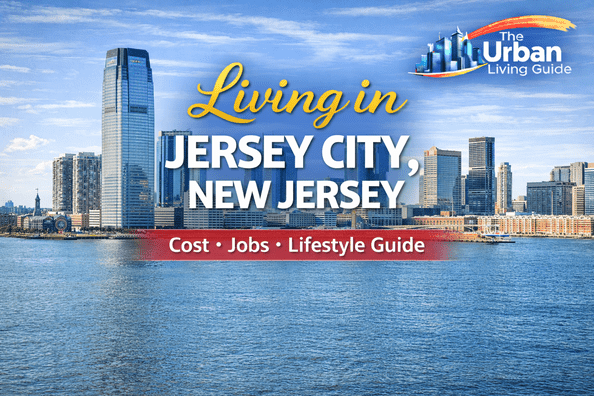
Living in Jersey City, New Jersey in 2026: The Complete Local Guide to Waterfront Living, Financial Towers, and Manhattan Proximity
Living in Jersey City, New Jersey offers a high-energy urban experience situated directly along the western bank of the Hudson River opposite Manhattan. As the second-most populous municipality in the state with approximately 290,000 residents, Jersey City serves as a premier economic and residential powerhouse within the New York metropolitan area. Widely recognized as “Wall Street West”, the city successfully combines towering corporate headquarters, historic brownstone neighborhoods, and a thriving multicultural community.
Municipal programs, public services, and community developments are centrally administered through the official City of Jersey City Government Portal.
If you are exploring the geographic layout of northern New Jersey’s premier waterfront corridor for the first time, the interactive map below highlights the city’s central thoroughfares and transit connections.
All quantitative metrics, economic data points, and community insights compiled within this living guide are synthesized from official municipal resources, regional economic boards, and verified long-term resident feedback.
What Makes Jersey City So Popular & Unique
Over the past two decades, Jersey City has evolved into one of the most dynamic and sought-after urban centers in the Northeast. Key factors driving its sustained popularity include:
- Unmatched Manhattan Access: Immediate proximity to New York City supported by rapid commuter rail lines via the Port Authority PATH Train Portal.
- Modern Waterfront Skyline: Expansive glass high-rises and luxury residential towers lining the Hudson River with breathtaking views of the Manhattan skyline.
- Robust Financial Economy: A powerful corporate sector housing major banking institutions, financial firms, and tech startups.
- Vibrant Cultural Diversity: A rich mosaic of multicultural neighborhoods, global dining districts, and thriving arts communities.
Jersey City at a Glance: Key Living Metrics
| Evaluation Metric | Local Data Overview & Regional Reality |
|---|---|
| Population | Approx. 290,000 within municipal city limits (Dense urban-suburban footprint) |
| Median Monthly Rent | Ranges from $2,800 to $4,800+ depending on building vintage and neighborhood pocket |
| Average Annual Salary | Typically spans $80,000 to $140,000 across major financial and corporate sectors |
| Primary Economic Pillars | Finance, banking, technology, healthcare, real estate, and professional services |
| State Income Tax | Progressive state income tax structure ranging up to 10.75% across upper brackets in New Jersey |
| Average Summer High | Routinely reaches 80°F to 90°F during humid July and August afternoons |
| Primary Transit Mode | PATH train network, Hudson-Bergen Light Rail, NJ Transit buses, and passenger ferries |
Famous Personalities, Local Icons & Major Brands in Jersey City
Jersey City has a rich history of nurturing legendary entertainers, influential innovators, and global corporate giants:
- Frank Sinatra: The legendary singer and global music icon spent his early years born and raised in neighboring Hoboken and regional Hudson County. Explore his musical legacy via the Official Frank Sinatra Portal.
- Queen Latifah: The acclaimed actress, Grammy-winning rapper, and producer maintains deep personal and philanthropic roots across the local region.
- Martha Stewart: The renowned businesswoman, author, and television personality spent her formative childhood years growing up in the local area.
- Goldman Sachs: A premier global investment banking firm anchoring the waterfront skyline with its iconic triangular tower.
- Verisk Analytics: A leading data analytics and risk assessment corporation headquartered in the city (Verisk Analytics Official Portal).
Job Market & Business Opportunities with Major Employers
The employment landscape in Jersey City offers exceptional professional opportunities, high average salaries, and robust career mobility:
- Financial Services and Banking: A massive employment cluster driven by global financial institutions managing trading floors, wealth management, and corporate operations.
- Technology and Digital Media: Growing hubs for software engineering, financial technology startups, and digital data analysis firms.
- Healthcare and Education: Comprehensive medical systems and higher education institutions providing steady administrative, clinical, and academic careers.
- Real Estate and Construction: Vigorous commercial and residential development sectors driving engineering, architecture, and project management roles.
Housing & Real Estate Overview in Jersey City
Navigating the real estate market in Jersey City requires understanding its intense demand, architectural variety, and waterfront premium:
- Diverse Housing Stock: Features historic 19th-century brownstones in The Heights and Paulus Hook alongside ultra-luxury glass high-rises in Downtown Jersey City.
- Market Valuations: High demand from Manhattan commuters keeps home valuations and rental rates elevated, though they often offer slightly more square footage than equivalent New York properties.
- Rental Market Inventory: Average monthly rent spans $2,200 to $2,800 for studio units, $2,800 to $3,500 for one-bedroom apartments, $3,800 to $4,800 for two-bedroom properties, and $4,500 to $6,500+ for single-family home rentals.
- Neighborhood Price Variations: Properties further inland near Journal Square or Bergen-Lafayette often provide more accessible entry points for buyers and renters.
Best Neighborhoods in Jersey City: Finding Your Ideal Community
| Neighborhood Name | Vibe & Lifestyle Character | Housing & Price Profile |
|---|---|---|
| Downtown Jersey City | Bustling urban core, pedestrian plazas, upscale dining, and steps from PATH stations. | Luxury high-rise apartments, modern condos, and premium valuations. |
| Journal Square | Rapidly developing transit hub featuring new residential towers and diverse local commerce. | New high-rise rentals, multi-family homes, and mid-tier pricing. |
| The Heights | Quiet residential neighborhood offering community parks, local cafes, and skyline views. | Historic brownstones, single-family homes, and stable family pricing. |
| Paulus Hook | Desirable waterfront community featuring historic architecture and refined neighborhood charm. | Historic townhomes, upscale condos, and high-end valuations. |
| Bergen-Lafayette | Dynamic emerging neighborhood undergoing active redevelopment and commercial growth. | Converted industrial lofts, townhouses, and competitive market pricing. |
What It’s Really Like Living in Jersey City (Daily Life & Vibe)
To visualize the everyday street-level atmosphere, waterfront promenades, and urban energy across the city, watch the video overview below.
Daily life in Jersey City is defined by a fast-paced, cosmopolitan rhythm paired with strong community engagement:
- Active Waterfront Living: Residents spend weekends walking or cycling along the Hudson River waterfront, enjoying unobstructed views of the Manhattan skyline.
- Green Space Escapes: Relaxing at Liberty State Park, which offers expansive lawns, memorials, and ferry access to the Statue of Liberty (New Jersey Department of Environmental Protection Portal).
- Culinary Exploration: Evenings feature diverse dining options ranging from upscale bistros in Paulus Hook to authentic global eateries throughout the city’s multicultural wards.
- Social Atmosphere: Cosmopolitan, ambitious, fast-moving, and deeply appreciative of urban culture and arts festivals.
Cost of Living in Jersey City: Monthly Expenses & Salary Needs
The cost of living in Jersey City sits substantially above the national average, reflecting its prime metropolitan location and proximity to New York City:
- Housing Overhead: $2,800 to $4,800+ covering typical luxury apartment rentals and waterfront condos. Review regional economic trends via the Bureau of Labor Statistics Northeast Information Office.
- Utilities & Municipal Services: $150 to $250 monthly for electricity, heating, water, and waste disposal.
- Groceries & Household Goods: $450 to $700 depending on shopping habits between local specialty markets and major supermarkets.
- Transportation Expenses: $120 to $250 covering monthly commuter passes for PATH, light rail, and bus services.
- Required Household Income: Individuals or households typically require an annual income between $90,000 and $150,000 to comfortably cover local living expenses without financial strain.
Transportation, Commute Dynamics & Transit Realities
Jersey City boasts one of the most robust and interconnected public transportation infrastructures in the New York metropolitan region:
- PATH Train Network: Providing 24/7 rapid transit rail connections from stations like Exchange Place, Newport, and Journal Square directly to Lower and Midtown Manhattan (Port Authority PATH Train Portal).
- Hudson-Bergen Light Rail: Efficient local light rail system connecting waterfront commercial districts to northern and southern residential neighborhoods (NJ Transit Official Portal).
- Ferry Services: High-speed passenger ferries operating from local terminals across the Hudson River directly to Manhattan piers.
- Highway and Tunnel Access: Proximity to the Holland Tunnel and major regional arteries including the New Jersey Turnpike, though peak-hour rush traffic requires strategic planning.
Weather Patterns, Seasonal Realities & Climate Factors
The environmental rhythm of Jersey City follows a classic northeastern humid continental climate:
- Warm Summers: Summer daytime high temperatures routinely average 80°F to 90°F, with coastal river breezes providing moderate relief along waterfront esplanades.
- Cold Winters: Winter seasons bring freezing temperatures, icy winds, and occasional snowstorms, making proper winter gear essential. Track local forecasts via the National Weather Service New York-Jersey City Portal.
- Splendid Transition Seasons: Spring and autumn deliver crisp, comfortable weather that transforms local parks and tree-lined neighborhood streets into vibrant community gathering spaces.
Education, Schools & Major Universities
Educational institutions serve as important anchors for intellectual development, professional training, and community engagement:
- New Jersey City University (NJCU): A respected public university offering diverse undergraduate, graduate, and professional degree programs (New Jersey City University Portal).
- Saint Peter’s University: A private Jesuit university known for rigorous liberal arts education and strong career placement networks in the New York region (Saint Peter’s University Portal).
- Hudson County Community College: Providing accessible associate degrees, technical certifications, and continuing education pathways.
- Public and Charter Schools: A developing public school district featuring specialized magnet programs and local elementary facilities.
Medical Facilities, Hospitals & Healthcare Systems
Healthcare infrastructure in Jersey City is advanced, accessible, and supported by leading regional medical networks:
- Jersey City Medical Center: A premier 340-bed acute care teaching hospital affiliated with Barnabas Health, offering advanced emergency services, specialized surgery, and trauma care.
- CarePoint Health: Operating local medical facilities and outpatient centers providing comprehensive family medicine and diagnostic services.
- Regional Proximity: Immediate access to world-class research hospitals and specialized medical centers across northern New Jersey and Manhattan.
Popular Hotels, Cafes, Dining & Culinary Scene
The hospitality and culinary identity of Jersey City reflects cosmopolitan elegance, business travel, and global immigrant heritage:
- Hyatt House Jersey City: Sophisticated waterfront hotel offering modern suites, panoramic Manhattan skyline views, and convenient PATH station access (Hyatt House Jersey City Portal).
- The Westin Jersey City Newport: Premium upscale hotel catering to business executives and tourists, featuring refined dining and event spaces (The Westin Jersey City Newport Portal).
- Bustling Culinary Corridors: Independent cafes, artisan bakeries, and award-winning restaurants lining Newark Avenue pedestrian plaza and waterfront promenades.
Sightseeing, Cultural Spots & Tourist Attractions
Cultural landmarks and recreational destinations significantly enhance the quality of life for local residents:
- Liberty State Park: Sprawling waterfront park offering green lawns, picnic areas, and stunning views of the Statue of Liberty and Ellis Island (New Jersey Department of Environmental Protection Portal).
- Liberty Science Center: Interactive science museum featuring hundreds of hands-on exhibits, an IMAX dome theater, and STEM educational programs.
- Historic Downtown Walks: Exploring preserved 19th-century brownstone blocks, local art galleries, and bustling outdoor community plazas.
Regional Trade-offs: Pros and Cons of Living in Jersey City
Evaluating the authentic advantages and challenges of Jersey City helps prospective residents establish realistic expectations:
Pros of Living in Jersey City
- Immediate Manhattan Proximity: Unrivaled 24/7 transit access to New York City via PATH trains in under 25 minutes.
- Modern Waterfront Living: Stunning glass high-rises and luxury apartments featuring unobstructed views of the Manhattan skyline.
- Vibrant Cultural Diversity: A rich multicultural community offering authentic global dining and community festivals.
- Strong Career Markets: Direct access to major financial, tech, and corporate employment opportunities across both sides of the Hudson River.
- Walkable Urban Centers: Pedestrian-friendly commercial districts and extensive public transit networks reducing car dependency.
Cons of Living in Jersey City
- High Housing Costs: Steep rent and property valuations driven by intense demand and proximity to Manhattan.
- Traffic Congestion: Heavy vehicular traffic during peak rush hours near the Holland Tunnel and major connecting corridors.
- Competitive Rental Market: High leasing competition and rapid turnover for desirable apartments in prime waterfront pockets.
- Winter Weather Impacts: Cold temperatures, freezing rain, and winter storms requiring seasonal preparation.
- Urban Noise and Density: High-density living conditions accompanied by typical metropolitan noise levels and bustling streetscapes.
Who Is Jersey City Ideal For — And Who Should Avoid It?
Who Jersey City Is Ideal For
- Manhattan Commuters: Professionals working in New York City who want rapid transit access while enjoying modern waterfront housing options.
- Finance and Tech Workers: Career-driven individuals seeking proximity to major banking firms, fintech startups, and corporate headquarters.
- Urban Professionals: Young adults and couples drawn to vibrant nightlife, fine dining, and active cosmopolitan streetscapes.
- Multicultural Families: Households seeking diverse communities, excellent public parks, and accessible higher education institutions.
Who Should Avoid Jersey City
- Budget-Conscious Buyers: Individuals seeking low-cost housing or expansive suburban square footage on modest financial budgets.
- Quiet Rural Seekers: People who prefer peaceful countryside isolation, wide-open rural spaces, and low-density neighborhoods.
- Drivers Detesting Traffic: Residents who rely entirely on personal automobiles and dislike urban congestion, tolls, and parking restrictions.
- Those Sensitive to City Noise: Individuals bothered by dense metropolitan surroundings, sirens, and bustling commuter crowds.
Real Experiences: Perspectives from Long-Term Residents (5 to 10+ Years)
“Living in downtown Jersey City for over eight years has been an incredible experience. Stepping onto the PATH train at Exchange Place gets me into Lower Manhattan in less than twenty minutes, which is faster and cheaper than commuting from many outer New York boroughs. Housing costs are definitely steep, but the waterfront parks, incredible food scene, and vibrant energy make it completely worth it.”
[Source: r/jerseycity Community Discussions — synthesized/paraphrased]
“The big reality check for newcomers is learning to navigate parking regulations and managing the competitive rental market in prime waterfront pockets. If you want a slightly quieter neighborhood feel with great historic brownstones, exploring areas like The Heights or Journal Square offers amazing community character while keeping you connected to major transit lines.”
[Source: Local Resident Panels & Community Forums — synthesized/paraphrased]
Frequently Asked Questions About Living in Jersey City, New Jersey
Is Jersey City expensive to live in compared to other cities?
Yes, Jersey City maintains a high cost of living driven by its prime location along the Hudson River adjacent to Manhattan, though it often provides slightly lower rent and purchase prices than equivalent New York City neighborhoods.
What level of annual salary do individuals need to live comfortably in Jersey City?
Most single professionals and households require an annual income between $90,000 and $150,000 to comfortably cover high housing costs, utilities, transportation, and discretionary spending across the municipality without severe financial stress.
Can residents successfully live in Jersey City without owning a personal vehicle?
Yes. Many residents live entirely car-free by utilizing the 24/7 PATH train network, Hudson-Bergen Light Rail, local bus lines, and highly walkable urban corridors centered around downtown and waterfront districts.
What are the best neighborhoods to consider when moving to Jersey City?
Top neighborhoods include Downtown Jersey City for waterfront luxury and dining, Journal Square for transit connectivity, The Heights for historic brownstones and skyline views, Paulus Hook for charm, and Bergen-Lafayette for emerging growth.
How does commuting from Jersey City to Manhattan work on a daily basis?
Commuters utilize the PATH train network from stations like Exchange Place and Newport to reach Lower Manhattan or Midtown in under 25 minutes, or take high-speed passenger ferries directly across the Hudson River.
Are there good green spaces and outdoor parks for families in Jersey City?
Yes. Residents enjoy sprawling outdoor recreation at Liberty State Park, local neighborhood pocket parks, and scenic waterfront promenades offering active paths and recreational facilities.
🔗 Explore More Cities in New Jersey
If you’re exploring more options beyond Jersey City, The Urban Living Guide has covered several other popular cities in New Jersey. You can also check:
Want to learn more about Jersey City? Check out these helpful guides:
Ready to make your decision? Explore our complete guide here: Moving to Jersey City, New Jersey
These guides give you a complete picture of what it’s like living across different cities, covering everything from cost of living, housing, and job opportunities to neighborhoods, commute, weather, education, popular places, and major employers.
The Urban Living Guide brings together these local insights in one place, helping you compare cities easily and make a confident, well-informed decision based on your lifestyle and goals.