
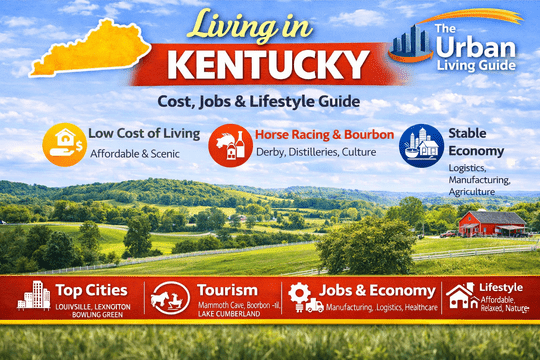
Living in Kentucky: Bourbon Culture, Lower Costs & Family-Friendly Communities
Kentucky, located in the southeastern United States, is known for its natural beauty, horse farms, and affordable lifestyle. The state offers a mix of rolling hills, small towns, and growing urban centers, making it a balanced place to live.
If you’re considering Living in Kentucky, it provides opportunities in manufacturing, healthcare, agriculture, logistics, and bourbon industry. Cities like Louisville, Lexington, and Bowling Green are key economic centers.
Compared to states like Tennessee, Kentucky offers a similar cost of living but slightly quieter and less crowded lifestyle, making it attractive for families and retirees.
Many people choose Kentucky because of its affordability, scenic environment, and stable lifestyle, especially for long-term living.
What Makes Kentucky Unique
Kentucky is famous for its rolling hills, horse farms, rivers like the Ohio River, and natural caves. The state is home to the world-renowned Kentucky Derby and a strong horse racing culture.
Culturally, Kentucky blends Southern charm with Midwestern practicality, offering a unique lifestyle that is both relaxed and community-driven.
Unlike many states, Kentucky offers a combination of natural beauty + low cost of living + cultural heritage, making it a peaceful yet fulfilling place to live.
🗺️ Explore the map of Kentucky to understand its geography and regions
Location, Geography & Climate
Kentucky has a humid subtropical climate, meaning:
-
- Hot summers
- Mild to cool winters
- Moderate rainfall
The state features forests, hills, rivers, and caves, including the famous Mammoth Cave National Park.
Top Cities in Kentucky
-
- Louisville – The largest city, known for logistics, healthcare, and the Kentucky Derby.
- Lexington – Famous for horse farms and a high quality of life.
- Bowling Green – Growing city with manufacturing and education opportunities.
- Owensboro – Affordable city with strong community culture.
- Covington – Close to Cincinnati, offering urban access with lower costs.
Tourism, Attractions & Things to Do in Kentucky
Kentucky offers a mix of nature and culture:
- Mammoth Cave National Park – World’s longest cave system
- Kentucky Derby (Louisville) – Iconic horse race
- Bourbon Trail – Distillery tours
- Red River Gorge – Hiking and adventure
- Lake Cumberland – Outdoor recreation
The state is known for its nature, bourbon, and horse culture.
Kentucky is also globally recognized as the birthplace of KFC (Kentucky Fried Chicken), one of the most famous fast-food brands in the world. The original roots of KFC add to the state’s cultural identity and global recognition.
Cost of Living in Kentucky
The cost of living in Kentucky is low, especially for housing. Major cities like Louisville and Lexington are affordable compared to national averages.
Compared to North Carolina, Kentucky offers lower housing costs and daily expenses.
Overall, it is a budget-friendly state with strong value for money.
Job Market & Economy
Kentucky has a stable economy driven by:
-
- Manufacturing
- Logistics (UPS hub in Louisville)
- Healthcare
- Agriculture
The job market is steady with growth in urban areas.
Major Industries & Economic Strength
Kentucky leads in:
-
- Bourbon production
- Horse farming
- Logistics and distribution
- Manufacturing
Compared to many states, Kentucky has a diverse but traditional economy.
Rural Living in Kentucky
Rural Kentucky offers peaceful living with scenic landscapes and farming communities. Agriculture includes tobacco, corn, and livestock.
Living costs are low, making it ideal for families and retirees.
Pros:
- Very affordable housing
- Quiet and scenic environment
- Strong community culture
Cons:
- Limited job opportunities
- Fewer healthcare facilities
- Limited entertainment options
Top Counties in Kentucky
-
- Jefferson County – Louisville region
- Fayette County – Lexington area
- Warren County – Bowling Green region
- Kenton County – Northern Kentucky area
- Boone County – Growing suburban region
Infrastructure & Connectivity
Kentucky benefits from a central U.S. location and strong highway connectivity, especially around major logistics and shipping corridors. Louisville plays a major role in freight and distribution operations.
- Key infrastructure advantages:
- Interstate highways like I-64, I-65, and I-75
- Airports in Louisville and Lexington
- Major shipping and logistics operations, including UPS Worldport
Most residents rely on personal vehicles due to limited public transportation systems.
Government, Safety & Policies
Kentucky offers moderate taxes and a business-friendly environment that supports manufacturing, agriculture, and logistics industries. Many suburban communities are considered safer and family-oriented.
- Kentucky is known for:
- Lower overall living costs
- Manufacturing and distribution growth
- Expanding suburban communities
Economic development remains focused on industrial investment and regional job growth.
Lifestyle & Culture
Living in Kentucky offers a slower-paced Southern-Midwest lifestyle centered around community, outdoor recreation, and local traditions. Residents often value affordability and quieter living environments.
- Popular lifestyle features include:
- Horse racing and bourbon culture
- Parks, lakes, and outdoor activities
- College sports and small-town traditions
Cities like Louisville and Lexington offer more urban amenities while still maintaining a relaxed atmosphere.
Education & Healthcare
Kentucky continues improving healthcare access and educational infrastructure, especially around larger metro regions. Urban areas generally provide stronger access to advanced services.
- Major institutions include:
- University of Kentucky
- University of Louisville
- Expanding regional healthcare systems
Rural areas may still have more limited healthcare and higher education access compared to larger cities.
Pros and Cons of Living in Kentucky
Pros:
- Low cost of living and highly affordable housing options
- Scenic natural environment with hills, forests, and outdoor activities
- Strong cultural identity with horse racing and bourbon industry
- Stable economy with growing logistics and manufacturing sectors
- Family-friendly lifestyle with slower pace of living
Cons:
- Limited high-paying job opportunities compared to major states
- Public transport options are minimal
- Healthcare and education access varies in rural areas
- Fewer entertainment and nightlife options
- Hot summers with humidity
Who Should Move to Kentucky
-
- Families looking for affordable and stable living
- Retirees seeking peaceful and scenic lifestyle
- Logistics and manufacturing professionals
- Remote workers wanting low-cost living
Major Companies & Investments
Kentucky has a strong economy supported by logistics, automotive manufacturing, and distribution industries. Its central location continues attracting large-scale industrial investment.
- Major companies include:
- UPS
- Ford
- Toyota
- Growing manufacturing and warehouse operations
The state remains important for shipping, automotive production, and regional logistics growth.
Transport & Connectivity (Expanded)
Kentucky offers strong transportation connectivity through highways, freight routes, and logistics infrastructure. Louisville is one of the country’s most important shipping hubs.
- Major connectivity features:
- Interstate highways like I-64, I-65, and I-75
- Airports in Louisville and Lexington
- Major freight and distribution operations
Public transportation remains limited outside larger urban regions.
Final Thoughts
Kentucky offers affordable living, natural scenery, and a quieter pace of life that appeals to families and long-term residents. Many people move here for lower housing costs, community-focused living, and access to outdoor recreation.
- Kentucky is especially attractive for:
- Affordable housing and taxes
- Logistics and manufacturing careers
- Horse country and outdoor lifestyle
While job growth may be slower than larger metro states, Kentucky continues attracting residents who value stability, affordability, and a relaxed lifestyle.
FAQs
Is Kentucky a good state to live in?
Yes, Kentucky is a great option for those seeking affordability, nature, and a relaxed lifestyle.
What is the cost of living in Kentucky?
Low, especially for housing and daily expenses.
Which city is best in Kentucky?
Louisville for jobs, Lexington for lifestyle, Bowling Green for affordability.
Does Kentucky have high taxes?
No, taxes are moderate compared to many states.
Is Kentucky safe?
Safety varies by area, with suburban regions generally safer.
What jobs are in demand in Kentucky?
Logistics, manufacturing, healthcare, and agriculture sectors.
How is Kentucky weather?
Hot summers and mild winters with seasonal variation.