

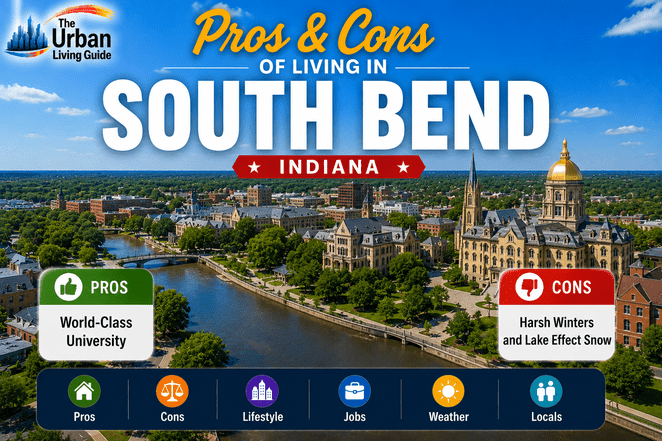
Pros and Cons of Living in South Bend in Indiana’s College and Innovation Corridor
If you’re considering a move to Indiana, understanding the pros and cons of living in South Bend can help you determine whether this historic college city aligns with your lifestyle and career goals.
Most people immediately associate South Bend with the prestigious University of Notre Dame, but the city has evolved into much more than a college town. Today, South Bend is known for its growing technology sector, healthcare employment, revitalized downtown, and affordable housing.
Located near the Michigan border, South Bend offers residents access to higher education, cultural attractions, and economic opportunities while maintaining a lower cost of living than many comparable university cities.
However, residents also face long winters, limited public transportation, and a smaller job market outside education and healthcare.
Pros of Living in South Bend
Home to the University of Notre Dame
One of the biggest advantages in the pros and cons of living in South Bend is its connection to the University of Notre Dame.
The university influences the local economy, culture, sports scene, and educational opportunities throughout the region.
The city offers:
-
- College sports excitement
- Cultural events
- Research opportunities
- Educational resources
- Strong community engagement
The city’s college-town atmosphere, academic reputation, and university-driven economy create opportunities that many cities of similar size cannot match.
Affordable Housing and Cost of Living
Another major positive in the pros and cons of living in South Bend is affordability.
Compared to many university cities across the country, housing remains relatively accessible.
Residents benefit from:
-
- Affordable home prices
- Lower rent costs
- Family-friendly neighborhoods
- Reasonable property values
- Good overall value
Many residents find homeownership more achievable than in larger Midwest cities.
Growing Technology and Innovation Sector
South Bend has worked to diversify its economy beyond manufacturing.
Key growth sectors include:
-
- Technology
- Healthcare
- Research
- Education
- Entrepreneurship
Projects around Ignition Park and technology-focused initiatives have helped attract startups and new investment.
The city’s innovation economy, technology growth, and business development efforts continue expanding opportunities.
Revitalized Downtown and Riverfront Development
Downtown South Bend has undergone significant improvements in recent years.
Popular attractions include:
-
- East Race Waterway
- Howard Park
- Downtown South Bend
- Studebaker National Museum
- Morris Performing Arts Center
The city’s riverfront redevelopment, historic downtown, and community investment have improved quality of life for residents.
Strong Healthcare Employment
Healthcare remains one of the region’s most important industries.
Major healthcare employers include:
-
- Beacon Health System
- Saint Joseph Health System
- Regional healthcare providers
- Medical research organizations
The city’s strong healthcare sector provides stable employment opportunities for many professionals.
Access to Chicago and Lake Michigan
Location is another significant benefit.
Residents enjoy proximity to major destinations throughout the Midwest.
Nearby attractions include:
-
- Chicago
- Lake Michigan
- Indiana Dunes National Park
- Southwest Michigan
- Regional airports
Many residents appreciate having access to larger cities and natural attractions without living directly within them.
Cons of Living in South Bend
Long, Cold Winters
One of the biggest downsides in the pros and cons of living in South Bend is winter weather.
Its proximity to Lake Michigan contributes to cold temperatures and lake-effect snow.
Winter challenges include:
-
- Heavy snowfall
- Freezing temperatures
- Ice-covered roads
- Winter driving conditions
- Higher heating expenses
Residents relocating from warmer climates often find winter adjustment difficult.
Limited Job Opportunities Outside Key Industries
Although healthcare and education remain strong, employment opportunities can be more limited in other sectors.
Career challenges include:
-
- Smaller corporate presence
- Limited executive roles
- Fewer large employers
- Narrower industry diversity
Professionals in specialized industries may find fewer opportunities than in larger metropolitan areas.
Public Transportation Limitations
Public transportation remains relatively limited throughout much of the region.
Transportation challenges include:
-
- Car dependency
- Limited transit routes
- Fewer regional connections
- Reduced transportation flexibility
Most residents rely on personal vehicles for daily travel.
Smaller Entertainment Scene
While Notre Dame events provide entertainment, South Bend lacks some of the attractions available in larger cities.
Residents may notice fewer:
-
- Major concerts
- Professional sports teams
- Large nightlife districts
- International cultural events
Many residents travel to Chicago for expanded entertainment options.
Property Crime Concerns in Certain Areas
Crime levels vary depending on neighborhood.
Common concerns include:
-
- Property crime
- Vehicle theft
- Neighborhood safety differences
- Certain higher-crime districts
Researching neighborhoods carefully remains important before relocating.
Population Growth Remains Modest
Compared to rapidly growing cities in the Midwest and South, South Bend’s growth has been relatively moderate.
Common concerns include:
-
- Slower economic expansion
- Limited housing development
- Smaller labor market
- Fewer large-scale projects
Some residents feel growth occurs more slowly than in competing regions.
Final Thoughts on the Pros and Cons of Living in South Bend
Understanding the pros and cons of living in South Bend is important before making a relocation decision.
The city stands out for its college-town atmosphere, University of Notre Dame influence, strong healthcare sector, affordable housing, and growing innovation economy. At the same time, residents should prepare for harsh winters, limited public transportation, and a smaller job market outside key industries.
For educators, healthcare professionals, students, retirees, and families seeking affordability with access to higher education and culture, South Bend remains one of Indiana’s most unique places to live.
| Pros | Cons |
| Notre Dame influence | Long, cold winters |
| Affordable housing | Limited job diversity |
| Growing technology sector | Public transportation limitations |
| Strong healthcare employment | Smaller entertainment scene |
| Access to Chicago and Lake Michigan | Property crime concerns |
FAQs
Is South Bend a good place to live?
Many residents choose South Bend because of its affordability, educational opportunities, and strong community identity. The city offers a balance between college-town energy and Midwest affordability.
What is South Bend known for?
South Bend is best known as the home of the University of Notre Dame, one of the most prestigious universities in the United States.
Is South Bend affordable to live in?
Yes, South Bend generally offers lower housing costs and living expenses than many comparable college cities across the country.
Does South Bend get lake-effect snow?
Yes. Because of its proximity to Lake Michigan, South Bend experiences significant lake-effect snowfall during winter.
Do you need a car in South Bend?
For most residents, yes. While public transportation exists, many people rely on personal vehicles for commuting and daily activities.
Keep Exploring Indiana with The Urban Living Guide
Read our full guide on living in South Bend, Indiana, and make sure you also check: