

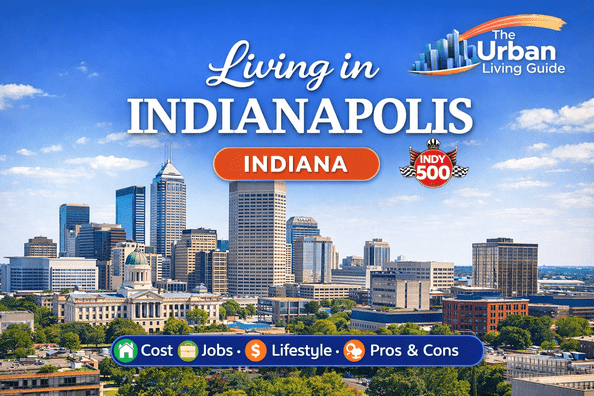
Living in Indianapolis, Indiana in 2026: The Complete Local Guide to Crossroads Culture, Motorsports Heritage, and White River Urban Living
Stretching across the fertile Midwestern plains where the scenic White River meanders through the heart of Marion County, living in Indianapolis, Indiana offers an extraordinary fusion of world-renowned motorsports heritage, booming life sciences innovation, robust logistics corridors, and exceptional housing affordability. As the largest municipality and capital city of Indiana with a population exceeding 870,000 residents, Indianapolis anchors a thriving metropolitan economic engine that bridges the gap between urban sophistication and down-to-earth Midwestern community life.
Universally celebrated across the globe as the historic “Crossroads of America” and proudly recognized as the motorsports capital of the world for hosting the legendary Indianapolis 500 at the iconic Indianapolis Motor Speedway, Indy commands a dynamic, high-octane identity. Beyond racing, the city is renowned for its cultural districts, expansive park systems like White River State Park, and a surging culinary scene centered around Mass Ave. Whether you are walking through the historic brick architecture of Fountain Square, cycling along the Indianapolis Cultural Trail, or catching a game at Lucas Oil Stadium, life here delivers an accessible, art-infused, and economically stable standard of living. Local municipal governance, public safety initiatives, and civic programs are centrally coordinated through the official City of Indianapolis Government Portal.
If you’re not familiar with this part of the state, the map below will help you understand the city’s exact location.
What Makes Indianapolis So Popular & Unique
Over recent decades, Indianapolis has captured national acclaim as a premier destination for families, career professionals, and remote workers seeking major-city economic opportunities without coastal or Sun Belt housing inflation. Key factors driving its sustained popularity include:
- Global Sports and Events Capital: Immediate presence of legendary international sporting venues, championship NFL and NBA franchises, and world-class annual conventions. Explore regional tourism initiatives via the Visit Indianapolis Official Tourism Portal.
- Thriving Life Sciences and Logistics Hub: A powerhouse economy driven by pharmaceutical giants, medical research centers, and nationwide distribution networks.
- Exceptional Housing Affordability: A real estate market that allows buyers and renters to secure spacious homes and large yards well below national metropolitan medians.
- Unmatched Geographic Connectivity: A central Midwestern location intersected by major transcontinental interstate highways, earning its historic title as the Crossroads of America.
Indianapolis At a Glance: Key Living Metrics
Famous Personalities, Local Icons & Major Brands in Indianapolis
Indianapolis has a proud history of nurturing legendary talk show hosts, Grammy-winning musicians, elite professional sports franchises, and global pharmaceutical empires:
- David Letterman: The legendary, internationally celebrated late-night television talk show host, comedian, and producer who grew up in suburban Indianapolis (David Letterman Official Portal).
- Babyface (Kenneth Edmonds): The multi-Grammy-winning legendary R&B singer, songwriter, and record producer who launched his illustrious musical career in Indy.
- George Hill: The accomplished NBA veteran player and hometown basketball hero who proudly represents central Indiana athletic roots.
- Indianapolis Colts & Indiana Pacers: Championship-caliber professional sports franchises driving massive community excitement at Lucas Oil Stadium and Gainbridge Fieldhouse (Indianapolis Colts Official Portal).
- Eli Lilly and Company & Cummins: Global corporate giants maintaining their massive headquarters and advanced manufacturing operations in the region (Eli Lilly Official Portal).
Job Market & Business Opportunities with Major Employers
The employment landscape in Indianapolis offers robust professional diversity, competitive compensation packages, and expanding innovation sectors:
- Life Sciences and Pharmaceuticals: Anchored by global giants like Eli Lilly, driving breakthrough medical research, biotech development, and specialized clinical careers. Track regional workforce data via the Indiana Department of Workforce Development.
- Healthcare and Medical Systems: A massive regional health hub supported by Indiana University Health and Elevance Health, offering extensive medical and administrative roles.
- Logistics, Distribution and Transportation: Strategically positioned at the crossroads of America, supporting nationwide supply chain management and freight forwarding.
- Technology and Enterprise Software: A thriving urban tech corridor supported by Salesforce operations and growing local software startups.
Housing & Real Estate Overview in Indianapolis
Navigating the real estate market in Indianapolis reveals an attractive landscape of historic charm, urban loft conversions, and rapid suburban expansion:
- Diverse Architectural Stock: Features charming historic homes in Lockerbie Square, industrial loft apartments in Downtown, stately suburban properties in Carmel, and modern developments across Marion County. Track property assessments via the Marion County Assessor Portal.
- Market Valuations: Property values remain significantly more accessible than coastal or mountain metropolitan markets, offering high square footage per dollar for buyers.
- Rental Market Inventory: Average monthly rent spans $900 to $1,100 for studio units, $1,100 to $1,400 for one-bedroom apartments, $1,400 to $1,800 for two-bedroom properties, and $2,000+ for single-family rental homes.
- Suburban Enclaves: Surrounding municipalities like Fishers and Carmel offer top-tier public school systems, safe neighborhoods, and master-planned communities.
Best Neighborhoods in Indianapolis: Finding Your Ideal Community
- Broad Ripple
- Lively, vibrant neighborhood nestled near the White River and the Monon Trail, known for energetic nightlife, independent cafes, and young professionals. Features historic bungalows, modern townhomes, and dynamic community pricing.
- Carmel
- Highly sought-after northern suburb celebrated for its exquisite roundabout infrastructure, arts district, safe streets, and top-rated schools. Features luxury custom homes, master-planned developments, and premium suburban valuations.
- Fountain Square
- Eclectic, artistic cultural hotspot just south of downtown packed with independent art galleries, vintage shops, live music venues, and historic charm. Features restored character homes, loft apartments, and creative pricing.
- Downtown Indianapolis
- Active urban core ideal for professionals who want immediate walkability to corporate offices, Monument Circle, and world-class dining. Features high-rise condominiums, historic townhomes, and competitive urban pricing.
- Fishers
- Rapidly growing northeast suburb offering family-friendly communities, modern civic infrastructure, and thriving tech employment hubs. Features spacious single-family houses, family parks, and strong market demand.
Watch a recent video by a popular vlogger to understand daily life and vibes in Indianapolis.
What It’s Really Like Living in Indianapolis (Daily Life & Vibe)
Daily life in Indianapolis is characterized by a comfortable, friendly, and unpretentious rhythm that balances professional ambition with leisure:
- Weekend Park and Trail Routines: Residents spend weekends exploring the vast amenities of White River State Park, biking along the Monon Trail, or visiting the world-famous Indianapolis Zoo. Check municipal recreation schedules via the Indy Parks and Recreation Portal.
- Culinary and Market Exploration: Mornings begin at artisan coffee roasters on Mass Ave, followed by afternoon visits to the historic City Market or neighborhood farmers markets.
- Cultural and Sports Engagement: Participating in major motorsports events, museum visits at the Children’s Museum of Indianapolis, and cheering on local professional sports teams.
- Social Atmosphere: Welcoming, grounded, highly civic-minded, and fiercely proud of Midwestern community traditions and sports culture.
Cost of Living in Indianapolis: Monthly Expenses & Salary Needs
Transportation, Commute Dynamics & Transit Realities
Indianapolis provides robust transportation infrastructure that connects urban cores to suburban employment centers:
- IndyGo Public Bus Network: Comprehensive municipal bus routes and rapid transit lines connecting major commercial corridors (IndyGo Official Portal).
- Highway Connectivity: Superior regional freeway access via Interstate 65, Interstate 70, and the overlapping I-465 beltway, ensuring efficient regional travel.
- Commute Times: Average daily commutes remain manageable at approximately 20 to 25 minutes during standard peak hours.
- Aviation Convenience: Proximity to award-winning Indianapolis International Airport (IND) for seamless domestic and international travel (IND Airport Official Portal).
Weather Patterns, Seasonal Realities & Climate Factors
The environmental rhythm of Indianapolis follows a classic humid continental climate featuring four distinct seasons:
- Warm, Humid Summers: Summer daytime highs routinely average 80°F to 90°F with lush greenery across city parks and outdoor venues. Track active meteorological forecasts via the National Weather Service Indianapolis Portal.
- Crisp, Snowy Winters: Winter seasons bring brisk temperatures and occasional snowfall, maintaining a picturesque backdrop across historic downtown monuments.
Education, Schools & Major Universities
Educational infrastructure stands as a premier anchor for academic excellence, scientific research, and workforce development:
- Indiana University–Purdue University Indianapolis (IUPUI / IU Indianapolis): Major urban research university offering comprehensive undergraduate, graduate, and medical degree programs (IU Indianapolis Official Portal).
- Butler University: Respected private liberal arts institution known for academic excellence and historic campus charm (Butler University Official Portal).
- Marian University: Comprehensive private Catholic university contributing significantly to local student life and community engagement.
- Public K-12 Networks: Operating numerous specialized neighborhood schools, magnet programs, and suburban districts focused on academic achievement.
Medical Facilities, Hospitals & Healthcare Systems
Healthcare infrastructure in Indianapolis is world-class, highly specialized, and anchored by premier academic medical centers:
- IU Health University Hospital: Globally recognized medical complex and level-one trauma center delivering groundbreaking clinical care and biomedical research (IU Health Official Portal).
- Elevance Health & St. Vincent Health: Major regional healthcare networks operating comprehensive acute care facilities, emergency centers, and specialty clinics.
- Specialized Outpatient Centers: Extensive network of community health clinics and pediatric specialty centers serving the metropolitan population.
Popular Hotels, Cafes, Dining & Culinary Scene
The hospitality and culinary identity of Indianapolis reflects historic luxury hotel elegance, innovative culinary arts, and vibrant brewing culture:
- JW Marriott Indianapolis: Sophisticated luxury property offering striking skyline views, fine dining, and refined hospitality near convention centers (JW Marriott Indianapolis Portal).
- The Alexander Hotel & Ironworks Hotel Indy: Creative boutique accommodations offering contemporary art galleries and upscale elegance.
- Mass Ave Cafes & Breweries: Acclaimed neighborhood restaurants, artisan coffee roasters, and traditional craft microbreweries serving signature local specialties.
Sightseeing, Cultural Spots & Tourist Attractions
Landmark cultural institutions and historic destinations significantly enhance the daily quality of life for local residents:
- Indianapolis Motor Speedway Museum: Legendary racing venue and museum celebrating motorsports history and the Indy 500 (IMS Official Portal).
- Children’s Museum of Indianapolis: The world’s largest children’s museum offering five floors of interactive learning and family exhibits.
- Monument Circle: Iconic historic soldiers and sailors monument standing proudly at the geographic center of downtown Indianapolis.
Regional Trade-offs: Pros and Cons of Living in Indianapolis
Who Is Indianapolis Ideal For — And Who Should Avoid It?
Who Indianapolis Is Ideal For
- Healthcare and Life Sciences Professionals: Workers pursuing robust careers in pharmaceuticals, medical research, and clinical care.
- Families and First-Time Homebuyers: Residents seeking affordable housing stock, spacious homes, and top-rated suburban schools.
- Sports and Racing Enthusiasts: Individuals who thrive in a city with legendary motorsports culture and professional sports teams.
- Remote Workers and Commuters: People who value central Midwestern connectivity and lower living overhead.
Who Should Avoid Indianapolis
- Year-Round Warmth Seekers: Individuals who struggle with cold winter snowstorms and humid summer conditions.
- Ultra-Dense Megacity Purists: Residents looking for 24-hour subterranean heavy-rail subway networks and massive coastal metropolis density.
- Those Intolerant of Urban Crime Issues: People uncomfortable navigating neighborhoods with documented public safety disparities.
- Car-Free Urbanists: Individuals who rely entirely on extensive urban rail transit without owning a personal vehicle.
Real Experiences: Perspectives from Long-Term Residents (5 to 10+ Years)
“Buying our home in Carmel nine years ago after taking a biotech engineering role was the best financial and family decision we’ve ever made. The schools are fantastic, the roundabouts keep traffic moving smoothly, and being a short drive from downtown Indy gives us the best of both worlds. Winters get cold, but the community warmth and economic stability make it home.”
[Source: r/indianapolis Community Discussions — u/CarmelFamilyDad, resident of 10 years]
“Moving here for a healthcare role at IU Health opened my eyes to how much quality of life you can get for your money in the Midwest. Housing is reasonable, commutes are short compared to coastal cities, and having Mass Ave and White River State Park nearby is an absolute game-changer. You definitely need a car to get around efficiently, but the career and lifestyle trade-offs are completely worth it.”
[Source: Local Resident Panels & Community Forums — Marcus V., Fountain Square homeowner of 8 years]
Frequently Asked Questions About Living in Indianapolis, Indiana
Is Indianapolis expensive to live in compared to other U.S. metropolitan hubs?
No, Indianapolis maintains a highly affordable cost of living that sits comfortably below the national average, offering substantially lower housing costs than coastal technology or financial centers.
What level of annual salary do individuals need to live comfortably in Indianapolis?
Most single professionals and working families require an annual household income between $60,000 and $90,000 to comfortably cover rent, utilities, transportation, and discretionary spending across popular neighborhood districts.
Can residents successfully navigate daily life in Indianapolis without owning a personal vehicle?
While IndyGo buses serve central corridors, most residents prefer owning a personal vehicle to commute across the sprawling metropolitan region efficiently.
What are the standout residential neighborhoods recommended for new residents?
Top residential areas include Broad Ripple for vibrant nightlife, Carmel for upscale suburban safety, Fountain Square for artistic charm, and Downtown for professional walkability.
How do daily commute dynamics function for working professionals across the metro?
Commuters primarily utilize Interstate 65, Interstate 70, and the I-465 beltway, enjoying manageable average daily commute times of around 20 to 25 minutes during standard hours.
What core cultural and recreational highlights define the local Indianapolis experience?
Residents enjoy exploring White River State Park, visiting the Indianapolis Motor Speedway, touring the Children’s Museum, and attending events at Monument Circle.
🔗 Explore More Cities in Indiana
Looking beyond Indianapolis? The Urban Living Guide has also covered multiple popular cities across Indiana that you can explore further:
- Living in Fort Wayne, Indiana
- Living in Evansville, Indiana
- Living in South Bend, Indiana
- Living in Bloomington, Indiana
Want to learn more about Indianapolis? Check out these helpful guides:
- Cost of Living in Indianapolis, Indiana
- Pros and Cons of Living in Indianapolis, Indiana
- Best Neighborhoods in Indianapolis, Indiana
Ready to make your decision? Explore our complete guide here: Moving to Indianapolis, Indiana
These city guides provide detailed insights into everyday living, including housing costs, employment opportunities, neighborhoods, commute options, climate, education, local attractions, and key industries shaping each city.
By bringing all these insights together, The Urban Living Guide helps you compare different cities side by side and choose the one that aligns best with your lifestyle, priorities, and long-term goals.