

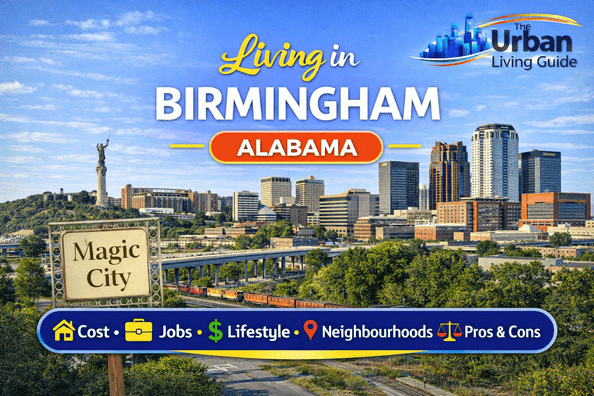
Living in Birmingham, Alabama in 2026: An Insider’s Look at Magic City Heritage, Appalachian Foothills, and Southern Urban Growth
Stretching across the lush, rolling foothills of the Appalachian Mountains in north-central Alabama where rich iron and steel industrialization built the legendary “Magic City,” living in Birmingham, Alabama offers an extraordinary fusion of southern hospitality, explosive healthcare and medical innovation, a nationally acclaimed culinary scene, and exceptional housing affordability. As the largest city in Alabama with an incorporated population of approximately 200,000 residents (anchoring a broader metropolitan statistical area exceeding 1.1 million people), Birmingham delivers a sophisticated metropolitan lifestyle paired with deep historical heritage.
Universally celebrated across the American South as a beacon of civil rights history and post-industrial renewal, Birmingham commands a distinct residential identity shaped by expansive urban parks like Railroad Park, vibrant historic arts districts like Avondale, and elite academic medicine anchored by the University of Alabama at Birmingham (UAB). Whether you are walking through the shaded trails of Red Mountain Park, exploring local microbreweries, or enjoying the quiet charm of tree-lined neighborhoods like Mountain Brook and Homewood, life here delivers an active, culturally rich, and financially advantageous standard of living. Local municipal governance, public safety programs, and regional economic development initiatives are centrally administered through the official City of Birmingham Government Portal under the direction of city leadership.
Watch a recent video breakdown to better understand daily life, neighborhood vibes, and local culture across Birmingham:
Why Birmingham Has Evolved Into the Economic Heart of Alabama
Over recent decades, Birmingham has captured national acclaim as a premier destination for healthcare professionals, remote executives, growing families, and value-conscious homebuyers seeking major-city amenities and career stability without coastal real estate inflation. Key factors driving its sustained popularity include:
- Explosive Healthcare and Academic Medicine: Anchored by UAB Health System, establishing Birmingham as a global medical research and trauma care powerhouse. Explore regional economic and tourism initiatives via the official Birmingham Tourism and Convention Portal.
- Exceptional Housing Affordability: Real estate valuations and rental rates sitting comfortably below national medians, offering outstanding purchasing power and spacious properties.
- Appalachian Foothills Natural Beauty: Immediate backyard access to rolling green hills, state parks, and extensive urban forestry.
- Nationally Acclaimed Culinary and Arts Scene: A vibrant food culture, craft breweries in Avondale, and historic civil rights museums drawing visitors nationwide.
Birmingham At a Glance: Key Living Metrics
Famous Personalities, Local Icons & Major Brands in Birmingham
Birmingham boasts a proud history of nurturing influential political leaders, sports legends, hip-hop artists, and Fortune 500 financial institutions:
- Condoleezza Rice: The former U.S. Secretary of State, national security advisor, and academic leader who spent her formative years in Birmingham (Hoover Institution Condoleezza Rice Portal).
- Charles Barkley: The NBA Hall of Famer, television analyst, and beloved local sports icon who proudly champions his hometown roots.
- Regions Financial Corporation & Blue Cross Blue Shield: Massive top-tier southeastern banking and health insurance enterprises maintaining headquarters and major operations in the city (Regions Financial Official Portal).
- UAB Health System: A globally renowned academic medical center and regional healthcare powerhouse driving medical breakthroughs and professional employment.
Career Landscape & Major Employers in the Magic City
The employment landscape in Birmingham offers exceptional professional stability, high-paying medical careers, and robust corporate finance opportunities:
- Advanced Healthcare and Medical Research: Anchored by UAB Hospital and UAB Health System, supporting thousands of specialized physicians, researchers, and clinical staff. Track regional workforce data via the Alabama Department of Labor.
- Corporate Finance and Banking: Driven by Regions Financial Corporation and Protective Life Corporation, delivering stable corporate finance, IT, and administrative careers.
- Higher Education and Academic Administration: The University of Alabama at Birmingham providing continuous faculty, research, and institutional management employment.
- Engineering and Advanced Manufacturing: Growing industrial engineering and logistics firms leveraging central highway connectivity.
Housing Market Dynamics & Real Estate Overview in Birmingham
Navigating the real estate market in Birmingham requires understanding its historic loft districts, upscale suburban municipalities, and exceptional value:
- Diverse Architectural Stock: Features stunning historic downtown lofts, grand estate homes in Mountain Brook, walkable suburban properties in Homewood, and character bungalows in Avondale. Track property assessments via the Jefferson County Assessor Portal.
- Market Valuations: Home purchase prices remain significantly below national averages, offering buyers superior square footage and excellent long-term investment potential.
- Rental Market Inventory: Average monthly rent spans $800 to $1,100 for studio units, $1,000 to $1,400 for one-bedroom apartments, $1,300 to $1,800 for two-bedroom properties, and $2,200+ for single-family rental homes.
- Very Low Property Taxes: Alabama maintains some of the lowest property tax rates in the United States, providing substantial long-term savings for homeowners.
Best Neighborhoods in Birmingham: Finding Your Ideal Community
Check the interactive map below to understand the geographic layout of Birmingham:
What Daily Life Really Looks Like in Birmingham (Rhythm & Vibe)
Daily life in Birmingham is characterized by an inviting, community-focused, and culturally rich rhythm that blends southern warmth with progressive urban renewal:
- Morning Fitness and Coffee Routines: Residents often start mornings jogging along the trails of Railroad Park or grabbing artisanal coffee in Homewood. Check municipal recreation schedules via the official City of Birmingham Parks and Recreation Portal.
- Afternoon Park and Museum Outings: Spending warm afternoons hiking through Red Mountain Park, exploring the Birmingham Botanical Gardens, or visiting the Birmingham Civil Rights Institute.
- Evening Dining and Brewery Gatherings: Enjoying award-winning southern fusion cuisine downtown or relaxing at craft microbreweries in Avondale.
- Social Atmosphere: Warm, welcoming, culturally proud, energetic, and wonderfully unpretentious.
Cost of Living Breakdown: Monthly Expenses & Salary Expectations
Commute Realities, Highway Corridors & Transit Options
Birmingham provides exceptional highway connectivity designed for efficient metropolitan transit:
- Interstates 20, 59, 65 & 459: Primary arterial highways intersecting directly through the city, allowing motorists to traverse the metro area efficiently (Alabama Department of Transportation Portal).
- Commute Times: Average daily local commutes remain highly manageable at approximately 20 to 25 minutes.
- MAX Transit Bus Network: Municipal public bus transit operating across urban and suburban corridors (MAX Transit Official Portal).
- Aviation Convenience: Proximity to Birmingham-Shuttlesworth International Airport (BHM) offering convenient domestic flights connecting residents to major national hubs.
Subtropical Climate Realities, Seasons & Environmental Factors
The environmental rhythm of Birmingham follows a classic humid subtropical climate featuring four distinct seasons:
- Hot, Humid Summers: Summer daytime highs routinely exceed 90°F from June through August, prompting heavy reliance on home air conditioning. Track active forecasts via the National Weather Service Birmingham Portal.
- Mild, Short Winters: Winter seasons bring pleasant daytime temperatures hovering comfortably in the 50s with rare snowfall events.
Higher Education, Schools & Major Universities
Educational infrastructure stands as a premier anchor for academic research, medical training, and higher learning:
- University of Alabama at Birmingham (UAB): Premier global research university and academic medical center enrolling over 20,000 students and driving regional innovation (UAB Official Portal).
- Samford University: Respected private liberal arts university nestled in Homewood offering comprehensive undergraduate and graduate degrees (Samford University Official Portal).
- Top Suburban School Districts: High-performing public school systems located in Mountain Brook, Vestavia Hills, Homewood, and Hoover.
Healthcare Infrastructure & Regional Medical Networks
Healthcare infrastructure in Birmingham is elite, positioning the city as a globally renowned medical capital and trauma center:
- Uab Hospital: Massive academic medical center offering advanced specialty care, cutting-edge research trials, and level 1 trauma services (UAB Medicine Official Portal).
- Ascension St. Vincent’s Birmingham & Grandview Medical Center: Premier hospital networks providing comprehensive community health, surgical services, and emergency care.
Hospitality, Boutique Hotels & Local Culinary Scene
The hospitality and culinary identity of Birmingham reflects historic hotel luxury, boutique comfort, and award-winning southern fusion dining:
- The Elyton Hotel: Historic downtown Marriott Autograph Collection hotel featuring chic rooftop dining and historic architecture (The Elyton Hotel Portal).
- Grand Bohemian Hotel Mountain Brook: Luxurious boutique retreat blending art, wine, and upscale comfort.
- Acclaimed Southern Dining: Award-winning restaurants bridging classic southern barbecue and soul food with high-end farm-to-table establishments.
Cultural Landmarks, Parks & Iconic Sightseeing
Landmark cultural institutions and outdoor recreational spaces significantly enhance the daily quality of life for local residents:
- Red Mountain Park: Over 1,500 acres of forested trails, historic mining sites, and adventure courses (Red Mountain Park Portal).
- Birmingham Civil Rights Institute: Powerful cultural museum chronicling the American Civil Rights Movement (Civil Rights Institute Portal).
- Railroad Park & Vulcan Park: Vibrant 19-acre green space downtown and home to the world’s largest cast-iron statue offering panoramic metro views.
Regional Trade-offs: Pros and Cons of Living in Birmingham
Who Is Birmingham Ideal For — And Who Should Avoid It?
Who Birmingham Is Ideal For
- Healthcare and Medical Professionals: Workers pursuing rewarding careers across UAB Hospital, research labs, and medical networks.
- Budget-Conscious Homebuyers: Residents seeking affordable housing stock, spacious properties, and financial breathing room.
- Families and School Planners: People looking for top-rated suburban public school districts in Mountain Brook, Homewood, and Vestavia Hills.
- Foodies and Culture Lovers: Individuals who thrive in a vibrant arts community with a nationally acclaimed culinary scene.
Who Should Avoid Birmingham
- Car-Free Urbanists: Residents requiring extensive urban rail rapid transit systems without driving.
- Extreme Heat Avoiders: Individuals who struggle with prolonged subtropical summer moisture and high afternoon temperatures.
- Coastal Beach Purists: People seeking an immediate oceanfront coastline right outside their home.
- Mega-City Nightlife Seekers: Those looking for 24-hour ultra-dense metropolitan club and theater districts.
Real Experiences: Perspectives from Long-Term Residents (5 to 10+ Years)
“Moving to Homewood twelve years ago after taking a research position at UAB was the best life decision I’ve ever made. The walkable boutique shopping, the incredible school district for my kids, and the vibrant food scene downtown make Birmingham feel like an absolute hidden gem. Summers get steamy, but the low cost of living and southern community warmth are unbeatable.”
[Source: r/Birmingham Community Discussions — u/HomewoodMom04, resident of 12 years]
“The big reality check for newcomers is understanding that you need a car to get around and prepping for July humidity. However, once you explore Railroad Park, hike Red Mountain, and experience the incredible culinary culture here, you realize Birmingham offers big-city sophistication with small-town financial breathing room.”
[Source: Local Resident Panels & Community Forums — David W., Downtown loft owner of 10 years]
Frequently Asked Questions About Living in Birmingham, Alabama
Is Birmingham, Alabama expensive to live in compared to the national average?
No. Birmingham maintains a very accessible cost of living that sits comfortably below the national average, offering lower median home prices than major coastal metropolitan markets.
What level of annual salary do individuals need to live comfortably in Birmingham?
Most single professionals and working families require an annual household income between $55,000 and $95,000 to comfortably cover housing, utilities, transportation, and discretionary spending.
Can residents successfully navigate daily life in Birmingham without owning a personal vehicle?
No, a personal vehicle is essential because Birmingham’s geographic layout is car-dependent and public transit options are limited outside of basic bus routes.
What are the standout residential neighborhoods recommended for new residents?
Top residential districts include Mountain Brook for luxury estates and top schools, Homewood for walkable boutique charm, Downtown for historic lofts and dining, and Avondale for craft breweries and arts.
How do daily commute dynamics function for working professionals across the city?
Commuters primarily utilize Interstates 20, 59, 65, and 459, enjoying efficient average daily commute times of around 20 to 25 minutes during standard hours.
What core natural and cultural highlights define the local Birmingham experience?
Residents enjoy visiting Railroad Park, touring the Civil Rights Institute, hiking Red Mountain Park, and dining at award-winning southern fusion restaurants.
🔗 Explore More Cities in Alabama
If you’re exploring options beyond Birmingham, The Urban Living Guide has journeyed across several other vibrant destinations throughout Alabama. You might also want to check out:
- Living in Montgomery, Alabama
- Living in Huntsville, Alabama
- Living in Mobile, Alabama
- Living in Tuscaloosa, Alabama
Interested in uncovering more details about Birmingham? Dive into these specialized resources:
- Cost of Living in Birmingham, Alabama
- Pros and Cons of Living in Birmingham, Alabama
- Best Neighborhoods in Birmingham, Alabama
For a complete transition breakdown from initial research to settling in, explore our extensive relocation manual: Moving to Birmingham, Alabama
Our curated municipal profiles cut through the noise to examine what really matters on a day-to-day basis—from localized real estate inventory and school district ratings to regional job markets, seasonal micro-climates, and authentic neighborhood personalities.
By keeping all these hyper-local benchmarks in one place, The Urban Living Guide empowers you to weigh regional trade-offs effortlessly, evaluate employment corridors side by side, and secure a residential setting tailored precisely to your long-term personal and professional ambitions.