

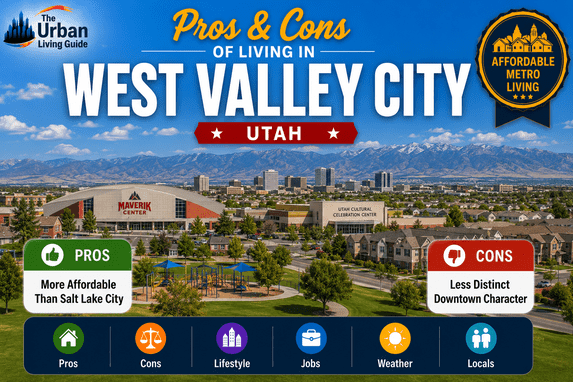
Pros and Cons of Living in West Valley City in Utah’s Most Diverse Community
If you’re considering a move to Utah, understanding the pros and cons of living in West Valley City can help you determine whether this growing suburban city fits your lifestyle and career goals.
Located just west of Salt Lake City, West Valley City is Utah’s second-largest city and one of the state’s most diverse communities. Known for its affordability relative to neighboring cities, strong transportation connections, growing employment base, and multicultural population, West Valley City continues attracting families, first-time homebuyers, and working professionals.
Residents benefit from convenient access to the entire Salt Lake Valley, major employers, entertainment venues, and outdoor recreation. However, challenges such as traffic congestion, air-quality concerns, and limited nightlife options can influence the overall living experience.
Watch local West Valley City relocation videos and neighborhood tours to better understand the real pros and cons of living in West Valley City before moving.
Whether you’re relocating for affordability, career opportunities, family life, or access to Salt Lake City, this guide covers the real pros and cons of living in West Valley City.
Pros of Living in West Valley City
More Affordable Housing Than Nearby Utah Cities
One of the biggest advantages in the pros and cons of living in West Valley City is relative affordability.
Compared to many communities along Utah’s Wasatch Front, housing remains more attainable for many buyers.
The city offers:
-
- More affordable home prices than many nearby suburbs
- Competitive rental options
- Family-oriented neighborhoods
- Larger residential communities
- Better value for first-time buyers
Many residents choose West Valley City because it provides easier access to homeownership than neighboring areas.
Excellent Access to Salt Lake City Jobs
Another major positive in the pros and cons of living in West Valley City is location.
Residents enjoy close proximity to one of the strongest job markets in the western United States.
Nearby employment opportunities include:
-
- Healthcare
- Technology
- Finance
- Logistics
- Government employment
Major employment centers throughout Salt Lake City, South Jordan, Murray, and Draper are easily accessible.
The city’s commuter-friendly location, regional connectivity, and access to major employers are significant advantages.
Diverse and Multicultural Community
West Valley City is widely recognized as one of Utah’s most diverse communities.
Residents benefit from:
-
- Cultural diversity
- International restaurants
- Community festivals
- Multicultural neighborhoods
- Diverse local businesses
The city’s diverse population, multicultural environment, and welcoming atmosphere make it unique within Utah.
Convenient Transportation Options
Transportation access is another strength.
Residents enjoy access to:
-
- Interstate 215
- Interstate 80
- TRAX Light Rail
- Regional bus services
- Salt Lake International Airport
The city’s transportation network provides more flexibility than many suburban communities.
Entertainment and Recreation Opportunities
West Valley City offers more entertainment options than many suburban cities.
Popular attractions include:
-
- Maverik Center
- Utah First Credit Union Amphitheatre
- Valley Fair Mall
- Centennial Park
- Community recreation centers
Residents appreciate having entertainment venues close to home.
Family-Friendly Neighborhoods
Many residents move to West Valley City because of its suburban environment and affordability.
The city offers:
-
- Community parks
- Family-oriented neighborhoods
- Recreation programs
- School options
- Residential stability
The city’s family-friendly atmosphere, community amenities, and suburban lifestyle continue attracting new residents.
Cons of Living in West Valley City
Air Quality Concerns During Winter
One of the biggest downsides in the pros and cons of living in West Valley City is air quality.
Like much of the Salt Lake Valley, winter inversions can create pollution issues.
Air-quality challenges include:
-
- Winter smog
- Pollution buildup
- Reduced visibility
- Seasonal health concerns
- Air-quality alerts
Residents often identify air quality as one of the area’s most significant environmental challenges.
Traffic Congestion During Peak Hours
As population growth continues, traffic has become increasingly noticeable.
Common traffic concerns include:
-
- Rush-hour congestion
- Interstate delays
- Construction zones
- Commuter traffic
- Population-driven growth
Driving throughout the Salt Lake Valley can be frustrating during peak periods.
Limited Downtown Identity
Unlike some neighboring communities, West Valley City lacks a traditional downtown district.
Residents may notice:
-
- Less walkability
- Fewer historic districts
- Limited urban character
- More suburban development patterns
Some newcomers prefer cities with a stronger downtown atmosphere.
Rising Housing Costs
Although still relatively affordable, prices continue increasing.
Housing challenges include:
-
- Rising home values
- Competitive housing market
- Increasing rents
- Limited inventory
- Growth-related demand
Affordability remains an advantage, but the gap is shrinking.
Hot Summers and Dry Climate
Utah’s climate can be difficult for some newcomers.
Summer challenges include:
-
- High temperatures
- Dry air
- Water conservation concerns
- Wildfire smoke events
- Increased cooling costs
Residents often need time to adapt to desert conditions.
Smaller Nightlife Scene
While entertainment options exist, nightlife remains more limited than larger metropolitan areas.
Residents may notice fewer:
-
- Major nightlife districts
- Late-night entertainment venues
- Large cultural districts
- Urban entertainment hubs
Many residents travel to downtown Salt Lake City for broader nightlife options.
Final Thoughts on the Pros and Cons of Living in West Valley City
Understanding the pros and cons of living in West Valley City is important before making a relocation decision.
The city stands out for its affordability, diverse community, access to Salt Lake City jobs, transportation connections, and family-friendly environment. At the same time, residents should prepare for winter air-quality concerns, traffic congestion, rising housing costs, and a more suburban atmosphere.
For families, commuters, first-time homebuyers, and professionals seeking access to the Salt Lake Valley without some of the costs associated with neighboring cities, West Valley City remains one of Utah’s most practical places to live.
| Pros | Cons |
| More affordable housing | Winter air-quality concerns |
| Access to Salt Lake City jobs | Traffic congestion |
| Diverse community | Limited downtown identity |
| Strong transportation options | Rising housing costs |
| Family-friendly neighborhoods | Smaller nightlife scene |
FAQs
Is West Valley City a good place to live?
Many residents choose West Valley City because of its affordability, diversity, and convenient access to employment opportunities throughout the Salt Lake Valley.
What is West Valley City known for?
West Valley City is known for being one of Utah’s most diverse communities, along with attractions such as the Maverik Center and its strong transportation connections.
Is West Valley City affordable?
Compared to many nearby Utah communities, West Valley City often provides more affordable housing options, although prices have increased in recent years.
Does West Valley City have good job opportunities?
The city benefits from access to the broader Salt Lake Valley job market, which includes technology, healthcare, finance, logistics, and government employment.
Do you need a car in West Valley City?
Many residents own cars, but access to TRAX Light Rail and regional transit options provides more transportation flexibility than many suburban communities.
Explore More with The Urban Living Guide
Read our full guide on living in West Valley City, Utah, and make sure you also check:
- Living in West Valley City, Utah
- Cost of Living in West Valley City, Utah