

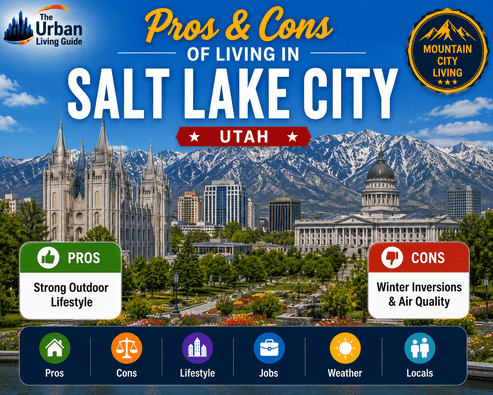
Pros and Cons of Living in Salt Lake City in Utah’s Outdoor and Innovation Capital
If you’re considering a move to Utah, understanding the pros and cons of living in Salt Lake City can help you decide whether this fast-growing mountain city fits your lifestyle and career goals.
Surrounded by the dramatic Wasatch Mountains and located near the world-famous Great Salt Lake, Salt Lake City has become one of the fastest-growing urban centers in the western United States. The city attracts professionals, entrepreneurs, outdoor enthusiasts, and families seeking access to nature, strong job opportunities, and a high quality of life.
Known for its booming technology sector, growing healthcare industry, and year-round outdoor recreation, Salt Lake City offers a lifestyle that is difficult to replicate elsewhere. However, residents also face rising housing costs, winter air-quality concerns, traffic growth, and increasing competition in the housing market.
Watch local Salt Lake City video to better understand the real pros and cons of living in Salt Lake City .
Whether you’re relocating for career opportunities, outdoor recreation, family life, or lifestyle reasons, this guide covers the real pros and cons of living in Salt Lake City.
Pros of Living in Salt Lake City
Incredible Access to Outdoor Recreation
One of the biggest advantages in the pros and cons of living in Salt Lake City is access to outdoor adventure.
Few major U.S. cities offer such close proximity to mountains, hiking trails, ski resorts, and national parks.
Residents enjoy easy access to:
-
- Big Cottonwood Canyon
- Little Cottonwood Canyon
- Snowbird Resort
- Alta Ski Area
- Park City
- Great Salt Lake
The city’s outdoor lifestyle, mountain access, and year-round recreation opportunities attract people from across the country.
Strong Job Market and Tech Growth
Another major positive in the pros and cons of living in Salt Lake City is its economy.
The region’s growing technology corridor, often called the Silicon Slopes, has attracted major investment and talent.
Major industries include:
-
- Technology
- Healthcare
- Finance
- Logistics
- Education
Major employers include:
-
- University of Utah Health
- Intermountain Health
- Adobe
- Qualtrics
- Domo
The city’s strong job market, technology sector, and innovation-driven economy continue fueling population growth.
Stunning Mountain Views
Natural scenery is part of daily life in Salt Lake City.
Residents can enjoy breathtaking mountain views from almost every part of the city.
The city offers:
-
- Mountain backdrops
- Scenic drives
- Canyon access
- Outdoor recreation areas
- Four-season beauty
The city’s natural beauty, mountain landscape, and outdoor environment contribute significantly to quality of life.
High Quality of Life
Salt Lake City consistently ranks highly for livability.
Residents benefit from:
-
- Clean neighborhoods
- Strong local economy
- Well-maintained parks
- Active lifestyle opportunities
- Community-focused culture
The city’s high quality of life, active population, and family-oriented environment appeal to many newcomers.
Access to World-Class Skiing
For winter sports enthusiasts, few cities compare.
Nearby ski destinations include:
-
- Snowbird
- Alta
- Brighton
- Solitude
- Park City Mountain
Many residents can reach ski resorts within 30 to 45 minutes of downtown.
The city’s ski culture, winter recreation, and mountain access are major lifestyle advantages.
Growing Downtown and Cultural Attractions
Salt Lake City has experienced significant downtown revitalization.
Popular attractions include:
-
- Temple Square
- City Creek Center
- The Gateway
- Red Butte Garden
- Utah Museum of Fine Arts
The city’s growing downtown, arts scene, and entertainment options continue expanding.
Cons of Living in Salt Lake City
Rising Housing Costs
One of the biggest downsides in the pros and cons of living in Salt Lake City is affordability.
Rapid population growth has significantly increased housing demand.
Housing challenges include:
-
- Rising home prices
- Competitive housing market
- Increasing rental rates
- Limited inventory
- Higher ownership costs
Many newcomers find housing more expensive than expected.
Winter Air Quality Issues
Air quality is one of the most commonly discussed concerns among residents.
Winter temperature inversions can trap pollution in the valley.
Air-quality challenges include:
-
- Winter inversions
- Smog buildup
- Reduced visibility
- Respiratory concerns
- Seasonal pollution events
This issue is especially noticeable during colder months.
Traffic Continues to Increase
As the metro area grows, transportation infrastructure faces increasing pressure.
Common traffic concerns include:
-
- Interstate congestion
- Rush-hour delays
- Population growth impacts
- Construction projects
- Canyon traffic during ski season
Commuting has become more challenging in recent years.
Hotter Summers Than Many Expect
Although Utah is known for mountains and snow, summers can become quite hot.
Summer challenges include:
-
- High temperatures
- Dry conditions
- Wildfire smoke
- Water conservation concerns
- Increased cooling costs
New residents are often surprised by summer heat.
Competitive Housing Market
Beyond rising prices, housing availability can be limited.
Common concerns include:
-
- Multiple-offer situations
- Limited inventory
- Fast-moving listings
- Competitive rental market
Finding desirable housing may require patience and flexibility.
Limited Nightlife Compared to Larger Cities
While improving, Salt Lake City’s nightlife remains smaller than many major metropolitan areas.
Residents may notice fewer:
-
- Late-night entertainment districts
- Major nightlife hubs
- Large-scale cultural events
- Big-city entertainment options
People seeking a major urban nightlife scene may find the city quieter than expected.
Final Thoughts on the Pros and Cons of Living in Salt Lake City
Understanding the pros and cons of living in Salt Lake City is important before making a relocation decision.
The city stands out for its outdoor lifestyle, mountain access, strong job market, technology sector growth, and high quality of life. At the same time, residents should prepare for rising housing costs, winter air-quality concerns, growing traffic, and a competitive housing market.
For professionals, outdoor enthusiasts, families, and remote workers seeking access to both career opportunities and nature, Salt Lake City remains one of the most desirable places to live in the western United States.
| Pros | Cons |
| Incredible outdoor recreation | Rising housing costs |
| Strong job market | Winter air-quality issues |
| Stunning mountain views | Increasing traffic |
| World-class skiing | Competitive housing market |
| High quality of life | Limited nightlife |
FAQs
Is Salt Lake City a good place to live?
Many residents consider Salt Lake City one of the best places to live in the West because of its strong economy, outdoor recreation opportunities, and high quality of life.
What is Salt Lake City known for?
Salt Lake City is known for the Wasatch Mountains, Great Salt Lake, world-class skiing, outdoor recreation, and the rapidly growing Silicon Slopes technology sector.
Is Salt Lake City expensive to live in?
Housing costs have risen significantly in recent years. While still more affordable than some coastal cities, Salt Lake City is no longer considered a low-cost market.
Does Salt Lake City get a lot of snow?
Yes. Winters bring snowfall, particularly in nearby mountain areas, making the city popular with skiers and snowboarders.
Do you need a car in Salt Lake City?
Many residents own cars, although public transportation options are better than in many similarly sized western cities.
Explore More with The Urban Living Guide
Read our full guide on living in Salt Lake City, Utah, and make sure you also check:
- Living in Salt Lake City, Utah
- Cost of Living in Salt Lake City, Utah