

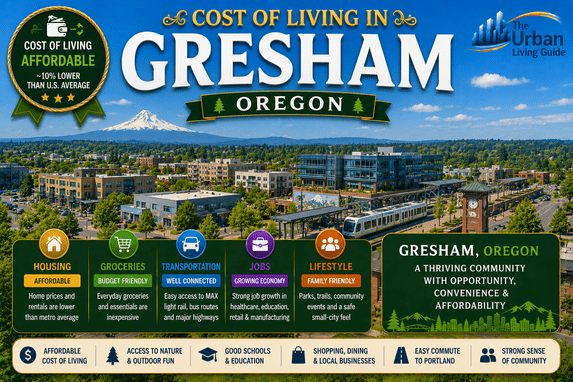
Cost of Living in Gresham, OR: MAX Line Access, Affordable Alternative & Working-Class Roots
Gresham offers Portland metro access without downtown price tags. This isn’t a trendy neighborhood—it’s a working-class city with strong multicultural communities, direct MAX Light Rail connections, and housing that still feels reachable. If you’re relocating for Portland jobs but can’t afford inner-city rents, or seeking diversity and transit access on a tighter budget, Gresham delivers practical value.
This guide breaks down real monthly costs so you can plan accurately. Many people moving to Gresham notice that rent near Downtown Gresham or Rockwood runs lower than Portland proper, though areas closer to Powell Valley or Pleasant Valley cost slightly more. The MAX Blue Line keeps commuters connected while maintaining affordability that inner Portland can’t match.
Average Monthly Cost in Gresham
Here’s what monthly living typically looks like:
-
- Single person: Around $2,600–$3,400
- Couple: Typically $4,200–$5,300
- Family of four: Approximately $6,300–$8,000
These estimates include rent, utilities, groceries, transportation, and essential expenses. Your actual spending depends on neighborhood and proximity to MAX stations or shopping districts.
Housing Costs in Gresham
Rent here stays notably cheaper than Portland while maintaining metro connectivity:
-
- Studio: Typically $1,000–$1,500 depending on neighborhood condition
- 1-bedroom apartment: Averages $1,300–$1,900, higher near newer developments
- 2-bedroom units: Range from $1,600–$2,400, vary by building age and location
- Family homes (3+ bedrooms): Cost $2,100–$3,200 monthly
Downtown Gresham and areas near MAX stations command slightly higher rents due to transit access. Locals often mention that Rockwood, Centennial, and neighborhoods along 181st Avenue offer the most affordable options, though some areas have higher crime concerns. If you’re coming from Portland, housing here feels significantly cheaper—Eugene or Salem transplants find it comparable.
The rental market serves working families, service industry workers, and Portland commuters who prioritize affordability over walkability. Gresham’s reputation as a blue-collar alternative keeps prices lower than westside suburbs like Beaverton or Hillsboro.
Utilities & Internet
Monthly costs breakdown:
-
- Utilities (electricity, water, trash, sewer): $130–$200 for standard apartments
- Internet: $55–$80 for reliable speeds
- Winter heating: Mild climate keeps heating moderate
Older housing stock in some Gresham neighborhoods can mean slightly higher utility costs due to less efficient insulation.
Grocery & Food Costs
Expect to spend $360–$530 monthly per person on groceries:
-
- Gresham has WinCo, Fred Meyer, Safeway, Grocery Outlet, and ethnic markets
- Dining out: Runs $12–$27 per meal at local spots, chains, and diverse ethnic restaurants
- The food scene reflects Gresham’s multicultural population—Mexican, Vietnamese, Russian, Middle Eastern options
No Oregon sales tax helps grocery budgets. Shopping at WinCo or Grocery Outlet keeps costs very manageable.
Transportation Costs
Transportation varies based on commute style:
-
- Car owners: Gas, insurance, and parking average $200–$350 monthly
- TriMet monthly pass: $100 for unlimited MAX, bus, and streetcar access
- MAX Blue Line: Connects Gresham to Downtown Portland, Portland Airport, and Hillsboro
- Parking: Most neighborhoods offer free street parking
Many Gresham residents drive for local errands but use MAX for Portland commutes. Families typically need cars, while young professionals near MAX stations can skip ownership.
Healthcare & Insurance
Health insurance and medical expenses:
-
- Employer health insurance: Typically $200–$450 per month for individuals
- Legacy Mount Hood Medical Center serves Gresham and east county
- Specialist visits and prescriptions: Budget $55–$145 monthly for regular care
Other Living Expenses
Entertainment, gym memberships, phone plans, and personal care add $190–$380 monthly:
-
- Gresham offers Mt. Hood Community College events, Gresham Japanese Garden, and Powell Butte Nature Park
- Portland entertainment is a short MAX ride away
- Families should budget for kids’ activities, though costs run lower than inner Portland
Cost Comparison with Nearby Cities
| Expense Category | Gresham | Portland | Hillsboro | Beaverton | Troutdale |
|---|---|---|---|---|---|
| 1-BR Rent | $1,300–$1,900 | $1,600–$2,400 | $1,400–$2,000 | $1,400–$2,100 | $1,200–$1,700 |
| Groceries (monthly) | $360–$530 | $380–$550 | $370–$540 | $370–$540 | $350–$520 |
| Transportation | $200–$350 (or $100 TriMet) | $220–$380 (or $100 TriMet) | $210–$360 (or $100 TriMet) | $210–$360 (or $100 TriMet) | $190–$340 |
| Overall Affordability | Moderate | High cost | Moderate-high | Moderate-high | Moderate-low |
Gresham costs 15–25% less than Portland while offering MAX access. It’s comparable to Hillsboro and Beaverton but attracts fewer tech workers, keeping prices lower.
Is Gresham Expensive or Affordable?
Gresham lands in the moderately affordable zone for the Portland metro. It’s not cheap compared to rural Oregon, but it’s one of the best values with direct MAX access. Housing drives affordability—working-class demographics, older housing stock, and reputation as a practical rather than trendy suburb keep rents reasonable. Why? Less demand from high-earning tech workers, families prioritizing space over prestige, and proximity to Portland without the urban premium.
Overall, this city works well for service workers, retail employees, young families, Portland commuters, and anyone prioritizing transit access over neighborhood cachet. Single earners and working-class households find Gresham accessible.
👤 Who Can Afford to Live Comfortably
A household income around $60,000–$75,000+ makes Gresham comfortable. Healthcare workers, retail managers, tradespeople, and dual-income families handle costs well. Those commuting to Portland for higher-paying jobs find Gresham housing very affordable compared to inner-city options.
⚠️ Who May Find Gresham Expensive?
Single earners making under $38,000 will feel rent pressure, though Gresham remains more forgiving than Portland. Part-time workers, single parents, or those in minimum-wage jobs may need roommates. The cost mismatch is less severe here—even on modest income, decent housing exists if willing to live in Rockwood or Centennial neighborhoods.
Money-Saving Tips
-
- Rent in Rockwood, Centennial, or East Gresham for lowest costs
- Shop at WinCo, Grocery Outlet, or ethnic markets for bargains
- Use MAX instead of driving to Portland for work
- Take advantage of free parks—Powell Butte, Blue Lake Park, Gresham Japanese Garden
- Cook at home using diverse international markets for affordable ingredients
FAQs
Is Gresham cheaper than Portland?
Yes, Gresham costs 20–30% less than Portland overall. Housing is significantly cheaper while maintaining MAX access to downtown jobs and amenities.
What salary do I need to live comfortably in Gresham?
A household income of $60,000–$75,000+ covers rent, utilities, food, and lifestyle comfortably. Single individuals can manage on $38,000–$48,000, depending on housing choice.
Are groceries expensive in Gresham?
Groceries run close to Portland metro averages—$360–$530 per person monthly. Shopping at WinCo or Grocery Outlet keeps costs very reasonable.
Do I need a car in Gresham?
It depends. MAX Blue Line access makes car-free living possible for Portland commuters, but most families and local workers find cars practical for daily life.
How does Gresham compare to Hillsboro in cost?
Gresham costs slightly less than Hillsboro—about 10–15% lower overall. Hillsboro attracts more Intel and tech workers, pushing housing costs higher despite similar MAX connectivity.
Explore more with The Urban Living Guide
Before moving to Gresham, make sure you check: