
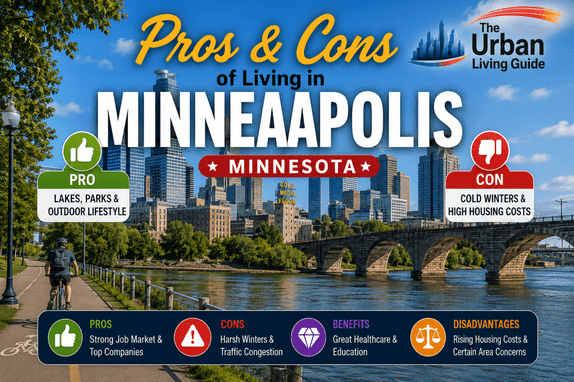
Pros and Cons of Living in Minneapolis Near the City of Lakes
If you’re planning a move to Minnesota, understanding the pros and cons of living in Minneapolis is important before making a decision. Known as the “City of Lakes,” Minneapolis offers a unique combination of urban living, outdoor recreation, thriving job opportunities, and strong community culture.
Located beside Saint Paul, the city forms part of the famous Twin Cities metro area and attracts professionals, families, students, and remote workers from across the country. From scenic waterfront parks and Fortune 500 headquarters to freezing winters and rising housing costs, life in Minneapolis comes with both major advantages and a few challenges.
Whether you’re relocating for work, education, lifestyle, or affordability, this guide breaks down the real pros and cons of living in Minneapolis so you can decide if the city matches your goals.
Watch video by a local to vlogger to understand the pros and cons more closely –
Pros of Living in Minneapolis
Strong Job Market and Fortune 500 Companies
One of the biggest pros and cons of living in Minneapolis discussions revolves around its strong economy and career opportunities.
The city is home to several major employers and Fortune 500 companies, including Target, Best Buy, U.S. Bancorp, and UnitedHealth Group. Industries like healthcare, finance, retail, technology, logistics, and manufacturing provide stable employment options for professionals at different experience levels.
The broader Twin Cities region also supports startups, remote work culture, and entrepreneurship, making it attractive for younger professionals and digital workers.
Major industries in Minneapolis include:
-
- Healthcare
- Finance
- Technology
- Retail
- Education
- Manufacturing
Beautiful Lakes and Outdoor Lifestyle
One thing that makes Minneapolis stand out nationally is its incredible access to lakes, trails, and green spaces.
The city’s outdoor culture is deeply connected to landmarks like Bde Maka Ska, Lake Harriet, Lake Nokomis, and the famous Chain of Lakes area.
Residents enjoy:
-
- Biking
- Jogging
- Kayaking
- Fishing
- Ice skating
- Hiking
- Paddleboarding
Even within city limits, outdoor recreation feels easily accessible, which is a major reason many people love living here.
Popular outdoor destinations include:
-
- Minnehaha Regional Park
- Mississippi Riverfront
- Boom Island Park
- The Grand Rounds Scenic Byway
High Quality Healthcare Facilities
Healthcare is another strong advantage when evaluating the pros and cons of living in Minneapolis.
The city has excellent hospitals, research institutions, and specialty medical centers. Residents have access to top-tier healthcare services across the metro area, which is especially beneficial for families, retirees, and healthcare professionals.
The healthcare industry itself also creates thousands of high-paying jobs throughout the region.
Excellent Education and Universities
Families moving to Minneapolis often appreciate the educational opportunities available throughout the metro area.
The city offers:
-
- Highly rated public schools
- Charter schools
- Private schools
- Colleges and universities
The well-known University of Minnesota plays a major role in education, research, sports, and local innovation.
Many suburbs around Minneapolis also rank highly for school quality, making the region appealing for long-term family living.
Arts, Music, and Food Scene
Another major positive in the pros and cons of living in Minneapolis is the city’s cultural scene.
Despite being located in the Midwest, Minneapolis has a surprisingly vibrant arts and entertainment environment. The city is famous for live music, local breweries, theaters, museums, and sports culture.
Residents enjoy attractions like:
-
- Guthrie Theater
- First Avenue
- Minneapolis Institute of Art
- Target Field
- U.S. Bank Stadium
The restaurant scene is also diverse, offering everything from Scandinavian-inspired food and craft coffee shops to international cuisine and trendy rooftop dining spots.
Bike-Friendly and Active Community
Compared to many U.S. cities, Minneapolis is extremely bike-friendly.
The city has:
-
- Dedicated bike lanes
- Urban cycling trails
- Walkable neighborhoods
- Public transportation access
Many residents bike during warmer months instead of driving, helping reduce commuting costs and traffic stress.
The active lifestyle culture also encourages community events, fitness programs, and outdoor social activities throughout the year.
Cons of Living in Minneapolis
Brutally Cold Winters
The harsh winters are easily one of the biggest cons in the pros and cons of living in Minneapolis.
Winter temperatures regularly drop below freezing, and snowstorms are common between late fall and early spring. Wind chills can make conditions feel even colder, especially during January and February.
For people moving from warmer climates like Texas, Florida, or California, adjusting to the weather can be difficult.
Winter challenges often include:
-
- Snow-covered roads
- Icy sidewalks
- Long heating seasons
- Seasonal depression
- Difficult commuting conditions
Residents usually need heavy winter gear, snow tires, and experience driving in snow.
Rising Housing Costs
Although Minneapolis is still cheaper than coastal cities like New York City or San Francisco, housing costs have increased significantly over recent years.
Popular neighborhoods close to downtown or lakeside areas can be expensive for both renters and buyers.
Expensive neighborhoods include:
-
- North Loop
- Uptown
- Linden Hills
- Northeast Minneapolis
Property taxes and utility bills can also add noticeable monthly expenses, especially during winter.
Traffic and Road Construction
Traffic congestion is another issue residents commonly mention.
Highways like I-35W, I-94, and Highway 62 can become heavily congested during rush hours. Winter weather and constant road construction projects often make commuting more frustrating.
While public transportation helps in some parts of the city, many residents still rely heavily on personal vehicles.
Crime Concerns in Certain Areas
Like many major U.S. cities, crime varies significantly by neighborhood in Minneapolis.
Some areas experience higher rates of:
-
- Property crime
- Vehicle theft
- Burglary
- Violent crime
However, many neighborhoods remain safe, family-friendly, and community-oriented.
Areas often researched carefully by newcomers include:
-
- Parts of Downtown Minneapolis
- Certain sections of North Minneapolis
- High-traffic urban corridors
Choosing the right neighborhood plays a huge role in overall quality of life.
Long Winters Can Affect Mental Health
Another downside many newcomers underestimate is the emotional impact of long winters.
Cold temperatures, snow, and limited daylight can contribute to seasonal depression or lower energy levels.
Many residents combat this by:
-
- Staying active indoors
- Using light therapy
- Participating in winter sports
- Traveling during colder months
Still, climate adjustment remains one of the biggest challenges for new residents.
Mosquitoes During Summer
While summers in Minneapolis are beautiful, mosquitoes can become annoying near lakes and parks.
Warm weather combined with humidity and water sources creates ideal mosquito conditions during summer evenings.
Residents often use bug sprays and avoid outdoor activities during peak mosquito hours.
Is Minneapolis a Good Place to Live?
For many people, yes.
Minneapolis offers a strong economy, outdoor lifestyle, quality healthcare, good education, and a vibrant arts scene. The city blends urban opportunities with easy access to nature better than many other large Midwest cities.
At the same time, freezing winters, rising living costs, and traffic issues may not work for everyone.
People who enjoy four-season living, active communities, and career opportunities often find Minneapolis to be an excellent place to settle long term.
Final Thoughts on the Pros and Cons of Living in Minneapolis
Understanding the pros and cons of living in Minneapolis can help you decide whether this fast-growing Midwest city matches your lifestyle and career goals.
The city stands out for its lakes, outdoor recreation, strong job market, healthcare access, education system, and cultural attractions. However, residents must also prepare for severe winters, increasing housing costs, and urban traffic challenges.
For professionals, families, students, and remote workers seeking a balance between city life and outdoor living, Minneapolis remains one of the most attractive places to live in the Midwest.
FAQ’s
Is Minneapolis expensive to live in?
Minneapolis is moderately expensive compared to other Midwest cities, especially in popular neighborhoods near downtown and the lakes.
Does Minneapolis get a lot of snow?
Yes, Minneapolis experiences long winters with frequent snowfall and freezing temperatures.
Is Minneapolis good for families?
Many families choose Minneapolis because of its schools, parks, healthcare facilities, and suburban communities.
What salary do you need to live comfortably in Minneapolis?
The income needed depends on lifestyle and housing choices, but many professionals aim for stable middle-to-upper income levels due to rising housing costs.
Is Minneapolis a walkable city?
Some neighborhoods in Minneapolis are highly walkable and bike-friendly, especially areas close to downtown and public transit routes.