

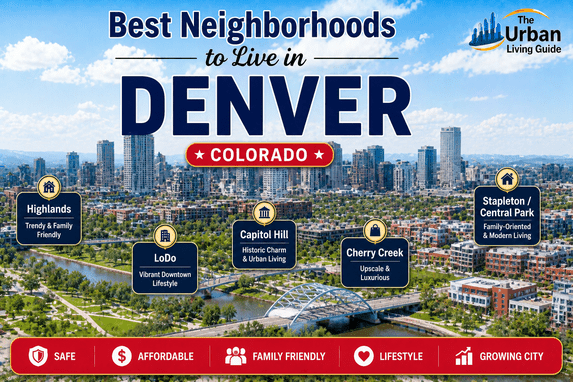
Discover the Best Neighborhoods in Denver, Colorado: Mile High Parks, Historic Bungalows & Urban Mountain Living in 2026
Covering approximately 155 square miles of land area across the high plains of the South Platte River Valley in Denver County, the consolidated city and county of Denver operates under the mayor-council governance of the City and County of Denver. Housing an incorporated municipal core population exceeding 715,000 residents and anchoring Colorado’s primary economic, financial, and cultural gateway within the burgeoning Denver-Aurora-Lakewood metropolitan region (surpassing 3.0 million people), the historic “Mile High City” stands as an essential global center for aerospace engineering, high-tech corporate innovation, higher education, outdoor alpine recreation, and specialized medical healthcare.
Relocating across the Mile High region requires evaluating distinct municipal zoning overlays, historic preservation guidelines, and multi-modal transit corridors managed by the Regional Transportation District (RTD) light rail and bus networks and regional highway systems.
Inbound movers consistently balance direct daily access to primary regional employers—including global corporate operations for Palantir Technologies, Kroenke Sports & Entertainment, major financial institutions, and healthcare systems anchored by Denver Health, UCHealth University of Colorado Hospital, and National Jewish Health—against daily transit commutes across Interstate 25, Interstate 70, US Route 6 (Colfax Avenue), and Colorado Boulevard, with international and domestic air travel via Denver International Airport (DEN).
Explore the alpine parks, historic architectural enclaves, and dynamic communities that define the best neighborhoods in Denver, Colorado:
Essential Residential Districts Across the Mile High City at a Glance in 2026
| Community / District | Location | Distance to Downtown Denver | Development Status | Transit Connectivity | Cost Level | Best Fit For |
|---|---|---|---|---|---|---|
| Washington Park (South Denver) | South Central Parkside Basin | ~3 mi south | Historic Bungalows & 155-Acre Park | High (RTD Light Rail, I-25) | High-to-Premium | Families, Park Enthusiasts & Long-Term Homebuyers |
| River North Arts District – RiNo (North Core) | North Platte River Corridor | ~1.5 mi north (Direct Walk) | Industrial Lofts & Creative Breweries | Exceptional (A-Line Commuter Train, I-70) | Mid-to-High | Artists, Tech Workers & Frequent Flyers |
| Lower Highlands – LoHi (Northwest Core) | Northwest River Bluff | ~1 mi northwest | Victorian Architecture & Rooftop Dining | High (I-25, Zuni St buses) | High-to-Premium | Young Professionals, Foodies & Skyline Dwellers |
| Cherry Creek (Southeast Core) | Cherry Creek Valley Basin | ~4 mi southeast | Luxury Retail & High-End Condos | High (Cherry Creek Trail, University Blvd) | Premium | Luxury Shoppers, Executives & Retirees |
| Central Park (Northeast Denver) | Northeast Master-Planned Basin | ~7 mi northeast | Master-Planned Family New Construction | High (RTD Commuter Rail, I-70) | Mid-to-High | Growing Families, Move-Up Buyers & Park Lovers |
A Comprehensive Look at Top-Tier Living Options in Denver, Colorado
Washington Park (South Denver) — 155-Acre Park, Historic Bungalows & Tree-Lined Avenues
Covering the established parkside residential territory in south-central Denver centered around the historic 155-acre park along Louisiana Avenue and Franklin Street, Washington Park (frequently called Wash Park) is celebrated as the crown jewel of southern Denver. Operating under City and County of Denver administration, the district retains an unmatched community charm.
When searching for the best neighborhoods in Denver, Colorado that offer majestic park lakes, running trails, early 20th-century brick bungalows, and tight-knit neighborhood programming, Washington Park stands out as the ultimate local destination.
- Housing & Real Estate Market:
Real estate stock features early 20th-century brick bungalows, classic Denver Square homes, and modern custom rebuilds with private backyards. Purchase prices typically range from $1,200,000 to $1,500,000+, reflecting strong long-term property appreciation across the metro area. - Safety & Crime Rate:
Patrolled actively by the Denver Police Department District 3 Command, this neighborhood consistently reports some of the lowest crime rates in urban Denver, supported by vigilant resident block associations and active park patrols. - School District & Education Quality:
Education is governed by Denver Public Schools (DPS), featuring high-performing neighborhood elementary schools and assignment to local academic powerhouses like South High School, alongside nearby higher education options. - Walkability & Daily Conveniences:
Exceptional pedestrian walkability connects residents directly to boutique coffee shops along South Gaylord Street, local grocers, and commercial retail corridors. - Parks & Green Spaces / Pet-Friendliness:
Anchored by the 155-acre Washington Park featuring two lakes, botanical gardens, and miles of running paths. Exceptionally pet-friendly for dog owners. - Parking & Traffic Congestion:
On-street parking near the park is competitive on sunny weekends; homes featuring detached garages and private driveways command premium resale values. - Proximity & Commuting:
Quick access to the Louisiana-Pearl RTD Light Rail station provides fast transit into Downtown Denver and the Denver Tech Center via Interstate 25. - Noise Levels & Vibe:
Lively during peak park hours yet peaceful on residential side streets, characterized by joggers, strollers, and mature tree canopies. - Medical Facilities & Hospitals:
Convenient 10-minute drive north to Denver Health and rapid access to major medical networks across central Denver. - Transit Connectivity:
Seamless roadway integration via Washington Street and easy entry onto Interstate 25 for regional commuting. - Affordability & Value:
Premium price bracket; robust historical appreciation ensures exceptional equity protection for long-term real estate investors. - Best Fit For:
Established families, fitness enthusiasts, and buyers prioritizing iconic urban green space without sacrificing residential quiet. - Drawbacks & Considerations:
High entry-level property costs and competitive buyer demand during peak spring and summer selling seasons.
River North Arts District – RiNo (North Core) — Industrial Lofts, Craft Breweries & Light Rail Transit
Covering the industrial warehouse corridor north of downtown along the South Platte River and Larimer Street, the River North Arts District (RiNo) is celebrated as Denver’s creative, artistic, and craft beverage capital. Supported by the RiNo Art District Organization, the area thrives on adaptive reuse.
When searching for the best neighborhoods in Denver, Colorado that offer converted industrial lofts, vibrant mural-lined alleys, and direct rail transit to the airport, RiNo serves as an electrifying urban hub.
- Housing & Real Estate Market:
Real estate stock features converted industrial brick lofts with exposed timber beams, modern condo developments, and mixed-use townhomes. Purchase prices typically range from $500,000 to $650,000 for condominiums. - Safety & Crime Rate:
Patrolled by the Denver Police Department District 2 Command, maintaining active safety protocols across commercial arts venues and high-density residential blocks. - School District & Education Quality:
Governed by Denver Public Schools, primarily serving young professionals, remote workers, and creative entrepreneurs rather than traditional families. - Walkability & Daily Conveniences:
Exceptional pedestrian walkability connects residents directly to hundreds of craft breweries, live music venues, art galleries, and specialty coffee roasters. - Parks & Green Spaces / Pet-Friendliness:
Recreation is anchored by the South Platte River Trail and pocket parks. Extremely pet-friendly urban community with numerous dog-friendly patios. - Parking & Traffic Congestion:
Street parking is tightly metered; residential developments provide secure structured parking garages for residents. - Proximity & Commuting:
Immediate access to the 38th & Blake Station on the RTD A-Line provides a direct 30-minute train ride to Denver International Airport. - Noise Levels & Vibe:
High-energy, creative, and fast-paced, characterized by muralists, tech workers, weekend festival crowds, and industrial architecture. - Medical Facilities & Hospitals:
Rapid 8-minute drive south to downtown medical offices and St. Joseph Hospital. - Transit Connectivity:
Unrivaled transit integration via the RTD Commuter Rail A-Line and quick highway entries onto Interstate 70. - Affordability & Value:
Mid-range urban tier; offers modern condo living and rental inventory suited for young professionals. - Best Fit For:
Young professionals, remote workers, artists, and frequent flyers seeking culture-rich walkable environments. - Drawbacks & Considerations:
Industrial zoning transition areas and higher weekend noise levels near entertainment corridors.
Lower Highlands – LoHi (Northwest Core) — Victorian Architecture, Rooftop Dining & Skyline Views
Covering the elevated river bluffs sitting just across the South Platte River from downtown along 32nd Avenue and Zuni Street, the Lower Highlands (LoHi) is celebrated as one of Denver’s most polished and walkable urban neighborhoods. Championed by local merchant groups, the district blends historic preservation with modern upscale dining.
The neighborhood features restored Victorian-era homes sitting alongside modern multi-story condo buildings, award-winning rooftop bars, and stunning panoramic views of the Downtown Denver skyline.
- Housing & Real Estate Market:
Real estate stock features restored historic Victorians, modern multi-story townhomes, and luxury low-rise condos. Purchase prices typically range from $865,000 to $980,000. - Safety & Crime Rate:
Patrolled by the Denver Police Department District 1 Command, maintaining consistent security across residential lanes and dining districts. - School District & Education Quality:
Governed by Denver Public Schools, with local school boundaries shifting block by block across urban development zones. - Walkability & Daily Conveniences:
Exceptional pedestrian infrastructure (Walk Score near 90/100) connecting residents directly to boutique coffee shops, yoga studios, and fine dining. - Parks & Green Spaces / Pet-Friendliness:
Recreation includes pedestrian bridges over Interstate 25 connecting straight into Commons Park and the South Platte River Trail. Exceptionally pet-friendly. - Parking & Traffic Congestion:
Street parking is tightly restricted; newer townhomes and condos feature dedicated underground or attached garage spaces. - Proximity & Commuting:
Instant pedestrian access across the Highland Bridge to Union Station and Downtown Denver financial hubs. - Noise Levels & Vibe:
Sophisticated, vibrant, and energetic, characterized by rooftop patio diners, young professionals, and stunning skyline views. - Medical Facilities & Hospitals:
Convenient 5-minute drive south to Saint Joseph Hospital and downtown medical clinics. - Transit Connectivity:
Excellent roadway integration via Interstate 25 and local RTD bus routes servicing the 32nd Avenue corridor. - Affordability & Value:
High-end urban tier; reflects prime proximity to downtown and top-tier dining infrastructure. - Best Fit For:
Young professionals, corporate executives, foodies, and buyers seeking polished urban neighborhood culture. - Drawbacks & Considerations:
Steep real estate pricing and limited availability of detached single-family yards.
Cherry Creek (Southeast Core) — Luxury Retail, Botanic Gardens & High-End Condos
Covering the premier upscale commercial and residential district situated along the Cherry Creek valley basin near University Boulevard and First Avenue, Cherry Creek is celebrated as Denver’s premier luxury shopping and lifestyle destination. Supported by the Cherry Creek Arts Festival Association, the district offers sophisticated urban elegance.
The neighborhood features lock-and-leave condominiums, attached townhomes with dedicated underground parking, direct access to the Cherry Creek Bike Trail, and immediate proximity to the Denver Botanic Gardens.
- Housing & Real Estate Market:
Real estate stock features luxury lock-and-leave condominiums, upscale townhomes, and multi-million-dollar custom builds. Purchase prices typically range from $1,200,000 to $1,500,000+. - Safety & Crime Rate:
Patrolled by the Denver Police Department District 3 Command alongside private retail security, maintaining exceptionally high safety standards. - School District & Education Quality:
Governed by Denver Public Schools, with nearby access to elite private preparatory academies across the southeast metro corridor. - Walkability & Daily Conveniences:
World-class pedestrian walkability connects residents directly to the Cherry Creek Shopping Center, art galleries, and fine dining. - Parks & Green Spaces / Pet-Friendliness:
Recreation is anchored by the Cherry Creek Bike Trail providing a direct paved cycling route into downtown, alongside the Denver Botanic Gardens. Extremely pet-friendly. - Parking & Traffic Congestion:
Managed almost exclusively via dedicated underground residential parking garages and structured retail parking. - Proximity & Commuting:
10-minute drive northwest to Downtown Denver and convenient access to major healthcare facilities like National Jewish Health. - Noise Levels & Vibe:
Upscale, polished, and sophisticated, characterized by luxury shoppers, art collectors, and manicured streetscapes. - Medical Facilities & Hospitals:
Immediate proximity to National Jewish Health and specialized medical centers operating along the southeastern corridor. - Transit Connectivity:
Excellent bus route integration along University Boulevard and direct cycling paths into the financial core. - Affordability & Value:
Premium luxury tier; reflects unmatched retail access, secure property management, and high-end finishes. - Best Fit For:
Affluent retirees, corporate executives, luxury shoppers, and buyers seeking lock-and-leave convenience. - Drawbacks & Considerations:
Steep property price tags and high monthly HOA condominium assessments.
Central Park (Northeast Denver) — Master-Planned Family Living, Community Pools & Modern Parks
Covering the expansive master-planned residential basin in northeast Denver along Arapahoe County borders and regional commuter rails, Central Park (formerly Stapleton) is celebrated as Denver’s premier master-planned family community. Championed by master community developers, the neighborhood was built around pedestrian connectivity and green architecture.
The neighborhood features traditional single-family homes with larger lot sizes than inner-city districts, modern energy-efficient floor plans, community pools, and extensive neighborhood parks.
- Housing & Real Estate Market:
Real estate stock features contemporary single-family homes, attached townhomes, and newer construction builds with attached garages. Purchase prices typically range from $760,000 to $900,000. - Safety & Crime Rate:
Patrolled by the Denver Police Department District 2 Command, maintaining reliable suburban safety across master-planned residential enclaves. - School District & Education Quality:
Governed by Denver Public Schools, featuring modern neighborhood elementary and middle schools designed specifically for growing family populations. - Walkability & Daily Conveniences:
Master-planned village layout; residents walk or bike to local retail plazas, community pools, and grocery stores. - Parks & Green Spaces / Pet-Friendliness:
Recreation is anchored by dozens of pocket parks, community pools, and the massive Central Park green space. Exceptionally pet-friendly. - Parking & Traffic Congestion:
Plentiful private two- and three-car garages and wide residential streets keep neighborhood lanes clear. - Proximity & Commuting:
Fast access to RTD commuter rail stations and Interstate 70 providing direct transit into Downtown Denver. - Noise Levels & Vibe:
Active, family-oriented, and modern, characterized by school children, community pool gatherings, and stroller walks. - Medical Facilities & Hospitals:
Convenient 15-minute drive east to the massive Anschutz Medical Campus in Aurora. - Transit Connectivity:
Outstanding roadway integration via Interstate 70 and RTD light rail lines connecting to the airport and city center. - Affordability & Value:
Mid-to-high suburban tier; offers superior square footage per dollar compared to inner-ring historic neighborhoods. - Best Fit For:
Growing families, move-up buyers, medical professionals, and buyers wanting modern master-planned infrastructure. - Drawbacks & Considerations:
Master association fees and uniform architectural guidelines across specific village filings.
Neighborhood Evaluation: Weighing Living Merits and Shortfalls Across Denver
| Community / District | Core Advantages (Pros) | Core Limitations (Cons) |
|---|---|---|
| Washington Park | 155-acre park access; historic brick bungalows; top-tier neighborhood walkability. | High entry-level housing costs ($1.2M+). |
| River North Arts District (RiNo) | Converted industrial lofts; craft breweries; direct A-Line light rail to airport. | Higher weekend noise and urban transition zones. |
| Lower Highlands (LoHi) | Rooftop dining views; restored Victorian architecture; walk to downtown. | Limited single-family yards and high price point. |
| Cherry Creek | Luxury shopping; Cherry Creek Bike Trail; secure lock-and-leave condos. | Steep property price tags and HOA fees. |
| Central Park | Master-planned family infrastructure; community pools; modern construction. | HOA guidelines and suburban density structure. |
Local Perspectives: What Area Residents Reveal About Living in Denver, Colorado
“Living near Washington Park gives our family the ultimate Colorado lifestyle. We can jog around the lakes every morning, walk to local cafes on South Gaylord Street, and reach downtown Denver in minutes.”
— Marcus Vance, Renewable Energy Director (Verified Local Contributor, Denver Community Forum)
“Moving to RiNo put us right in the middle of Denver’s creative engine. Our converted brick loft has incredible character, and being able to hop on the A-Line train straight to the airport makes business travel effortless.”
— Sarah Jenkins, Tech Startup Founder (Verified Resident Review, Mile High City Insights)
Matching Your Personal Lifestyle with the Right Mile High City Community
Selecting your ideal community in Denver requires balancing your household budget with daily workplace destinations, school enrollment choices, and regional transportation logistics. Because Denver County is framed by the high plains and interconnected by major expressways like Interstate 25 and Interstate 70, your chosen location dictates whether your daily commute prioritizes parkside elegance in Washington Park, creative lofts in RiNo, rooftop dining in LoHi, luxury shopping in Cherry Creek, or family master-planned living in Central Park.
Aerospace engineers, medical specialists at UCHealth or Denver Health, tech innovators, and corporate executives should evaluate regional transit routes to optimize daily convenience.
Beyond transportation corridors, evaluate essential municipal utility and building infrastructure realities. The Front Range experiences over 300 days of sunshine alongside heavy winter alpine snowstorms, making home energy efficiency through Xcel Energy an essential consideration.
In addition, prospective homebuyers evaluating historic properties in Washington Park or LoHi should inspect foundation integrity, plumbing stacks, and historical zoning overlays. Before executing a residential lease or property purchase agreement, verify high-speed fiber broadband availability (such as CenturyLink Fiber or Xfinity Gigabit) and confirm Denver Public Schools enrollment boundaries.
Essential Local Insights & FAQs for Denver, Colorado
Which neighborhood in Denver is considered best for parkside living and historic bungalows?
Washington Park in south-central Denver is widely regarded as the premier parkside community in the city, offering 155 acres of lakes and running trails, early 20th-century brick bungalows, and tight-knit neighborhood charm.
What is the most dynamic industrial loft district for artists and frequent flyers?
The River North Arts District (RiNo) offers exceptional converted brick lofts, craft breweries, street murals, and direct commuter rail access to the airport via the RTD A-Line.
Are there historic neighborhoods featuring rooftop dining and skyline views?
Yes, Lower Highlands (LoHi) provides restored Victorian homes, multi-story townhomes, rooftop bars, and stunning panoramic views of the Downtown Denver skyline.
What are the top luxury shopping and high-end condo communities for executives?
Cherry Creek offers luxury lock-and-leave condominiums, high-end retail shopping centers, and direct bike trail access to downtown financial hubs.
How manageable is the daily commute across the Denver metropolitan area?
Commuting across the region is highly efficient via Interstate 25, Interstate 70, and the RTD Light Rail network, allowing residents to navigate between urban centers and tech hubs within 15 to 25 minutes.
Which neighborhood is best for families wanting master-planned new construction and community pools?
Central Park in northeast Denver features traditional single-family homes, community pools, pocket parks, and master-planned family infrastructure.
Is Denver an affordable place to live compared to coastal California metros?
Yes, Denver’s overall cost of living and housing purchase prices remain significantly more accessible than major California coastal metros, offering alpine proximity, robust job markets, and vibrant culture at an exceptional economic value.
Denver, Colorado Relocation Resources & Living Guides
The Urban Living Guide creates deeply researched, practical, and informative city relocation resources designed to help individuals, working professionals, and families navigate complex urban landscapes. By analyzing municipal infrastructure, hyper-local zoning patterns, commuter realities, and housing markets, our guides provide actionable insights so you can make confident, data-backed decisions when moving to major metropolitan areas.
Explore our regional guides across Denver and the Front Range:
- Living in Denver, Colorado
- Cost of Living in Denver, Colorado
- Pros and cons of living in Denver
- Moving to Denver
Follow The Urban Living Guide for ongoing regional insights, neighborhood developments, and expert local coverage across Greater Denver and the state of Colorado.