

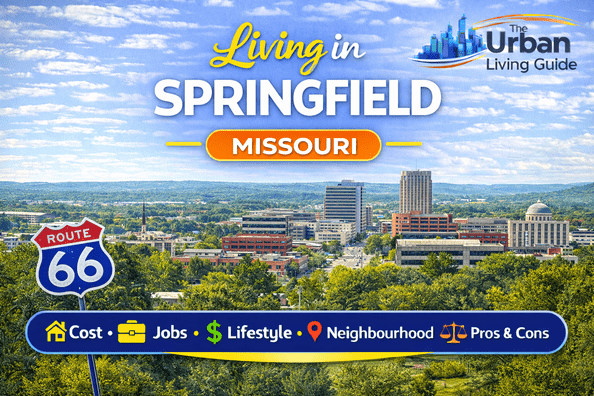
Living in Springfield, Missouri in 2026: The Complete Local Guide to Ozark Mountain Culture, Healthcare Innovations, and Route 66 Heritage
Stretching across the rolling green plateaus of southwest Missouri where the Ozark Mountains begin to rise, living in Springfield, Missouri offers an extraordinary fusion of down-to-earth Midwestern charm, a robust healthcare economy, and unmatched proximity to pristine lakes and wilderness reserves. As the third-largest municipality in the state with a city proper population of approximately 170,000 residents, Springfield anchors a thriving regional hub that balances urban convenience with a relaxed pace of life.
Universally celebrated as the “Queen City of the Ozarks” and proudly recognized as the official birthplace of Historic Route 66, Springfield commands a distinct cultural identity rooted in outdoor adventure, automotive history, and entrepreneurial enterprise. Whether you are browsing the flagship immersive exhibits at the massive Wonders of Wildlife National Museum & Aquarium, catching a minor league baseball game at Hammons Field, or escaping for a weekend on the shores of Table Rock Lake, life here delivers an accessible, community-focused standard of living. Local municipal governance, civic planning, and public safety initiatives are centrally managed through the official City of Springfield Government Portal under the direction of city leadership.
Why Springfield Attracts Families, Healthcare Professionals & Outdoor Enthusiasts
Over recent years, Springfield has captured widespread national attention as a premier destination for families, remote professionals, and first-time homebuyers seeking economic stability and natural beauty without coastal price tags. Key factors driving its sustained popularity include:
- Unmatched Proximity to Ozark Wilderness: Immediate access to world-class freshwater lakes, forested hiking trails, and scenic state parks across the Mark Twain National Forest. Explore regional tourism initiatives via the Springfield Convention & Visitors Bureau Portal.
- Robust Healthcare and Corporate Economy: A thriving employment engine driven by massive regional medical networks and global corporate giants.
- Exceptional Housing Affordability: A real estate market that allows buyers to secure spacious historic or modern homes well below the national median price.
- Rich Route 66 and Cultural Heritage: A vibrant local arts scene, historic downtown entertainment districts, and deep historical roots in American highway culture.
Springfield At a Glance: Key Living Metrics
| Evaluation Metric | Local Data Overview & Regional Reality |
|---|---|
| Population | Approx. 170,000 within municipal city limits (Greater metropolitan statistical area exceeds 470,000) |
| Median Monthly Rent | Ranges from $850 to $1,700+ depending on apartment square footage and neighborhood location |
| Average Annual Salary | Typically spans $55,000 to $90,000 across healthcare, higher education, retail management, and logistics |
| Primary Economic Pillars | Healthcare and medical research, higher education, retail headquarters, advanced manufacturing, and tourism |
| State Income Tax | Progressive Missouri state income tax structure ranging up to 4.8% across taxable income brackets |
| Average Summer High | Routinely reaches 85°F to 95°F during warm, sun-drenched July and August afternoons |
| Primary Transit Mode | City Utilities Transit bus network, major interstate corridors, and regional air service |
Famous Personalities, Local Icons & Major Brands in Springfield
Springfield has a proud history of nurturing Academy Award-winning actors, retail empire visionaries, and influential academic institutions:
- Brad Pitt: The internationally acclaimed Academy Award-winning actor and film producer who spent his foundational childhood and youth growing up in Springfield (Brad Pitt Official Portal).
- Kathleen Turner: The legendary, Golden Globe-winning stage and screen actress whose early life and education connected her deeply to the Ozarks region (Kathleen Turner Official Legacy Portal).
- John Goodman: The celebrated Emmy- and Golden Globe-winning actor known for iconic film and television roles, maintaining strong cultural ties throughout Missouri.
- Bass Pro Shops Headquarters: The massive global headquarters and flagship outdoor sporting goods emporium that defines Springfield’s commercial identity (Bass Pro Shops Official Portal).
- O’Reilly Auto Parts & CoxHealth: Major corporate leaders and healthcare networks maintaining multi-state operations and thousands of regional careers (O’Reilly Auto Parts Corporate Portal).
Job Market & Business Opportunities with Major Employers
The employment landscape in Springfield offers diverse professional opportunities, high retention rates, and strong recession-resistant sectors:
- Healthcare and Clinical Research: Anchored by massive medical centers delivering extensive clinical, nursing, and biomedical research careers. Track regional workforce data via the Missouri Department of Elementary and Secondary Education.
- Higher Education and Administration: Major public and private universities supporting thousands of faculty, research, and professional administrative roles.
- Retail Logistics and Corporate Management: Home to Fortune-level corporate headquarters managing nationwide distribution and supply chain networks.
- Advanced Manufacturing and Engineering: A steady industrial sector supporting precision machining, automotive component production, and technical trades.
Housing & Real Estate Overview in Springfield
Navigating the real estate market in Springfield reveals an attractive landscape of historic character, suburban expansion, and exceptional financial value:
- Diverse Architectural Stock: Features charming early 20th-century Craftsman bungalows in the Rountree area, stately estates in Southern Hills, and modern developments across Greene County. Track property assessments via the Greene County Assessor Portal.
- Market Valuations: Property values remain significantly more accessible than major coastal markets or regional capitals like Kansas City, providing high purchasing power for first-time buyers.
- Rental Market Inventory: Average monthly rent spans $700 to $900 for studio units, $850 to $1,200 for one-bedroom apartments, $1,200 to $1,700 for two-bedroom properties, and $1,900 to $3,200+ for single-family home rentals.
- Suburban Alternatives: Surrounding residential communities like Battlefield and Nixa offer quiet neighborhood streets and top-tier public school systems.
Best Neighborhoods in Springfield: Finding Your Ideal Community
| Neighborhood Name | Vibe & Lifestyle Character | Housing & Price Profile |
|---|---|---|
| Southern Hills | Upscale, established residential neighborhood featuring large custom homes, manicured lawns, and quiet streets. | Spacious single-family homes, mature landscaping, and premium suburban valuations. |
| Rountree Area | Historic, highly walkable district known for charming period architecture, local coffee shops, and tree-lined blocks. | Historic Craftsman homes, vintage bungalows, and stable residential pricing. |
| University Heights | Vibrant academic-adjacent community located near Missouri State University, popular with faculty and students. | Charming historic houses, rental flats, and dynamic neighborhood demand. |
| Sequiota Area | Popular family-oriented residential ward nestled directly next to Sequiota Park and local greenway trails. | Mid-century modern homes, family properties, and strong community valuations. |
| Downtown Springfield | Active urban core packed with historic loft conversions, craft breweries, live music venues, and local eateries. | Industrial loft apartments, mixed-use developments, and competitive urban pricing. |
Watch a recent video by a local vlogger to experience Springfield’s neighborhoods, downtown atmosphere, and everyday lifestyle before making your move.
What It’s Really Like Living in Springfield
Daily life in Springfield is characterized by a welcoming, unpretentious rhythm that prioritizes community connection and outdoor recreation:
- Weekend Ozark Explorations: Residents spend weekends hiking scenic Ozark trails, boating on Table Rock Lake, or visiting local farmers markets. Check regional park events via the Springfield-Greene County Park Board Portal.
- Downtown Dining and Coffee Rituals: Mornings begin at independent roasters in the urban core, followed by evening visits to craft breweries and farm-to-table restaurants.
- Community Festivals and Route 66 Events: Participating in vibrant street fairs, live music showcases, and annual automotive heritage festivals.
- Social Atmosphere: Friendly, family-oriented, industrially driven, and deeply appreciative of local sports teams and outdoor heritage.
If you haven’t come across this city before, the map below gives you a quick view of its location.
Cost of Living in Springfield: Monthly Expenses & Salary Needs
The cost of living in Springfield sits comfortably below the national average, making it one of the most financially forgiving metropolitan areas in the Midwest:
- Housing Overhead: $1,000 to $1,500 covering standard apartment rentals across popular residential wards. Review regional economic trends via the Bureau of Labor Statistics Midwest Information Office.
- Utilities & Power: $120 to $200 monthly for electricity, water, heating, and municipal services, reflecting efficient local utility management.
- Groceries & Household Goods: $280 to $420 depending on household size and shopping preferences between local co-ops and regional supermarkets.
- Transportation Expenses: $90 to $160 covering public transit fares, fuel, and routine vehicle maintenance.
- Required Household Income: Single professionals or working families typically require an annual household income between $60,000 and $80,000 to comfortably cover living expenses and long-term savings goals.
Transportation, Commute Dynamics & Transit Realities
Springfield provides an efficient, low-congestion transit infrastructure that makes daily commuting remarkably stress-free:
- City Utilities Transit System: Comprehensive public bus routes connecting major commercial and residential sectors (City Utilities of Springfield Portal).
- Major Highway Conduits: Excellent regional freeway access via Interstate 44, US Route 65, and US Route 60, ensuring smooth regional travel.
- Commute Times: Average daily commutes remain refreshingly brief at approximately 20 minutes during peak traffic hours.
- Aviation Convenience: Proximity to the modern Springfield-Branson National Airport (SGF) for seamless commercial and regional flights (SGF Airport Official Portal).
Weather Patterns, Seasonal Realities & Climate Factors
The environmental rhythm of Springfield follows a distinct four-season humid continental climate:
- Warm, Sunlit Summers: Summer daytime highs routinely average 85°F to 95°F, providing magnificent weather for evening outdoor dining and lake recreation. Track active meteorological forecasts via the National Weather Service Springfield Portal.
- Crisp, Manageable Winters: Winter seasons bring cool temperatures and occasional snowfall, maintaining a picturesque backdrop without punishing alpine blizzards.
- Splendid Transition Seasons: Spring and autumn deliver blooming Dogwood trees, vibrant Ozark fall foliage, and crisp, refreshing air.
Education, Schools & Major Universities
Educational infrastructure stands as a cornerstone of community growth, workforce development, and academic research:
- Missouri State University (MSU): A prominent public university offering comprehensive undergraduate and graduate degree programs downtown (Missouri State University Official Portal).
- Drury University: Respected private liberal arts institution known for academic rigor and personalized undergraduate education (Drury University Official Portal).
- Evangel University: Comprehensive private Christian university contributing significantly to local student life and community engagement.
- Springfield Public Schools: Operating numerous high-achieving neighborhood elementary, middle, and high schools.
Medical Facilities, Hospitals & Healthcare Systems
Healthcare infrastructure in Springfield is advanced, highly specialized, and serves as a regional medical destination for southern Missouri:
- CoxHealth: Premier regional healthcare system operating comprehensive acute care hospitals, level-one trauma capabilities, and specialty clinics (CoxHealth Official Portal).
- Mercy Hospital Springfield: World-class medical center delivering advanced clinical care, specialized surgical units, and extensive community health networks (Mercy Hospital Springfield Portal).
- Specialized Outpatient Centers: Extensive network of rehabilitation clinics, urgent care centers, and specialized pediatric care providers.
Popular Hotels, Cafes, Dining & Culinary Scene
The hospitality and culinary identity of Springfield reflects historic boutique hotel elegance, classic Route 66 diner culture, and emerging culinary arts:
- Hotel Vandivort: Sophisticated luxury boutique hotel located in downtown Springfield, featuring striking industrial-chic design, fine dining, and refined hospitality (Hotel Vandivort Portal).
- University Plaza Hotel & Hilton Garden Inn: Premier accommodations offering exceptional guest amenities near major convention and university centers.
- Route 66 Diners & Craft Breweries: Acclaimed neighborhood smokehouses, vintage roadside diners, and independent craft beverage makers serving unique local flavors.
Sightseeing, Cultural Spots & Tourist Attractions
Landmark cultural institutions and natural wonders significantly enhance the daily quality of life for local residents:
- Wonders of Wildlife National Museum & Aquarium: Nationally awarded conservation museum and aquarium complex adjacent to Bass Pro Shops headquarters.
- Fantastic Caverns: America’s only ride-through subterranean cave system offering stunning geological formations and guided tram tours (Fantastic Caverns Official Portal).
- Route 66 Car Museum: Historic automotive collection celebrating vintage roadside history along the original highway corridor (Route 66 Car Museum Portal).
Regional Trade-offs: Pros and Cons of Living in Springfield
Pros
- Exceptionally affordable housing and overall cost of living compared to national averages.
- Robust healthcare and higher education employment sectors providing career stability.
- Stunner scenic access to the Ozark Mountains, Table Rock Lake, and outdoor recreation.
- Short, stress-free average daily commutes hovering around 20 minutes.
- Friendly Midwestern community atmosphere with a relaxed, family-oriented pace of life.
Cons
- Smaller overall job market and corporate variety compared to Kansas City or St. Louis.
- Public transportation options are more limited outside primary bus routes.
- Hot, humid summer afternoons requiring air-conditioned indoor environments.
- Severe spring weather seasons occasionally bringing heavy storm activity and tornado warnings.
- Fewer large-scale international nightlife and mega-entertainment options than coastal hubs.
Who Is Springfield Ideal For — And Who Should Avoid It?
Who Springfield Is Ideal For
- Families and First-Time Homebuyers: Residents seeking affordable real estate, safe neighborhood schools, and community parks.
- Healthcare Professionals: Medical practitioners pursuing robust career opportunities across major hospital networks.
- Outdoor Enthusiasts: Individuals who prioritize weekend boating, hiking, fishing, and Ozark mountain exploration.
- Retirees and Remote Workers: People looking to maximize their financial budget while enjoying a peaceful, connected community.
Who Should Avoid It
- Mega-City Nightlife Seekers: Residents looking for massive 24-hour ultra-dense metropolitan club and theater districts.
- Subway and Rail Purists: Individuals who rely entirely on extensive underground heavy-rail transit networks without driving a car.
- High-Altitude Alpine Enthusiasts: People seeking rocky mountain ranges over rolling Ozark hills and forested plateaus.
- Corporate Conglomerate Climbers: Workers requiring massive Fortune 500 financial and tech headquarters variety found only in top-tier global metros.
Real Experiences: Perspectives from Long-Term Residents (5 to 10+ Years)
“Purchasing our home in the Rountree neighborhood eight years ago was the smartest financial choice we’ve ever made. The historic charm, the walkable streets, and being a short drive from Table Rock Lake give us an incredible quality of life. Winters are mild, summers get humid, but the community warmth here is second to none.”
[Source: r/springfieldmo Community Discussions — u/RountreeDad017, resident of 9 years]
“Relocating here for a nursing role at CoxHealth opened my eyes to how far a paycheck can actually stretch. My commute is less than fifteen minutes, housing is reasonable, and weekend camping trips in the Ozarks are an absolute dream. It’s a city that punches way above its weight class for families.”
[Source: Local Resident Panels & Community Forums — Brenda K., Southern Hills homeowner of 11 years]
Frequently Asked Questions About Living in Springfield, Missouri
Is Springfield expensive to live in compared to other U.S. metropolitan areas?
No, Springfield maintains a highly affordable cost of living that sits well below the national average, particularly regarding housing costs and everyday consumer goods.
What level of annual salary do individuals need to live comfortably in Springfield?
Most single professionals and small families require an annual household income between $60,000 and $80,000 to comfortably cover housing, utilities, transportation, and discretionary spending.
Can residents successfully navigate daily life in Springfield without owning a personal vehicle?
While City Utilities Transit buses serve primary corridors, most residents find owning a personal vehicle necessary for efficient commuting and weekend recreation across the Ozarks.
What are the standout residential neighborhoods recommended for new residents?
Top residential districts include Southern Hills for upscale suburban custom homes, Rountree for historic walkability, University Heights for academic proximity, and Sequiota for park access.
How do daily commute dynamics function for working professionals across the city?
Commuters primarily utilize Interstate 44 and US Route 65, enjoying exceptionally brief average daily commute times of around 20 minutes during standard hours.
What core cultural and natural highlights define the local Springfield experience?
Residents enjoy exploring Wonders of Wildlife Museum, touring Fantastic Caverns, browsing downtown boutiques, and taking weekend trips to Table Rock Lake and the Ozark Mountains.
🔗 Explore More Cities in Missouri
If you’re exploring more options beyond Springfield, The Urban Living Guide has covered several other popular cities in Missouri. You can also check:
- Living in Kansas City, Missouri
- Living in St. Louis, Missouri
- Living in Columbia, Missouri
- Living in Independence, Missouri
Thinking about Springfield? Here are a few must-read guides:
- Cost of Living in Springfield, Missouri
- Pros and Cons of Living in Springfield, Missouri
- Best Neighborhoods in Springfield, Missouri
And if you’re planning your move, don’t miss our complete guide: Moving to Springfield, Missouri
These guides offer a comprehensive view of life in different cities, covering key aspects like cost of living, housing, job opportunities, neighborhoods, commute, weather, education, popular spots, and major employers.
The Urban Living Guide brings all these insights together in one place, making it easier to compare cities and choose the one that best fits your lifestyle, priorities, and long-term goals.