
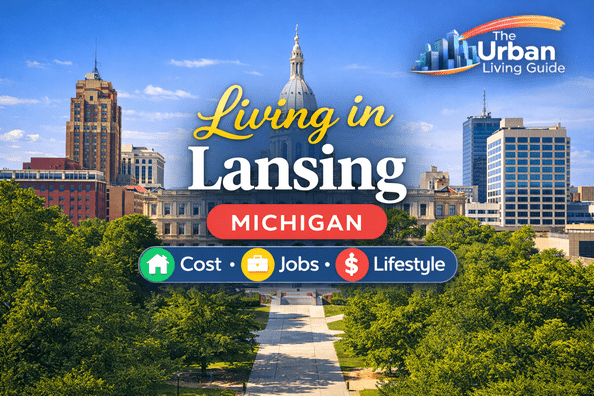
Living in Lansing, Michigan: Government Careers, Lower Housing Costs & Everyday Convenience
Living in Lansing, Michigan offers a balanced lifestyle with government employment opportunities, affordable housing, and a relaxed Midwestern atmosphere. Lansing is the capital city of Michigan and sits in the central part of the state along the Grand River. The city has a population of around 112,000 residents, while the greater Lansing metropolitan area includes more than 500,000 people.
Because Lansing is the state capital, government services, education, and healthcare play a major role in the local economy. The presence of Michigan State University, located nearby in East Lansing, adds strong academic influence and creates a vibrant college-town environment.
Many people consider living in Lansing, Michigan due to its relatively low cost of living compared to larger cities like Detroit or Chicago. The city also offers a variety of parks, cultural institutions, and family-friendly neighborhoods, making it attractive for students, professionals, and families.
Watch a recent video by a popular vlogger to understand daily life and vibes in Lansing.
Information in this guide is compiled from publicly available data, official city resources, economic reports, and local housing databases to ensure accuracy and reliability.
What Makes Lansing So Popular
Key reasons why people move here include:
-
- Michigan’s state capital with strong government employment
- Affordable housing compared to most U.S. capital cities
- Close proximity to Michigan State University
- Family-friendly communities and suburban neighborhoods
- Parks, river trails, and outdoor recreational areas
👉 If this city is new to you, use the map below to see exactly where it’s located and what’s nearby.
Famous Personalities, Sports & Major Brands from Lansing
Lansing has connections to several well-known figures and organizations.
-
- Magic Johnson – NBA legend who attended Michigan State University
- Sam Raimi – Film director known for the Spider-Man trilogy
- Steven Seagal – Actor and martial artist born in Lansing
Sports are closely tied to nearby Michigan State University, whose teams attract huge regional support.
Major teams include:
-
- Michigan State Spartans Football
- Michigan State Spartans Basketball
Major organizations and employers connected to Lansing include:
-
- State of Michigan Government
- General Motors
- Michigan State University
- Accident Fund Insurance Company
Best Neighborhoods in Lansing
Lansing offers a mix of historic and suburban neighborhoods.
-
- Downtown Lansing
Urban living with government buildings, restaurants, and offices. - East Lansing
A lively college area near Michigan State University with apartments and nightlife. - Old Town Lansing
Historic district known for art galleries, boutiques, and cafes. - Westside Neighborhood
Residential area with historic homes and tree-lined streets. - Groesbeck Neighborhood
A quiet suburban-style area popular with families. - Moores Park Area
Affordable housing and access to parks and river trails.
- Downtown Lansing
Housing & Rent in Lansing
Housing in Lansing is considered affordable compared to many U.S. cities, making it attractive for students and young professionals.
Typical monthly rent estimates include:
-
- Studio apartment – $750 – $1,000
- 1 Bedroom – $900 – $1,250
- 2 Bedroom – $1,200 – $1,700
- Family home – $1,800 – $2,800
The housing market includes historic homes, modern apartments, and suburban neighborhoods.
Rental figures are based on aggregated listing data and recent market trends.
Job Market & Business Opportunities
Lansing has a stable economy supported by government employment and education.
Major industries include:
-
- Government administration
- Education and universities
- Automotive manufacturing
- Healthcare and medical services
- Insurance and financial services
Many residents work for the State of Michigan government or nearby Michigan State University.
Average salaries typically range between $50,000 and $100,000 depending on profession.
Major Companies & Headquarters in Lansing
Several major employers operate in the Lansing area.
Key employers include:
-
- State of Michigan Government Offices
- General Motors Lansing Grand River Assembly Plant
- Michigan State University
- Accident Fund Insurance Company
- Sparrow Health System
These institutions play a major role in supporting the city’s economy.
What It’s Really Like Living in Lansing, Michigan
Daily life in Lansing is calm and community-oriented. The downtown area offers restaurants, government buildings, and cultural venues, while nearby East Lansing provides college-town energy with cafes, bars, and sports events.
Residents enjoy outdoor spaces such as River Trail, which stretches through the city along the Grand River. Weekends often involve college sports, farmers markets, and local festivals.
For many residents, living in Lansing, Michigan offers a comfortable lifestyle with a lower cost of living and strong job stability.
Cost of Living in Lansing
Lansing is considered one of the more affordable cities in the Midwest.
Typical monthly costs include:
-
- Rent – $1,000 – $1,500
- Utilities – $140 – $220
- Groceries – $320 – $450
- Transportation – $100 – $200
- Healthcare – $300 – $420
Compared to nearby cities like Ann Arbor or Detroit, Lansing often has lower housing costs.
Transportation & Commute
Lansing offers several transportation options.
Public transit includes:
-
- CATA bus system serving Lansing and East Lansing
- Regional transportation routes
- Bike paths and walking trails
Average commute time is around 20 minutes.
Capital Region International Airport provides domestic flights to major hubs.
Weather & Environment
Lansing experiences four distinct seasons.
-
- Summer: Warm with temperatures around 75–85°F
- Winter: Cold with snowfall and freezing temperatures
- Spring/Fall: Mild weather with colorful foliage
The region offers parks, rivers, and green spaces for outdoor recreation.
Popular Hotels, Cafes & Restaurants
Lansing has a growing hospitality and food scene.
Popular hotels include:
-
- Graduate East Lansing
- Courtyard by Marriott Lansing Downtown
- Radisson Hotel Lansing
Old Town and East Lansing are known for restaurants, cafes, and breweries.
Sightseeing & Attractions
Visitors and residents can explore many attractions in Lansing.
-
- Michigan State Capitol Building
- Potter Park Zoo
- Michigan History Center
- Lansing River Trail
- Michigan State University Campus
These places highlight the city’s history and culture.
Budget Stay / Hostels
Travelers and students can find affordable accommodation options.
Examples include:
-
- Budget motels near Michigan State University
- Guesthouses near downtown Lansing
- Affordable student housing options
Quick Snapshot of Living in Lansing, Michigan
-
- Population – ~112,000
- Average Rent – $1,150/month
- Average Salary – $60,000/year
- Average Commute Time – 20 minutes
- Climate – Warm summers, snowy winters
Education & Universities
Education plays a major role in Lansing’s identity.
Major institutions include:
-
- Michigan State University
- Lansing Community College
- Thomas M. Cooley Law School
These institutions attract students from across the country.
Pros and Cons of Living in Lansing, Michigan
Pros
-
- Affordable housing and lower cost of living 🙂
- Stable government and education jobs
- Family-friendly neighborhoods
- Access to parks and outdoor recreation
- Strong university influence
Cons
-
- Smaller job market compared to major cities
- Cold winters with snowfall
- Limited public transportation coverage
- Fewer nightlife options than large metros
- Slower economic growth compared to tech hubs
Is Lansing a Good Place to Live?
For many people, living in Lansing, Michigan offers stability, affordability, and a relaxed lifestyle. As the state capital, the city benefits from strong government employment and educational institutions that help maintain economic stability.
Students and young professionals often move to the area because of Michigan State University and the relatively affordable housing options. Families appreciate the quieter neighborhoods, good schools, and community-oriented environment.
Although Lansing may not offer the same fast-paced lifestyle as larger metropolitan areas, it provides a comfortable and practical place to live with reasonable living costs and steady job opportunities.
For those seeking affordability and a balanced lifestyle in the Midwest, Lansing remains an attractive option.
FAQs
Is Lansing expensive to live in?
No, Lansing is considered affordable compared to many U.S. cities.
What salary is needed to live comfortably in Lansing?
Around $55,000–$70,000 per year is generally comfortable.
Is Lansing safe to live in?
Many neighborhoods are considered safe and family-friendly.
What are the best neighborhoods in Lansing?
Old Town, East Lansing, and Groesbeck are popular areas.
Can you live in Lansing without a car?
It is possible near downtown and campus areas but most residents drive.
Does Lansing get heavy snow?
Yes, winters bring moderate snowfall.
🔗 Explore More Cities in Michigan
If you’re considering options beyond Lansing, The Urban Living Guide has also explored several other well-known cities across Michigan. You may also want to check:
- Living in Detroit, Michigan
- Living in Grand Rapids, Michigan
- Living in Ann Arbor, Michigan
- Living in Flint, Michigan
If you’re comparing cities and considering Lansing, don’t miss:
- Cost of Living in Lansing, Michigan
- Pros and Cons of Living in Lansing, Michigan
- Best Neighborhoods in Lansing, Michigan
For the full relocation experience, check out: Moving to Lansing, Michigan
Each of these guides highlights what daily life looks like in different cities, including insights on cost of living, housing trends, job opportunities, local neighborhoods, commute patterns, weather conditions, education options, popular areas, and major employers.
With The Urban Living Guide, all this information is organized in one place so you can easily compare cities and decide which one suits your lifestyle, budget, and future plans.